


アクリルシートの用途イノベーションと業界の変革
導入 光学明快さ(92%光通信)および多様性のために珍重されるアクリルシートは航空宇宙からヘルスケアに産業に革命をもたらしている。予想される世界市場...
LED fixtures need more than a transparent cover. The optical sheet must distribute light properly, reduce visible LED hotspots and maintain the required brightness. When selecting an 照明用アクリル板, buyers should first identify the fixture structure and light source arrangement. These factors determine whether a diffuser plate or a light guide plate is more suitable.
Different lighting structures require different アクリル板 designs. The main distinction is whether light passes through the sheet from behind or enters through its edges.
In a backlit fixture, LEDs are positioned behind the acrylic panel. Light travels toward the front surface and passes through the sheet. A diffuser helps spread the light across the illuminated area.
This structure is commonly used in LED panel lights, light boxes and illuminated signs. The distance between the LEDs and the sheet affects how evenly the light spreads. A shallow fixture may show bright spots if the LEDs are too close to the panel.
An edge-lit fixture uses LEDs installed along one or more edges. Light enters the sheet from the side and travels through the material. A light guide plate redirects part of this light toward the viewing surface.
Edge-lit designs are useful when the fixture needs a slim profile. However, the light-entry edges and the optical pattern must be designed together. Poor edge preparation or unsuitable LED positioning can create bright and dark areas.
Opal acrylic is used when a fixture needs a translucent front panel rather than a clear viewing surface. Its appearance helps soften direct light and reduce the visibility of individual LED points.
A LED backlit acrylic panel is generally selected according to the fixture depth, LED arrangement and required brightness. A deeper fixture may allow more distance for light mixing, while a shallow design may need a sheet with stronger diffusion.
Buyers should distinguish between a diffuser panel and a simple translucent cover. A cover may transmit light but provide insufficient diffusion for a uniform illuminated surface.
A light guide plate is designed for edge-lit applications. Light enters through a polished edge and travels inside the sheet. Printed, engraved or molded optical patterns help redirect light toward the front.
The pattern density and distribution should match the LED layout and the dimensions of the panel. A pattern designed for one size or LED arrangement may not produce the same result when used in a different fixture.
Two important optical properties are light transmission and haze. They describe different aspects of how light passes through a sheet.
Light transmission indicates the proportion of incident light that passes through the material. Haze describes how much transmitted light is scattered rather than remaining in a clear, straight-through direction.
A ライトディフューザー with higher transmission may preserve more brightness, but it may also reveal LED points if its diffusion is insufficient. A sheet with higher haze can scatter light more strongly, helping to soften hotspots, but it may reduce the amount of light reaching the front surface.
For example, a material with 92% transmission and 90% haze may be suitable when brightness is a priority and the fixture already provides adequate light mixing. A material with 85% transmission and 98% haze may be more suitable when hiding LED points is more important. These figures are comparison examples, not universal acceptance limits.
Buyers should request transmission and haze results measured under consistent conditions. ASTM D1003 provides test methods for haze and luminous transmittance of transparent plastics. The test method, sample thickness and measurement conditions should be recorded when comparing suppliers.
Visible hotspots are not always caused by the acrylic sheet alone. They can also result from LED spacing, the distance between the LEDs and the panel, the LED beam angle and the internal reflective structure.
Start by checking the LED layout. If bright points appear directly above individual LEDs, increase the LED-to-panel distance or adjust LED spacing where the fixture design allows. If the layout cannot be changed, test a diffuser with a different haze level or optical structure.
For edge-lit fixtures, check the position of the LEDs and the condition of the light-entry edge. A properly prepared edge helps light enter the plate more consistently. Reflective material on unused edges can also help reduce light loss. Optical bonding, printing and surface treatments may change the final light distribution, so the complete assembly should be tested rather than the sheet alone.
Lighting uniformity can be evaluated by comparing the minimum and maximum measured luminance across the illuminated surface:
Uniformity (%) = Lmin / Lmax × 100%
Measure the center, corners and several edge points under the same operating conditions. Use the same instrument, measurement distance and LED output for each reading. Luminance measurements describe the brightness of the visible surface, while illuminance measurements describe the light falling on a surface. The two should not be treated as interchangeable.
There is no single uniformity target for every LED product. Buyers should define an acceptable value based on the fixture’s intended use and confirm it with a production-representative sample.
Optical performance is only one part of the purchasing decision. The sheet must also fit the fixture, withstand processing and remain consistent during production.
Confirm the required thickness, length, width and dimensional tolerance. Thickness affects rigidity, weight and the optical path. A sheet that is too thin may require additional support, while a thicker sheet may affect the fixture’s available space and light distribution.
For large panels, check the support structure and mounting method. Also confirm whether the supplier can provide cut-to-size sheets or whether further cutting is required after delivery.
A smooth diffuser surface and a patterned light guide plate serve different functions. Buyers should specify whether they need an opal finish, a textured surface, a printed dot pattern or laser-engraved features.
A light diffusing acrylic sheet should be evaluated under the actual LED arrangement. Check for visible spots, uneven brightness, surface marks and color differences. For patterned plates, confirm the pattern position, density and direction against the fixture drawing.
A useful RFQ should include the fixture type, LED position and spacing, required sheet dimensions, thickness, optical targets and processing details. Buyers should also state the required test method for transmission and haze.
For custom designs, provide drawings or sample parts showing the LED layout and mounting structure. Approve a sample under operating conditions before mass production. This helps identify optical or dimensional problems before they affect a full order.
JRT offers LED light acrylic sheets made with a PMMA base and light-diffusion particles. The range includes diffuser plates, light guide plates and uniform-light plates for different fixture structures.
| パラメータ | ディフューザーシート | 導光板 |
| 光透過率 | 85–92%, depending on grade | 88-92% |
| ヘイズ | 90–98%, depending on grade | 90-95% |
| 厚さ | 1.5–10 mm | 1.5–10 mm |
| 標準サイズ | 1220 × 2440 mm | 1220 × 2440 mm |
| Available design | Diffusion grades and finishes | Dot patterns and custom designs |
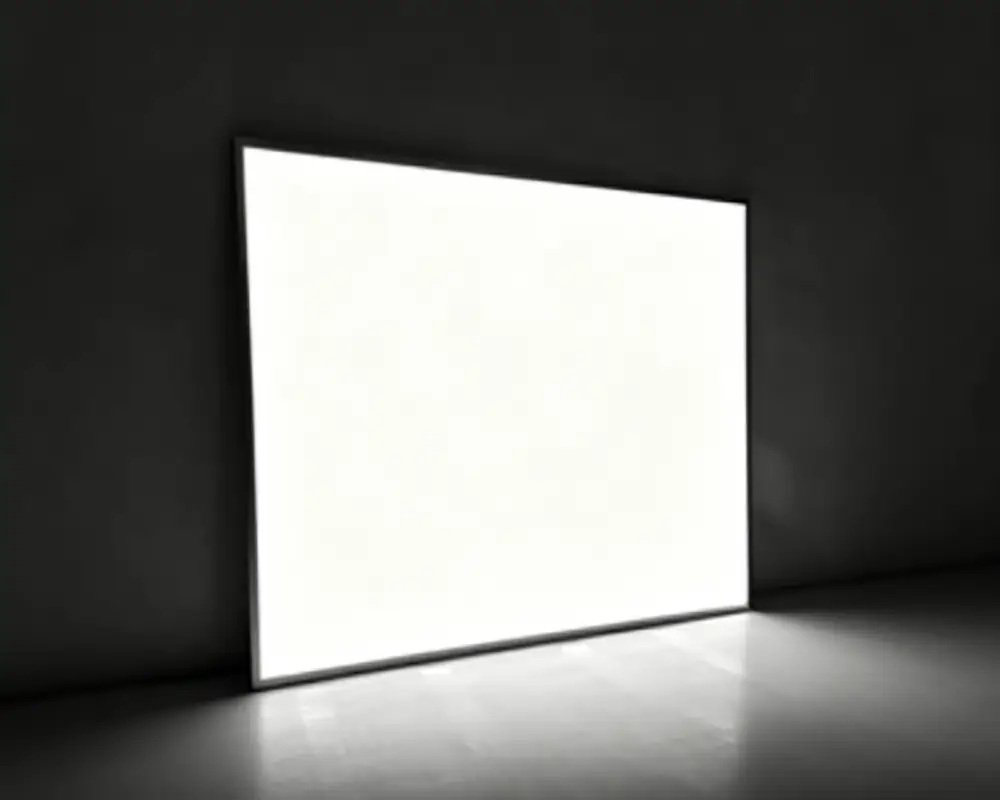
Different diffuser grades provide different balances between brightness and light scattering. The standard diffuser has 88% transmission and 95% haze. The high-transmission grade has 92% transmission and 90% haze, while the anti-glare grade has 85% transmission and 98% haze.
These options allow buyers to compare optical performance according to the fixture design. The final grade should be selected through testing with the actual LED arrangement, not by comparing one optical value alone.
JRT provides dot-pattern designs and laser-engraved light guide plates. The pattern can be adjusted to suit panel dimensions and light-entry positions. This is important for buyers developing an 導光板アクリルシート for a specific edge-lit fixture.
Custom pattern design should be checked through a sample test. The test should cover the center, edges and corners to identify uneven light distribution before production approval.
The sheets can be processed by laser cutting, CNC engraving and thermoforming. Laser cutting is suitable for producing defined panel dimensions and shapes. Buyers should inspect cut edges for excessive melting, burrs and visible marks that may affect assembly or light entry.
CNC engraving is useful for producing controlled patterns and local optical features. Pattern depth, position and dimensional accuracy should be checked against the drawing. For thermoformed parts, inspect deformation, surface appearance and optical changes after forming. Processing conditions should be confirmed with sample parts before a production run.
The product range can be used in LED panel lights, light boxes, illuminated signs, decorative lighting and digital displays. Diffuser sheets are suitable for applications where light needs to pass through a front panel, while light guide plates are intended for edge-lit structures.
Matching the sheet type to the fixture design helps avoid unnecessary brightness loss, visible hotspots and assembly problems.
The standard grade provides 88% transmission and 95% haze. The high-transmission grade provides 92% transmission and 90% haze, while the anti-glare grade provides 85% transmission and 98% haze. Choose according to the required brightness and hotspot control, then verify the result in the complete fixture.
Yes. JRT offers custom dot-pattern and laser-engraved designs. Buyers should provide panel dimensions, LED positions and relevant drawings so the pattern can be evaluated for the intended fixture.
The sheets support laser cutting, CNC engraving and thermoforming. Processing conditions should be tested on samples first, especially when the finished part has tight dimensional or optical requirements.
No. Higher haze generally indicates stronger light scattering, but it can also reduce transmitted brightness. The suitable value depends on LED spacing, fixture depth and the required appearance.
A diffuser sheet spreads light passing through it, commonly in backlit fixtures. A light guide plate receives light through its edge and redirects it toward the front surface, mainly in edge-lit fixtures.
The right acrylic sheet should be selected as part of the complete lighting design. Backlit fixtures generally need a diffuser matched to the LED distance and brightness target, while edge-lit fixtures need a light guide plate designed around the light-entry edges and optical pattern.
For custom fixtures, confirm dimensions, pattern details and processing requirements before ordering. Keep an approved sample and record its material grade, thickness, surface finish and optical test conditions. These records make it easier to compare later batches and identify changes in brightness or uniformity.
If you are looking for an LED lighting acrylic sheet supplier, contact JRT for available diffuser and light guide plate options, custom dimensions and pattern details, technical specifications, samples and a quotation based on your lighting structure, optical requirements, processing needs and order quantity.
 159月
 159月
 1710月
 2310月