Two Way Acrylic Mirror Sheet: A Practical Buying Guide
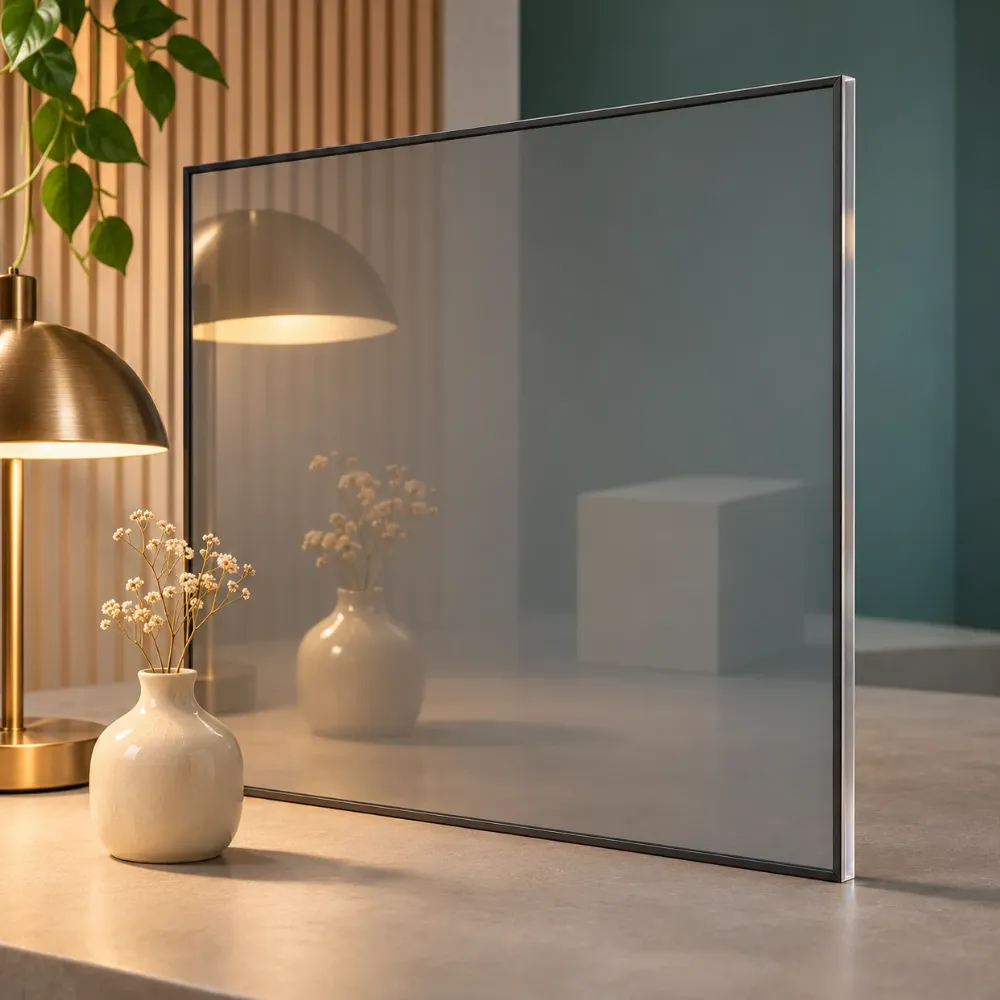
A two way acrylic mirror sheet reflects part of the light and lets part pass through. Its apparent one-way effect depends on the lighting on both sides, so it cannot guarantee privacy when that balance changes.
Why can a display look clear on a workbench, then disappear behind its reflection in a bright showroom? The sheet, screen, and room form one optical system. Choosing by thickness or the word “mirror” alone leaves too much to chance.
If you’re building a smart mirror, retail display, or infinity effect, you need predictable results before cutting the finished panel. The mirror coating controls the balance between reflection and light transmission. The frame then has to hold the panel flat while leaving the required view open.
This guide explains how to compare a two way acrylic mirror sheet, read supplier specifications, and test the assembly. You’ll find practical checks for lighting, coating care, mounting, and sample approval. Supplier figures below describe those suppliers’ products; they are not specifications for every acrylic mirror or a promise of JRT stock.
Pontos-chave
A two way acrylic mirror sheet needs controlled lighting; light can travel through it in both directions.
Light transmission and reflectance values vary by supplier and grade.
A solid backing or adhesive layer across the viewing area can block the intended see-through effect.
A small sample checks appearance; a full-size trial checks panel flex and the finished frame.
The material combines an acrylic substrate, also called PMMA, with a partially reflective layer. The mirror coating reflects light toward the viewer while allowing other light through the panel. Neither face acts as a valve that permits light in only one direction.
On the brighter side, the reflection can dominate the weaker view from the darker space. From that darker space, the brighter scene can be visible through the sheet. Turn on lights behind the panel, and the effect may change. Light transmission has not switched off; the competing light has changed.
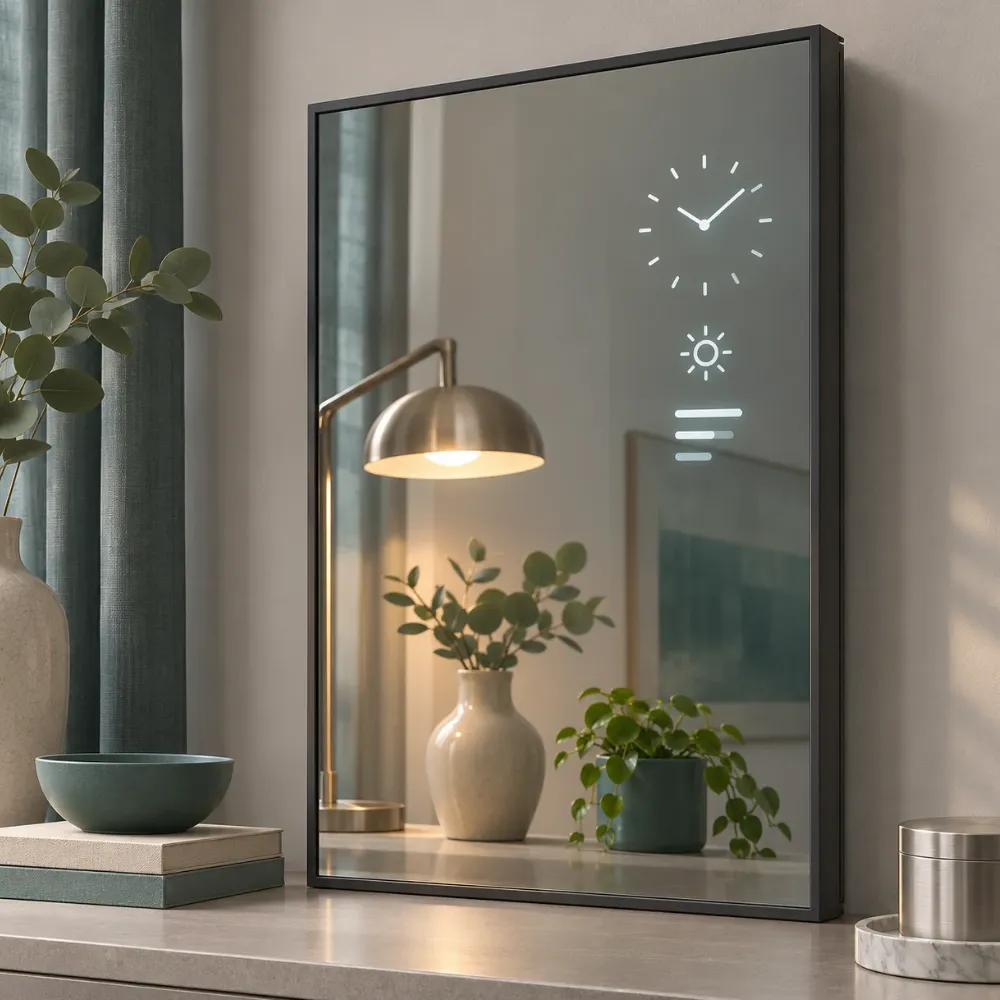
For a two way acrylic mirror sheet over a screen, this means checking two states: display on and display off. A convincing reflection with the screen off does not prove that text will remain readable with the screen on.
To compare decorative materials first, Explore JRT mirror options. That listing describes generic mirror acrylic; confirm a suitable see-through grade separately for any smart mirror project.
Two-Way, Double-Sided, and Standard Mirror Compared
These names describe different features. Check the construction before ordering a two way acrylic mirror sheet.
Material description
What to verify
Relevance to a hidden display
Standard decorative mirror
Whether it has an opaque backing
An opaque backing blocks the screen image
Double-sided mirror
Whether both faces reflect, and whether light passes through
Two reflective faces alone do not establish transparency
See-through or two-way acrylic
Light transmission, reflection, and coating construction
Can combine a reflected room image with transmitted display light
A product photo cannot establish the mirror coating or show every lighting condition. Ask for the actual grade and its optical data. Request a sample from that grade before approving the material.
Two Way Acrylic Mirror Sheet Specifications to Check
Read Transmission and Reflectance Together
Transmissão de luz describes the proportion of incident light that passes through. Reflectance describes the proportion reflected. Ask whether the figures describe the finished coated sheet and what measurement conditions apply.
For example, Canal Plastics’ see-through acrylic listing states 25% light transmission. It describes a partially metallized, extruded sheet with no opaque backing. That value belongs to its listed product.
Meanwhile, Two Way Mirrors’ acrylic product page states 70% reflection and 30% transparency. It also lists nominal 1/8-inch and 1/4-inch options. These are supplier specifications, not a universal ratio or thickness range for a two way acrylic mirror sheet.
Don’t assume every mirror coating divides light into two portions that total exactly 100%. Absorption and test conditions also matter. Nor does a light transmission percentage alone predict whether your display will look bright enough in the room.
When comparing a two way acrylic mirror sheet from different sources, record:
The exact grade and coated-sheet thickness.
Light transmission and reflectance, with their measurement basis.
Coating location and the intended viewing face.
Permitted cleaning, cutting, mounting, and service conditions.
Specify Flatness as Well as Thickness
A thicker two way acrylic mirror sheet can resist flex better, but thickness alone doesn’t guarantee a straight reflected image. Panel size, edge support, frame pressure, and viewing distance all affect the result.
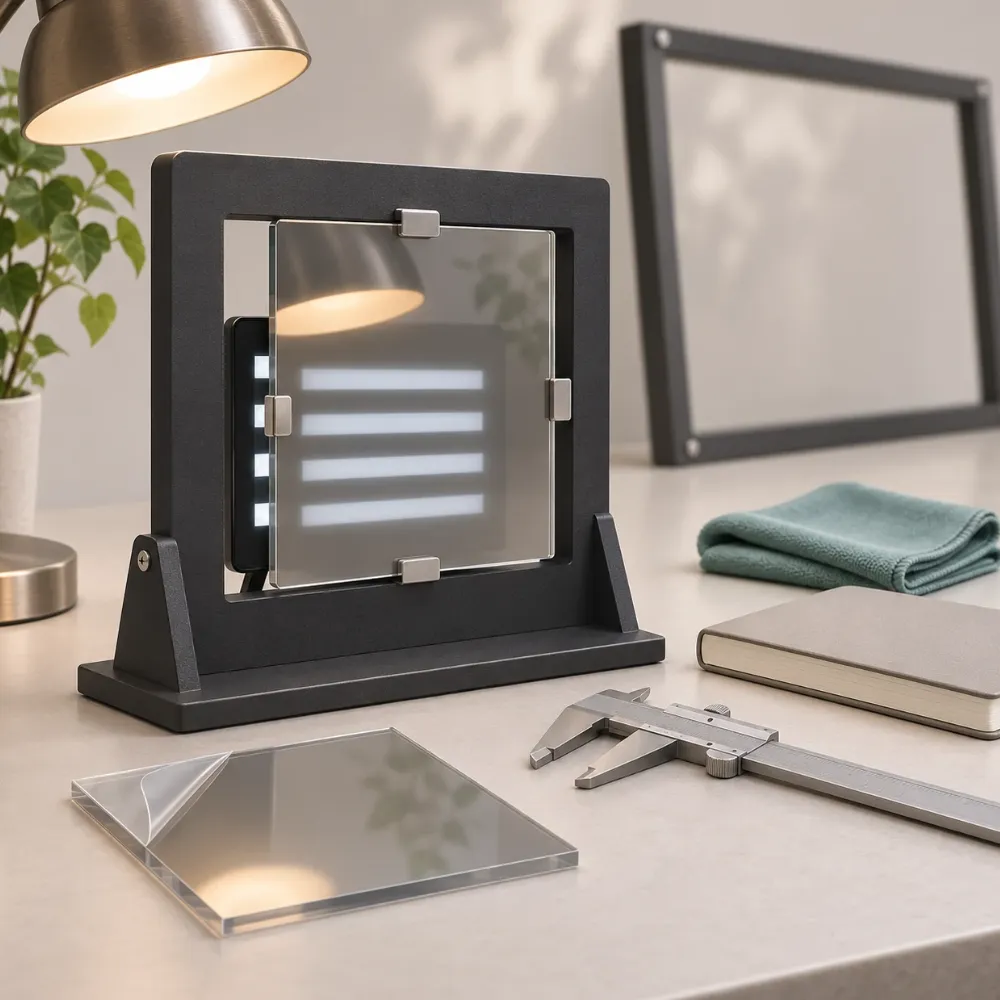
A small sample of a two way acrylic mirror sheet cannot reproduce the bow of a large panel. Test the intended dimensions in the proposed frame. Look at reflected straight lines from the actual viewing positions, then check screen text through the panel.
For a smart mirror, separate the optical requirement from the mechanical requirement. Approve the mirror coating and display appearance first, then confirm that the full panel holds that appearance after mounting.
Match the Optics to Your Display
Smart Mirrors and Hidden Screens
A smart mirror must show useful screen content while preserving the reflection you want. Bright room lighting can compete with that content. A dark enclosure around the display helps control unwanted light, but it cannot make every screen-and-sheet combination suitable.
Test the smallest text and dimmest graphics in your smart mirror layout. A bright logo on a black background is a different challenge from a detailed photograph. Check the display from an angle as well as straight ahead.
Hypothetical example: Alex’s showroom display Alex plans a 600 x 400 mm smart mirror. In this illustrative setup, the test text looks readable on a shaded bench but washes out under the showroom lamps. They repeat the trial with the same screen settings, a black enclosure, and the intended lighting.
The outcome is a revised sample-approval test before they choose the panel, rather than an order based on the bench view alone. This is a design example, not a customer result.
The useful question is whether a two way acrylic mirror sheet works with your particular smart mirror display. Compare light transmission alongside text contrast, reflected detail, and the screen-off appearance.
Infinity Mirrors and Observation Panels
An infinity display uses repeated reflections between a front partial mirror and a rear reflector. The front mirror coating must allow the viewer to see the illuminated effect. Test spacing, light placement, and the enclosure as an assembly rather than judging the front sheet alone.
For observation panels, the lighting difference between spaces is central. A two way acrylic mirror sheet does not provide permanent concealment if lights change behind it. Avoid treating a successful daytime trial as approval for nighttime conditions.
A smart mirror and an observation partition therefore need different acceptance tests, even when both use partially reflective acrylic. Confirm the use first; choose the optical grade second.
Mount and Fabricate Without Blocking the View
Keep the Optical Opening Clear
A two way acrylic mirror sheet needs an unobstructed path wherever light must pass. Gluing it onto a solid board defeats that purpose across the covered area. A black enclosure controls stray light around the display; it is not a board placed between the display and the viewer.
Canal’s listing calls for mechanical mounting and warns against adhesive backing or solid-surface mounting for its see-through grade. Follow the selected supplier’s instructions for the frame, edge engagement, and any permitted adhesive. Keep the required optical opening clear.
Hypothetical example: Jordan’s display frame Jordan sketches an 800 x 600 mm panel with a continuous backboard, copying a decorative-mirror detail. In this example, the backboard covers the intended screen opening, so no image can pass through it. They revise the drawing to support the edges while leaving that opening clear.
The next step is a full-size frame trial to check support and reflection quality. The redesign resolves the blocked view; it does not establish a structural rating or guaranteed flatness.
Mounting pressure matters too. US Plastic’s acrylic mirror guidance explains that uneven support and overtightened fasteners can distort reflected images. Its advice concerns general mirror substrates; its ordinary-mirror full-backing methods should not be copied across a see-through opening.
Protect the Coated Surface
The mirror coating needs its own handling plan. Confirm which face carries it, where protective masking should remain during fabrication, and how the finished panel can be cleaned. Avoid rubbing an exposed layer or testing an unknown solvent on the finished part.
For the acrylic surface, mild soap, water, and a soft cloth are general starting points in US Plastic’s guide. Obtain separate approval for the coated face. Do not assume that a cleaner suitable for glass is suitable for the mirror coating.
Before machining a two way acrylic mirror sheet, approve an offcut trial using the exact grade. Check for chipped edges, coating damage, haze, and changes visible through the panel. Follow machine-specific extraction and fire precautions; acrylic is combustible.
Discuss your coated-sheet fabrication plan using JRT’s acrylic processing services as a starting point. Ask which listed processes are suitable for the proposed material before approving the drawing.
Test a Sample Before Ordering the Full Panel
Use a sample of the intended two way acrylic mirror sheet to answer a defined set of questions. Keep its grade label and supplier light transmission figures with the test record. A sample from a different mirror coating is not a reliable substitute.
Define the viewing conditions. Record room lights, daylight exposure, viewing distance, and the display settings. Choose the text or object that must remain visible.
Control light around the sample. Place it over an opening in black card or a dark enclosure. Avoid judging it while light spills around every edge.
Check both operating states. For a smart mirror, inspect screen on and screen off. Turn lights behind the panel on and off to expose conditions that defeat the intended effect.
Confirm the viewing face. Follow the supplier’s orientation instructions. Compare reflected detail, transmitted text, and any visible secondary image before fixing the panel in place.
Trial fabrication and cleaning. Use a separate offcut for the approved cutting and cleaning methods. Inspect the mirror coating again after those operations.
Test the full assembly. Fit the intended panel size in its frame. Check reflection, screen visibility, edge pressure, and access for cleaning before accepting the design.
For each smart mirror trial, mark the result acceptable, unacceptable, or unresolved. Record what you changed between tests. Don’t change lighting, screen brightness, and material at once if you need to identify the cause of a problem.
Keep optical approval separate from a supplier’s general acrylic sheet range. The presence of clear or decorative mirror materials does not confirm a two-way grade. Likewise, review JRT’s order and sample FAQ, then ask whether a sample of the required grade is available.
Approval of a two way acrylic mirror sheet should identify the tested material, light transmission specification, frame drawing, and lighting setup. That record makes later substitutions easier to evaluate.
Questions About Two-Way Acrylic Mirrors
Is a Two-Way Mirror the Same as a One-Way Mirror?
These names commonly refer to the same lighting-dependent effect. A two way acrylic mirror sheet partially reflects and transmits light; it does not restrict light to one direction. Ask for light transmission data and the intended lighting conditions instead of relying on the name alone.
Can Ordinary Mirror Acrylic Work Over a Screen?
An ordinary mirror with opaque backing will block the screen image. A smart mirror requires a suitable partially transparent grade and a clear optical path. Check the construction of the mirror coating, then test screen readability under the intended room lighting before choosing the panel.
Which Face Should Point Toward the Viewer?
Use the supplier’s instructions for the exact grade and application. Exposing the mirror coating may change cleaning and handling needs, while orientation can affect appearance. Test a two way acrylic mirror sheet in the proposed direction rather than using a fingernail test as a complete installation guide.
Can I Cut or Laser-Cut a Two-Way Acrylic Mirror?
It depends on the substrate, reflective layer, masking, and approved process. Obtain the supplier’s fabrication instructions, then trial an offcut before cutting the finished two way acrylic mirror sheet. Confirm coating condition and light transmission appearance afterward; a clean cut edge alone does not prove the optical surface is undamaged.
Choose the Grade Around the Finished Assembly
Choose a two way acrylic mirror sheet by working backward from the view you need. Define what the viewer must see, how strong the reflection should appear, and which lighting conditions the assembly must tolerate. Then compare the supplier’s optical data with a physical sample.
For a smart mirror, judge reflection and screen readability together. Light transmission is one part of that decision, alongside the display, enclosure, viewing angle, and surrounding lights. Protect the mirror coating through fabrication and cleaning, and preserve the open path required for the image.
Before ordering the finished size, confirm flatness in the intended frame. Keep your approved sample, drawing, and test notes together so a later change of grade or mounting detail triggers another check.
Send JRT your display specification, including dimensions, intended use, optical requirements, and lighting conditions. Ask whether a matching grade and suitable sample can be supplied before placing an order for a two way acrylic mirror sheet.
Introdução As chapas acrílicas, apreciadas pela sua clareza ótica (transmissão de luz 92%) e versatilidade, estão a revolucionar as indústrias, desde a aeroespacial à dos cuidados de saúde. Com um mercado global esperado...
Introdução As folhas de cloreto de polivinilo (PVC) são um elemento básico na construção, nos cuidados de saúde e na eletrónica devido à sua durabilidade, resistência química e eficácia em termos de custos. Com o mercado global de PVC...
Em aplicações onde a segurança, a beleza e a durabilidade são essenciais, há um material que se destaca: a chapa acrílica retardadora de chama. Para projectos em edifícios, transportes públicos ou edifícios de...
Quem já se informou sobre o custo da instalação de um espelho que ocupa toda a parede sabe quais são as desvantagens associadas ao vidro: o peso, a equipa de instalação, a responsabilidade civil caso...