Acrylic Mirror vs Glass Mirror: Which Should You Choose?
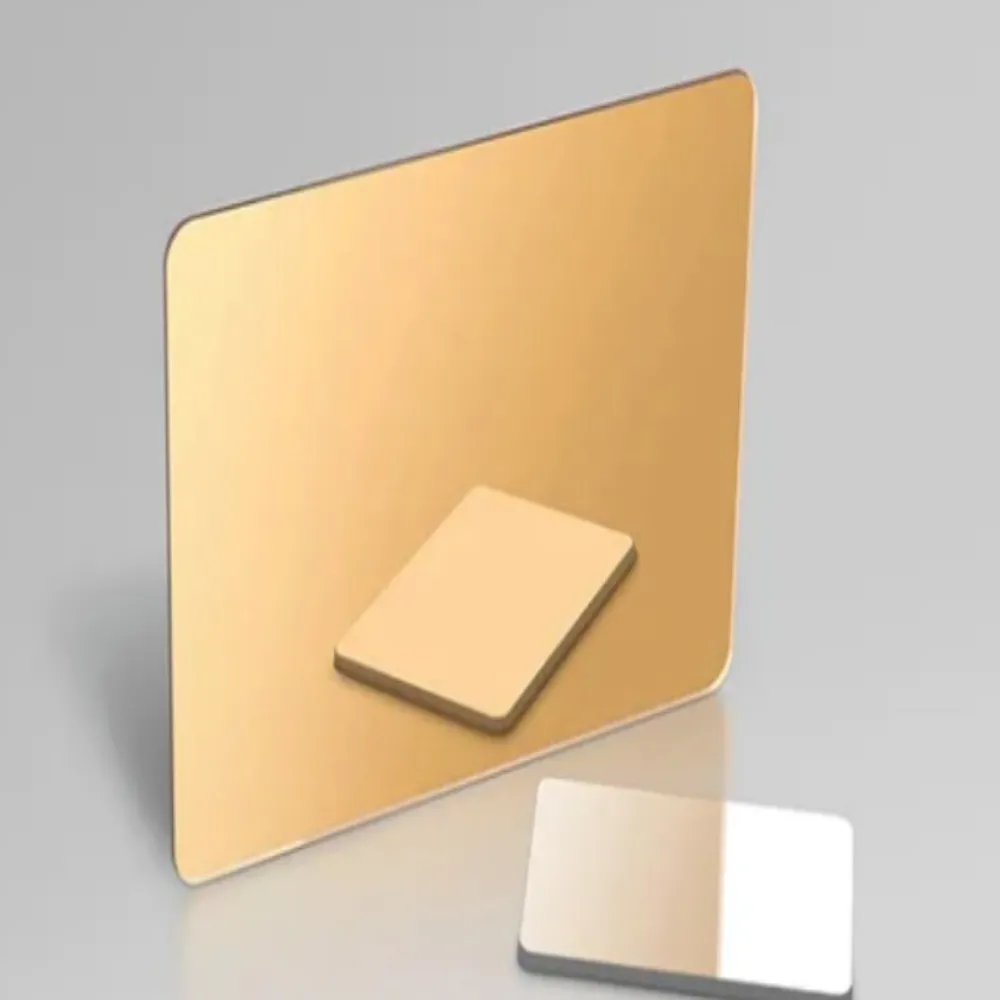
Choose acrylic mirror for lightweight decorative panels and cut shapes when the mounted sample gives the image you need. Choose glass mirror when you need a flat image that stands up to daily cleaning.
The surprise in an acrylic mirror vs glass mirror decision is that a lighter sheet can still need a firm backing board. A thin panel that looks clear in your hand may show waves once it covers a wall or wardrobe door. The material price alone won’t tell you whether the finished mirror will work.
You’re right to consider weight, transport, and breakage before placing an order. But the reflection also needs to suit the job: a sparkling display accent has a different purpose from a full-length fitting mirror. Judge each against its intended use.
This guide compares image quality, weight, cleaning, mounting, and installed cost. It draws on published manufacturer guidance and explains where a product-specific check is needed. Start with the comparison, then use the application examples and sample checklist to narrow your choice before you commit to a sheet or finished assembly.
Основные выводы
Acrylic weighs roughly half as much as glass at the same area and thickness; backing and hardware change the finished weight.
Glass is the stronger starting choice for large, accurate person-viewing reflections; acrylic needs careful flat support and sample approval.
Protective film on acrylic is temporary handling protection, not proof of a permanent scratch-resistant surface.
Compare the complete installed system, including fabrication, backing, packing, freight, cleaning, and replacement.
Acrylic Mirror vs Glass Mirror at a Glance
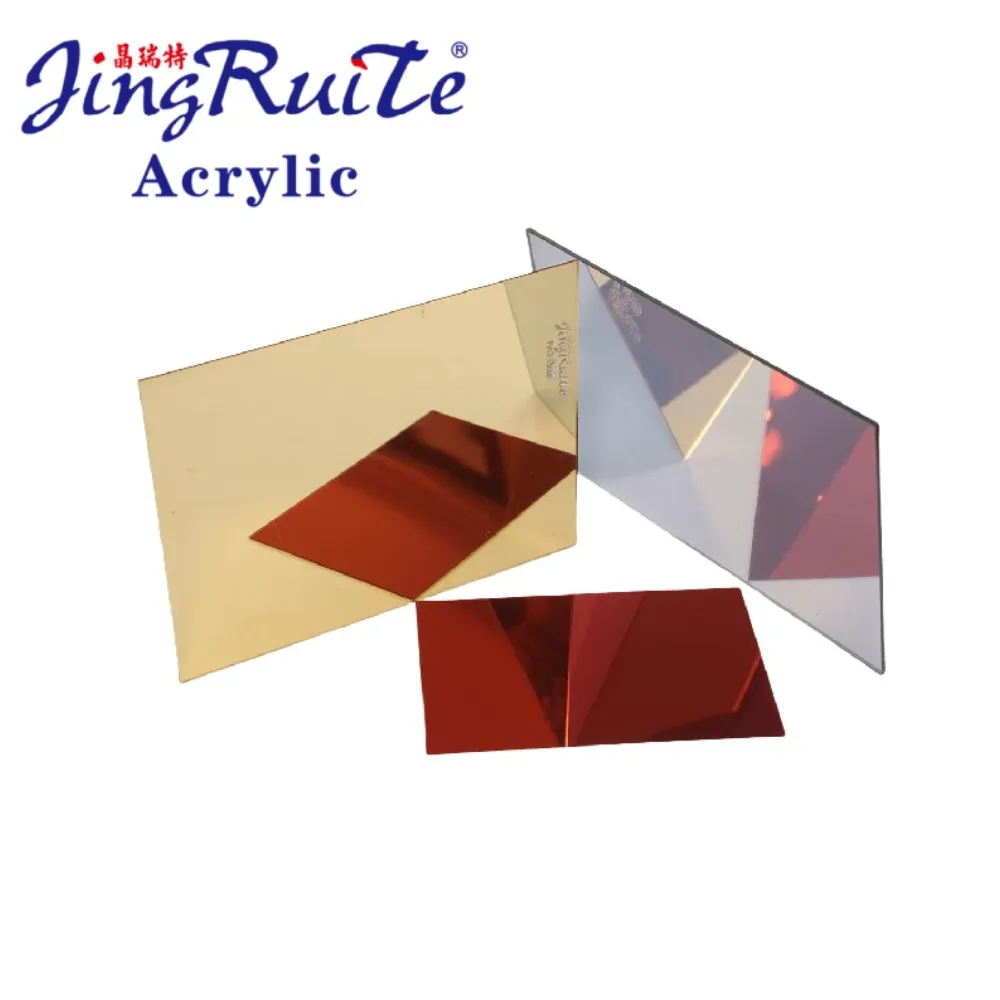
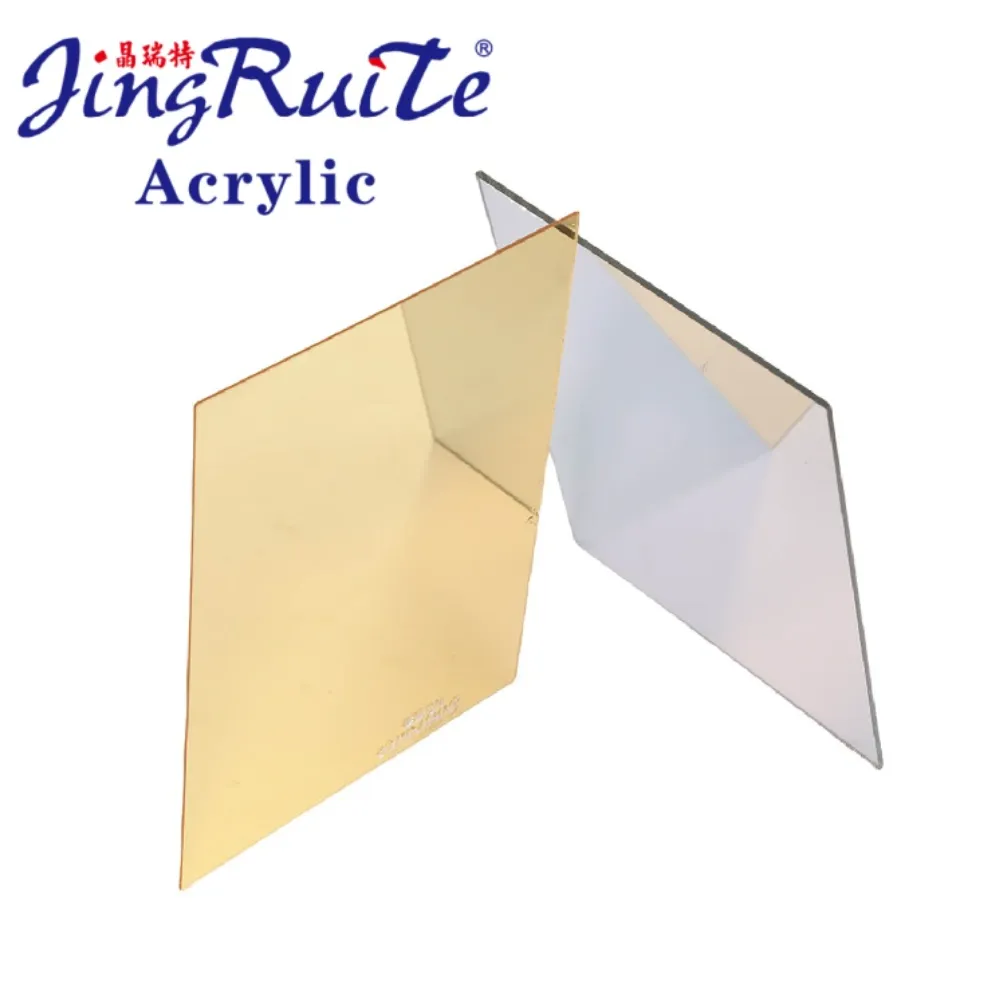
An acrylic mirror sheet uses a plastic base, normally polymethyl methacrylate (PMMA), with a reflective coating. A conventional glass mirror uses glass with a reflective metal layer and protective backing. Both the base and the layers behind it affect how the mirror works.
If weight and decorative fabrication make acrylic a candidate, Explore JRT mirror acrylic sheet and confirm the grade for your proposed assembly.
Decision factor
Acrylic mirror
Glass mirror
Reflected image
Can look clear, but flex and uneven support can distort shapes
Better starting point for a stable, flat image
Sheet weight
Roughly half at equal size and thickness
Heavier at equal size and thickness
Impact and breakage
More resistant to breakage than ordinary glass, but can still crack
Breakage behavior depends on the specified glass and assembly
Surface care
Standard faces need protection from abrasion and unsuitable cleaners
Better resistance to routine face scratching
Fabrication
Useful for cut lettering, small inserts, and decorative profiles
Specialist cutting, edge finishing, and handling needed
Service conditions
Confirm coating, backing, and environmental limits
Confirm mirror backing and installation suitability
Project cost
Include rigid support, compatible adhesive, and handling protection
Include safe handling, hardware, edge work, and installation
Use this table to narrow your choice. It does not report tests of every mirror sold. A hard coat can change how an acrylic face wears. Glass products also differ in thickness, image quality, backing, and how they break.
Acrylic Mirror vs Glass Mirror: Reflection and Flatness
Why Acrylic Mirror Can Look Wavy
Acrylic is flexible enough to follow small bends in its support. Those bends change the angle of the reflected light. A straight doorframe can appear curved even when the mirror surface looks bright and clean.
Canal Plastics’ mirror FAQ explains that thicker sheets and a flat, rigid backing can reduce distortion, while warning that distortion may remain. Thickness helps control flex; it doesn’t turn an uneven wall into a flat one.
Glass is more rigid, making it a sensible first choice when you need to judge body shape or clothing. Still, inspect the chosen glass mirror rather than assuming that every low-cost panel gives the same image. Product quality and mounting stress also matter.
A Bright Mirror Can Still Bend the Image
Reflectivity measures how much light a mirror reflects. Flatness affects whether the image keeps the right shape. A bright reflection can still be wavy.
Light transmission measures light passing through a clear sheet. A transmission figure for transparent PMMA does not describe the reflectivity of a finished opaque mirror. When a supplier offers an optical percentage, ask which property and finished product it measures.
For a practical check, mount a full-size sample using the planned support and fixings. View a reflected doorframe, shelving edge, or grid from the distance where people will use the mirror. Move sideways and inspect the full panel, including its edges.
Illustrative example: Imagine Alex planning a 600 × 1,800 mm fitting mirror for a clothing shop. Their priority is a trustworthy full-length image, and the existing wall has an uneven finish. Alex asks to see a full-size acrylic sample on the planned backing. If that sample cannot keep reflected lines straight enough for the fitting room, they choose a glass mirror with a suitable frame and fixings. The outcome follows the image requirement, rather than the lighter sheet alone. This imagined decision is not a customer test or a rule for sheet thickness.
Acrylic Mirror vs Glass Mirror: Weight and Mounting
Compare the Same Size and Thickness
Kuraray’s COMOMIRROR product information lists a density comparison of 1.19 g/cm³ for its acrylic material and approximately 2.5 g/cm³ for glass. These published values explain why acrylic mirror is commonly described as roughly half the weight of glass.
Consider an illustrative 1 m² panel, 3 mm thick. Its volume is 0.003 m³. With those densities, the base sheets would weigh 3.57 kg for acrylic and 7.50 kg for glass, or about 52% less for acrylic.
This calculation excludes the reflective coating, frame, backing board, adhesive, and fixings. It uses Kuraray’s comparison values, not a guaranteed JRT product weight. It does not mean 3 mm suits a panel of that size.
If an acrylic mirror needs a thicker sheet and a substantial support board, the finished assembly saves less weight than the bare-sheet comparison suggests. Ask for the weight of the proposed system when you check door hardware, transport, or the load on a wall.
Use a Design That Suits the Risk of Breakage
Acrylic resists breakage better than ordinary glass. That helps when you move or handle display parts. However, it can crack, and its edges and fixings still need attention. Avoid treating words such as shatter-resistant as proof of a tested safety assembly.
For public spaces or areas exposed to impact, ask for test evidence for the exact material and its fixings. Specify the required glass construction or acrylic grade with the installer. A general comparison cannot establish that a mirror is suitable for every gym, children’s space, or ceiling.
Plan the Backing and Adhesive Together
Сайт United States Plastic mirror technical guide recommends smooth, rigid, flat support. It also warns that overtight screws can cause dimpling and distortion. Tightening a flexible sheet against an uneven surface can make the image worse.
The same guide recommends adhesive compatibility tests on expendable pieces for at least 72 hours. That screens for damage to the materials. It does not prove bond strength or a long service life. Follow the selected adhesive manufacturer’s instructions and check compatibility with the acrylic, reflective coating, and backcoat.
Give the installer the finished size, backing details, fixing method, and expected temperature range. Movement allowance and hole details need to suit that design; there is no universal screw spacing or adhesive pattern for every mirror sheet.
Scratches, Cleaning, and Service Conditions
Check What Protects the Face
Ordinary glass resists routine face scratching better than standard acrylic. That matters on mirrors that staff clean repeatedly or people touch while passing. An acrylic panel can keep its appearance with suitable care, but it needs a cleaning method that respects the surface.
Protective masking helps during transport and fabrication. Once you peel it off, it no longer protects the face. If the specification calls for abrasion resistance, ask whether the sheet has a permanent hard coat and which wear test it passed.
Check both sides on arrival. Damage to the rear paint or reflective layer may show through from the front, even when the face has no obvious scratch. Store and handle the back as carefully as the visible surface.
Use the Cleaning Instructions for That Grade
To clean standard acrylic, use mild soap, water, and a soft cloth, as the guide above advises. Wipe gently. Remove loose grit before wiping. A cloth that has picked up abrasive dust can damage a face even when the cleaner itself is suitable.
Do not assume window spray, alcohol, or a workshop solvent is safe for the face or coating. Follow the mirror supplier’s cleaning instructions, especially for coated products. Try the approved cleaner on a spare piece before using it on the mirror.
Check Heat, Moisture, and Outdoor Exposure
The base plastic is only part of a mirror. Moisture, heat, and exposure also affect the reflective layer, backcoat, adhesive, and support.
For example, Kuraray says not to use COMOMIRROR outdoors or in hot, humid places. That limit applies to its product. Other acrylic mirror grades need their own checks. A claim that the base plastic withstands weather does not prove the finished mirror can stay outdoors.
For an acrylic mirror vs glass mirror choice in a bathroom or outdoor project, check the exact product and fixing plan. Ask the supplier to confirm those conditions in writing. A list of possible uses is not enough.
Which Mirror Fits Your Application and Budget?
Start With Glass When the Image Drives the Decision
A permanent dressing mirror, fitting room, or large dance wall needs a stable image over the full viewing area. Glass is the better starting point when straight reflections and repeated cleaning carry more weight than easy fabrication.
Have the supplier and installer confirm panel quality, dimensions, edge work, backing, and fixing details. Choosing glass does not remove the need for a suitable assembly. It changes which tradeoffs you need to manage.
Consider Acrylic for Small Parts and Moving Displays
Consider acrylic mirror sheet for decorative lettering, small display inserts, and lightweight exhibit accents. Here, the finished shape and handling needs can matter more than a full-length person-viewing image.
Describe what viewers will see and how close they will stand. A mirror used as a reflective background beneath merchandise has a different acceptance standard from one used to assess a haircut. Put that difference into the sample request.
Illustrative example: Imagine Morgan specifying 24 decorative inserts, each 200 × 300 mm, for a portable retail display. The inserts frame products; customers will not use them as dressing mirrors. Morgan chooses acrylic as the material to sample, then checks the cut edges, surface, and reflection in the intended holders. If the assembled sample meets those requirements, they approve that specification for the remaining inserts. This hypothetical outcome illustrates an application choice, not a measured saving or proof that every panel of this size will perform alike.
For shaped parts, discuss acrylic processing with the drawing and intended mirror finish. Confirm which cutting or engraving method suits the coating before you order.
Compare Installed Cost, Not Just the Sheet Quote
In an acrylic mirror vs glass mirror cost comparison, neither material always costs less once fitted. Acrylic can reduce bare-sheet weight, while extra backing, face protection, and fabrication can add cost. A locally available glass panel may have a different freight and installation cost from an imported decorative mirror order.
Compare quotes for the same finished size and result. Add the costs of cutting waste, edge work, holes, backing, glue, hardware, packing, and freight. Include the labor to fit and care for the mirror. State the destination and trade terms so the quoted totals cover comparable work.
Finally, consider replacement. A small insert that lifts out is easier to replace than a panel glued to a finished wall. Ask how a damaged mirror will come out before choosing the fixing method.
Acrylic Mirror vs Glass Mirror FAQs
Does Acrylic Mirror Look the Same as Glass?
Acrylic mirror can give a clear image. It does not always keep shapes as straight as a flat glass mirror does. Flex, backing, thickness, and mounting affect distortion. Compare a representative mounted panel at the intended viewing distance before accepting it for person-viewing use.
Is Acrylic Mirror Better for a Gym?
Acrylic mirror is not automatically the better gym choice. Low weight and fewer breaks help. A large workout mirror also needs a true image and sound fixings. Start with the required image quality, impact conditions, and installation evidence, then compare the finished systems.
Can I Use Acrylic Mirror in a Bathroom?
Use acrylic mirror in a bathroom only if the supplier approves that grade and mounting system for the room. Heat, humidity, cleaners, and edge exposure all matter. Some manufacturers exclude humid locations for their mirrored products, even though акриловый лист has broader uses elsewhere.
Is Acrylic Mirror Always Cheaper Than Glass?
No. Cost depends on the grade, size, order volume, cutting, backing, packing, freight, and labor. Compare quotes for the same job. A lower sheet price does not establish a lower installed cost, and a lighter sheet does not guarantee cheaper shipping for every package.
What Acrylic Mirror Thickness Stops Distortion?
No single acrylic mirror thickness guarantees a wave-free image. A thicker sheet bends less. But size, support, viewing distance, and the way you fit it still matter. Ask the supplier to propose a thickness for your assembly, then approve the mounted sample rather than a universal thickness rule.
Choose the Mirror by Testing the Finished Assembly
Choose glass when a stable person-viewing reflection and routine surface care dominate the brief. Consider acrylic when low weight and decorative fabrication offer a practical advantage. In both cases, the finished assembly needs to meet the requirement you actually care about.
Before requesting the final quote, record these details:
Panel size, actual thickness, color, and edge finish
Backing, fixing method, and expected temperature and moisture
Viewing distance and the image quality you need
Quantity, packing, delivery destination, and sample approval
Agree how you will mount the sample and judge its reflection. Keep the approved sample as the reference for the order.
For JRT enquiries, the order and sample FAQ explains the published terms; custom-order conditions depend on the specification. Confirm stock, what the sample includes, and when production will finish. Do not assume the size you need is in stock.
To resolve your acrylic mirror vs glass mirror decision for a specific project, send your specification to JRT Acrylic. Include the image requirement and mounting plan so the material discussion starts with the finished result.
Введение Акриловые листы, ценящиеся за свою оптическую чистоту (светопропускание 92%) и универсальность, совершают революцию в различных отраслях промышленности - от аэрокосмической до здравоохранения. Ожидается, что мировой рынок...
Введение Поливинилхлоридные (ПВХ) листы являются основным материалом в строительстве, здравоохранении и электронике благодаря своей долговечности, химической стойкости и экономичности. В условиях глобального рынка ПВХ...
Там, где важны безопасность, красота и долговечность, один материал стоит особняком: огнестойкий акриловый лист. Для проектов в зданиях, общественном транспорте или элитных...
Любой, кто когда-нибудь рассчитывал стоимость установки зеркала, занимающего всю стену, знает, с какими трудностями связано использование стекла: вес, необходимость привлечения монтажной бригады, ответственность в случае, если оно...