How to Choose the Right Sign Acrylic Sheet for Different Signage Applications?
Points clés à retenir
Start with the sign structure, lighting method, and desired visual effect before choosing the sheet type and thickness.
Small panels with multiple fixing points can often use thinner sheets, while larger panels with fewer supports may need a thicker sheet or additional framing.
For outdoor signs, check UV test methods, exposure time, and color-change results instead of relying only on claims such as “UV resistant” or “outdoor grade.”
If the project involves printing, laser cutting, engraving, or thermoforming, confirm that the sheet is compatible with the intended process before ordering.
Before bulk purchasing, confirm the required dimensions, thickness, color, technical data, and sample results.
Introduction
Choosing a Panneau de signalisation en acrylique should start with the finished sign rather than the sheet itself. Backlit signs require suitable light transmission and diffusion, while large outdoor panels place more emphasis on rigidity, impact resistance, and weathering performance. Channel letters and three-dimensional signs may also require specific cutting, engraving, or forming properties.
The practical approach is to define what the finished sign needs first and then select the sheet specifications. This helps avoid choosing the material first and adjusting the production process afterward.
What Should You Consider Before Choosing Acrylic for Signage?
The first step is to connect the sheet specifications with the structure and visual effect of the finished sign.
Match the Sheet to the Type of Sign
Different sign structures require different sheet properties.
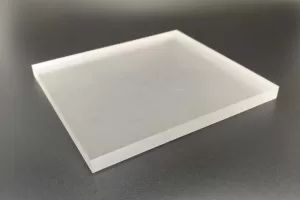
Transparent sheets allow light to pass through with a clear appearance, while translucent sheets diffuse light and can create a more even illuminated effect. For a light box with LEDs placed close to the panel, a translucent sheet can help reduce visible bright spots. If the light source is farther away, a sample should be used to check whether the light distribution is even enough.
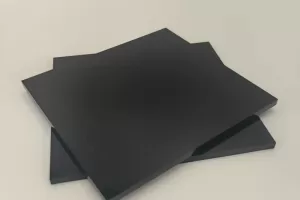
Channel letters and three-dimensional signs also require a sheet that can be cut, engraved, or formed into the required shape. For non-illuminated signs, an opaque sheet can block light transmission and hide internal structures.
Large outdoor panels have different structural requirements. When a panel has limited support, a thicker sheet or additional framing may be needed to control movement and improve structural stability.
Choose the Right Thickness for the Sign Structure
Thickness should be selected according to the size, support method, and construction of the sign rather than appearance alone.
A small panel with several fixing points may not require a thick sheet. A larger panel with fewer supports may need a thicker sheet or a supporting frame. Screw-fixed signs should also have enough material around the fixing points, while adhesive-mounted signs need a suitable bonding area.
For thermoformed signs, a thicker sheet is not automatically better. The forming temperature, minimum bending radius, and final shape should be considered together. For high-impact locations, direct impact data is more useful than simply increasing thickness.
Choose Transparent, Translucent, or Opaque Material
The sheet’s optical properties should match the way the sign will be viewed and illuminated.
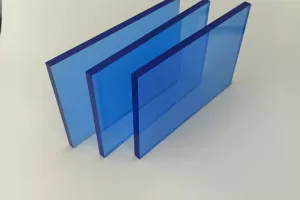
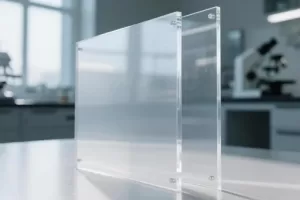
Transparent acrylic is suitable when clear light transmission or a glass-like visual effect is required. Translucent acrylic is more suitable when the light needs to be diffused across the surface. Opaque acrylic is useful when light transmission is not required or when internal components need to be concealed. These differences make it easier to select the right acrylic for signage based on the intended visual effect.
For illuminated signs, the final effect should be checked with the actual light source. A sample can show whether the brightness, diffusion, and surface appearance meet the design requirement before bulk production.
What Performance Matters for Indoor and Outdoor Signage?
Once the basic material type is selected, performance requirements should be matched to the installation environment.
Consider Impact Resistance in High-Traffic Areas
Signs installed near entrances, roads, shopping areas, or other public spaces may be exposed to accidental impact. In these locations, impact resistance should be included in the material specification.
ASTM D256 provides a standard method for measuring plastic impact resistance. When comparing suppliers, buyers should check the test method and test conditions instead of comparing impact values alone.
Check UV and Weathering Performance for Outdoor Use
Outdoor signs are exposed to sunlight, temperature changes, moisture, and other environmental conditions. A supplier’s general statement that a sheet is “UV resistant” does not show how the material performed under a defined test.
ASTM G154 and ISO 4892-3 describe laboratory methods for exposing nonmetallic materials and plastics to fluorescent UV radiation. Buyers should check the test method, exposure conditions, test duration, and color-change result together.
For example, a requirement such as ΔE <3 after 5,000 hours can be written into a material specification, but the exposure time should not be treated as a direct prediction of outdoor service life.
Consider Color Consistency for Multi-Panel Signage
Color consistency becomes more important when one project contains multiple panels or when the same sign design will be produced repeatedly.
For colored or printed signage, buyers can approve a physical sample before production and confirm whether the supplier provides same-batch color-difference data. This helps reduce visible differences between panels installed side by side.
For printed signs, the substrate color should also be confirmed because the base color can affect the final appearance of printed graphics.
What Fabrication Requirements Should You Check?
The sheet should match the production process before the order is placed. This is especially important when the sign includes printing, fine cutting, engraving, or curved structures.
Check Printing Compatibility Before Production
Printing is often used for retail signs, display panels, promotional graphics, and decorative signage. Common processes include UV inkjet printing, screen printing, and solvent-based printing.
Instead of checking only whether a sheet is described as “printable,” buyers should confirm the recommended printing process and ink type. A production sample can then be used to check adhesion, color appearance, surface quality, and edge performance.
Confirm Cutting and Laser Engraving Performance
Complex signs may require cut-outs, small holes, fine lettering, or engraved patterns. The sheet should be tested at the actual thickness used in production because cutting and engraving results can change with thickness and processing conditions.
The sample should be checked for edge quality, small details, engraving depth, and the appearance of heat-affected areas. The feuille acrylique fabrication process should match the material thickness and the final sign design rather than relying only on whether the sheet can technically be cut or engraved.
Consider Thermoforming and Mechanical Assembly
Curved letters, three-dimensional signs, and decorative components may require thermoforming. Before production, confirm the supplier’s recommended forming conditions and test the intended shape with a sample.
Mechanical assembly also affects material selection. Screw holes, fixing points, adhesive areas, and panel supports should be considered during the design stage so the sheet can be processed without creating unnecessary stress around the finished sign.
What Should You Verify Before Ordering Sign Acrylic Sheet?
The key requirements should be written clearly into the quotation and purchase order. When purchasing Feuille acrylique pour enseignes, buyers should specify the sheet size, thickness, optical type, color, processing requirements, packaging, and delivery conditions.
Check the Sample Before Bulk Production
A physical sample allows the buyer to evaluate the actual appearance and processing performance before committing to a larger order.
For illuminated signs, check light transmission and diffusion with the intended light source. For printed signs, check the print result and adhesion. For formed or engraved signs, check the final shape, surface, and details after processing.
Confirm Packaging and Delivery Requirements
Acrylic sheets can be scratched or damaged during handling and transportation if they are not properly protected. Buyers should confirm protective film, edge protection, pallet or crate requirements, and loading conditions before shipment.
For repeat orders, the same packaging and product identification requirements should be documented so that future shipments can be checked more efficiently.
Why Choose JRT Acrylic’s Sign Acrylic Sheet?
JRT Acrylic, operated by Beijing Jingruite, is an acrylic and PVC material supplier with more than 17 years of industry experience and ISO-certified quality management. Its Sign Acrylic Sheet uses modified PMMA and is available in different thicknesses and optical options for signage and visual applications.
Product Specifications at a Glance
Spécifications
JRT Acrylic Sign Acrylic Sheet
Matériau
PMMA modifié
Taille standard
1 220 × 2 440 mm
Épaisseur
1.5–12 mm
Résistance aux chocs
≥15 kJ/m²
Transmission de la lumière
≥90%
UV Weathering
ΔE <3 after 5,000 h
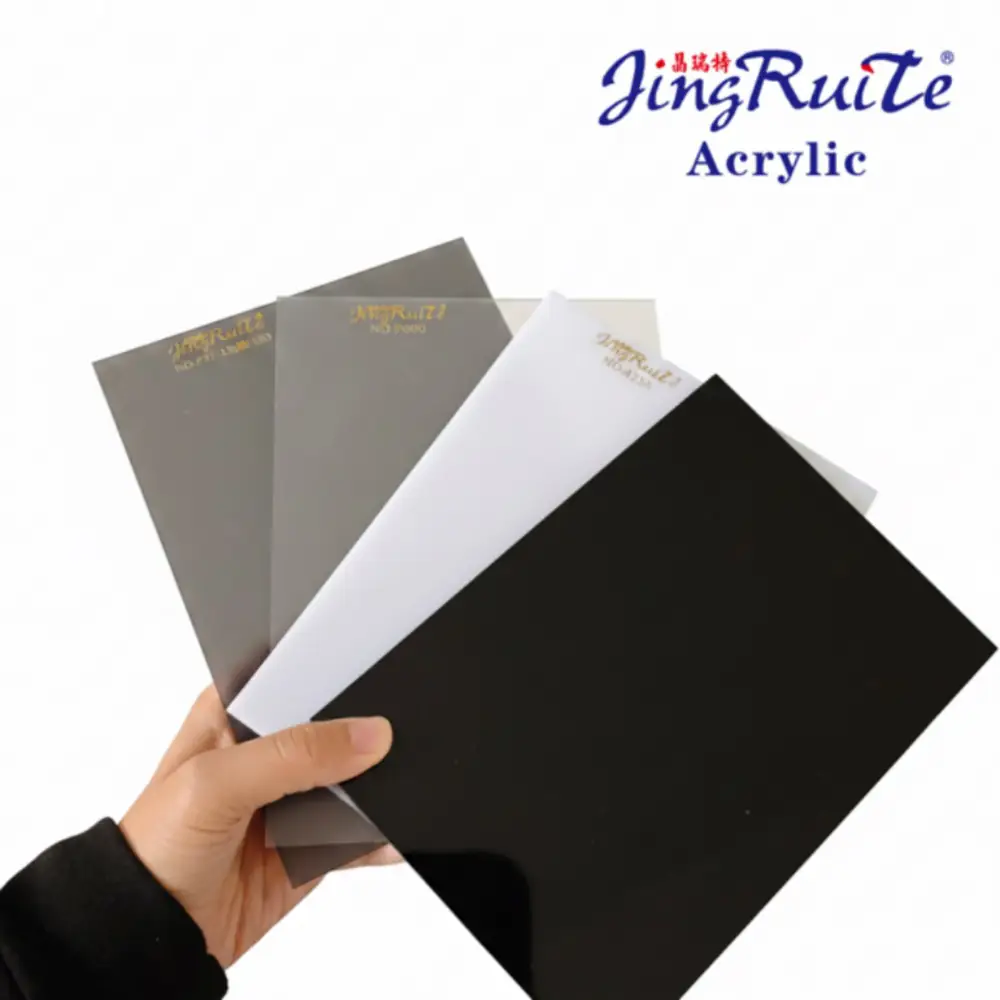
The sheet is available in transparent, translucent, and opaque white options for different signage designs and visual effects.
Modified PMMA for Better Sign Durability
The sheet uses modified PMMA with impact modifiers and UV stabilizers. It provides light transmission of ≥90% for transparent material and an impact strength of ≥15 kJ/m².
This combination can support signs that require both visual clarity and resistance to everyday impact. Transparent sheets can be used for illuminated display panels and public-facing signs where both appearance and material durability matter.
Multiple Optical Options for Different Sign Effects
JRT Acrylic’s Sign Acrylic Sheet is available in transparent, translucent, and opaque white options, giving buyers more flexibility when matching the sheet with illuminated and non-illuminated sign designs.
These options can be used for light boxes, illuminated letters, display panels, retail signs, and non-illuminated lettering.
Supports Printing and Detailed Sign Fabrication
The sheet supports UV-curable ink printing, solvent-based printing, screen printing, laser cutting, mechanical cutting, and CO₂ laser engraving. For CO₂ laser engraving, the recommended power range is 50–100 W with an engraving depth of 0.1–0.5 mm.
For thermoforming, the product data specifies a forming temperature of 150–170°C and a minimum bending radius of 5× the sheet thickness. These capabilities can be used for printed retail panels, engraved lettering, cut-out signs, and curved decorative components.
Color Consistency for Repeat Signage Projects
For repeat signage production, JRT Acrylic provides a same-batch color difference of ΔE <2. This can help control visual differences when multiple panels are produced from the same batch.
It is particularly useful for retail signage, brand display panels, and projects where several signs need to be installed together with a consistent appearance.
Questions fréquemment posées
What thicknesses and sizes are available for JRT Acrylic’s Sign Acrylic Sheet?
The standard sheet size is 1220 × 2440 mm, with thicknesses from 1.5 to 12 mm. The final thickness should be selected according to the sign structure and fabrication requirements.
Is JRT Acrylic’s Sign Acrylic Sheet suitable for outdoor signs?
The product uses modified PMMA with UV stabilizers and has a stated UV weathering result of ΔE <3 after 5,000 hours. For an outdoor project, buyers should still evaluate the actual exposure conditions and approve a sample before bulk production.
What processing methods can be used with JRT Acrylic’s Sign Acrylic Sheet?
The sheet supports UV-curable ink printing, solvent-based printing, screen printing, laser cutting, mechanical cutting, CO₂ laser engraving, and thermoforming. The specified CO₂ laser engraving power is 50–100 W, while the thermoforming temperature is 150–170°C with a minimum bending radius of 5× the sheet thickness.
What is the difference between transparent and translucent acrylic for signs?
Transparent acrylic allows clearer light transmission, while translucent acrylic diffuses light across the sheet. Transparent material can be used when a clear visual effect is required, while translucent material is often more suitable for illuminated signs that need a softer and more even appearance.
How long can acrylic sheets be used outdoors?
There is no single outdoor service life that applies to every acrylic sheet or installation. Actual performance depends on UV exposure, climate, temperature changes, moisture, installation conditions, and other environmental factors. UV test results can be used to compare material performance under defined laboratory conditions, but they should not be converted directly into a fixed number of outdoor years.
Conclusion
JRT Acrylic’s Sign Acrylic Sheet combines modified PMMA with impact modifiers and UV stabilizers, providing a practical material option for different signage applications. The 1.5–12 mm thickness range and transparent, translucent, and opaque white options allow manufacturers to match the sheet with different sign structures and visual effects.
Beyond material performance, the sheet offers flexibility during fabrication. It supports UV-curable ink printing, solvent-based printing, screen printing, laser cutting, mechanical cutting, CO₂ laser engraving, and thermoforming. This makes it suitable for printed panels, illuminated signs, engraved lettering, cut-out designs, and curved decorative components. For repeat signage projects, the same-batch color difference of ΔE <2 also helps maintain a consistent appearance across multiple panels.
If you are looking for Feuille acrylique pour signalisation, contact JRT Acrylic to discuss your application requirements, suitable product options, and quotation.
Introduction Les plaques acryliques, appréciées pour leur clarté optique (transmission de la lumière 92%) et leur polyvalence, révolutionnent les industries, de l'aérospatiale aux soins de santé. Avec un marché mondial prévu...
Introduction Les plaques acryliques, connues pour leur transparence exceptionnelle (transmission de la lumière 92%) et leur durabilité, sont devenues indispensables dans des secteurs allant de l'architecture à la santé. Avec une...
Introduction Les feuilles de polychlorure de vinyle (PVC) sont un élément essentiel dans les secteurs de la construction, de la santé et de l'électronique en raison de leur durabilité, de leur résistance aux produits chimiques et de leur rapport coût-efficacité. Le marché mondial du PVC...
Dans les applications où la sécurité, la beauté et la durabilité sont essentielles, un matériau se distingue : la feuille acrylique ignifugée. Pour les projets dans les bâtiments, les transports publics ou les...