







+86 180 1040 9086
When purchasing acrylic round tube for industrial, medical, optical or construction projects, it is the key to determine a product that balances accuracy, durability and specific application performance.This guide breaks down everything you need to know about selecting a top-tier acrylic tubes, from its core definition and manufacturing standards to technical advantages, industry applications, and common buyer questions—with clear product naming, balanced keyword placement, and practical expertise to guide your purchasing decision.

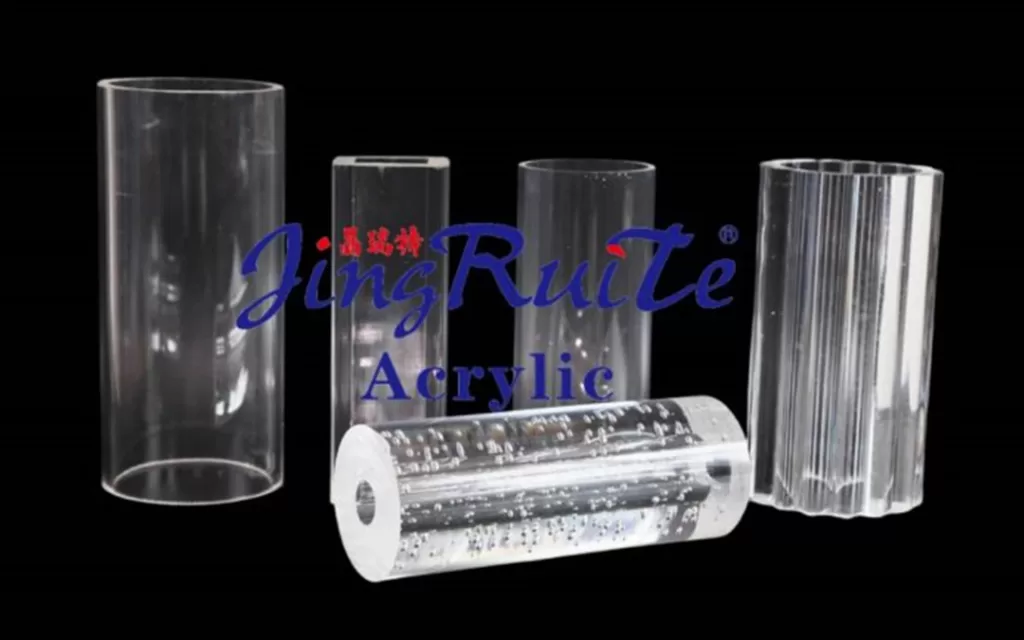
An acrylic tubes are hollow cylindrical parts made of optical grade polymethylmethacrylate (PMMA), which are produced through two leading manufacturing processes: precision extrusion and centrifugal casting. Both of these methods are controlled to eliminate internal bubbles, structural stress and surface defects, which are the basis for manufacturing product with impaired optical transparency and structural strength, far higher than low-grade plastic tubes made with non-optical or recycled resins.
The manufacture of the acrylic tubes follows the strict global dimensional tolerance control of 0.1 mm, which can ensure the consistency of each batch and size. This precision means that the components can be assembled seamlessly, eliminating expensive modifications or matching problems in the manufacturing process. Different from ordinary plastic tubes, the design of acrylic tubes is adaptable: it supports CNC precision machining, thermoforming, ultrasonic welding and professional coating treatments, and can easily customize unique project requirements-from customized lengths and diameters to professional surface treatment.
Top-grade acrylic tubes stand out from other transparent materials (including glass, polycarbonate and low-grade acrylic 신소재), which is attributed to a series of tested and real technical advantages, which directly improve the performance and life.
1. Ultra-high optical clarity: Visible light transmittance ≥ 92%, almost comparable to high-quality glass, no haze and no optical distortion (< 0.1%).
2. Excellent impact resistance: The impact resistance is 17 times higher than that of glass, and it will not break and shatter even if it is accidentally hit. Different from glass, glass will break into sharp and dangerous fragments, and acrylic tubes will break cleanly without breaking, thus reducing the responsibility and maintenance costs of outdoor, industrial and medical applications.
3. Ultra-Smooth Inner Walls: Polished to a smoothness of Ra 0.2μm, the inner walls eliminate fluid turbulence (for fluid conveyance) and light scattering (for optical applications). This smoothness is very important for laboratory fluid systems, laser catheters and chemical tubelines that require precise flow or light conduction.
4. Long-term UV Resistance and weatherability: Acrylic tubes are made of UV-stable resin, which can keep its transparency and color for years of outdoor exposure. After five years in direct sunlight, the yellowing index (δE) is lower than Ordinary acrylic 신소재 turns yellow and becomes brittle in a few months, but this anti-ultraviolet performance makes the acrylic tubes ideal choice for outdoor lighting, architectural decoration and aquarium projects in sunny climates.
5. FDA Compliance & Chemical Inertness: An FDA-compliant version of the acrylic tubes is available, meeting strict food and medical device safety standards (21 CFR 177.1010). This material is chemically inert and can resist most inorganic acids, bases and alcohols, so it can be safely used in body fluids, food and sensitive laboratory chemicals without the risk of leaching or pollution.
6.Exceptional Structural Strength: Features a flexural strength of ≥ 90 MPa and compressive strength of ≥ 80 MPa, with an elongation at break of > 3%. This structural stability means that acrylic tubes can withstand mechanical stress, vibration and moderate pressure, which is very suitable for industrial automation, construction and large-scale aquarium projects.
It is very important for buyers to know the available sizes of an acrylic tubes (including 아크릴 rod sizes used to match solid components) and customization options for choosing the right product for their project. Standard acrylic tubes have a variety of external diameters, wall thicknesses and lengths to choose from, all of which meet the tolerance control standard of 0.1 mm. For those who are looking for acrylic rod to manufacture complete structures or fluid systems, the size of 아크릴 round tube should be matched with the size of solid rods to achieve seamless compatibility and ensure that each component can work together as designed.
Below is the official specification table for standard acrylic tube product dimensions, with recommended wall thickness, standard length, and primary application field—this is the go-to reference for selecting the right size for your project.
| 일반 외경(mm) | 권장 벽 두께(mm) | 표준 길이(mm) | Primary Application Field |
| 3-10 | 1-2 | 1000-2000 | Precision instruments, laser guide tubes, dental tools |
| 12-50 | 2-5 | 2000-3000 | LED lighting, fiber optic systems, small laboratory conduits |
| 60-200 | 5-10 | 3000 | Architectural decoration, transparent handrails, industrial sensor protection |
| 250-1000 | 10-20 | 2000 | Large aquarium engineering, chemical corrosion-resistant tubelines, industrial automation |
In addition to these standard sizes, the acrylic tube product are fully customized for unique project requirements. Manufacturers offer custom outer diameters, wall thicknesses, and lengths—all with the same strict tolerance control—along with in-house CNC machining services for the acrylic tube product and matching solid rods. This customization includes threading, drilling, cutting to exact lengths, and applying specialized coatings (anti-scratch, anti-reflective, UV-protective) to tailor the product to specific industry or project demands. For buyers with non-standard requirements, this customization ability eliminates the need to find multiple manufacturers, thus saving time and simplifying the supply chain.
When choosing the size of acrylic rod or an acrylic round tube for your project, it is very important to match the size with the applied load, fluid/light transmission requirements and installation space. For example, the sample pool of precision spectrometer needs acrylic tube product with small diameter to realize barrier-free light transmission, while the circulating tube of large aquarium needs product with thick wall and large diameter to withstand water pressure and impact.
The acrylic tube product is a very universal solution, which is widely used in high-end industries that require transparency, accuracy, durability and customization. Every industry uses the unique technical advantages of this product to select the size (including the 아크릴 막대 sizes of paired components) to meet the specific application requirements. acrylic tubes are the main product of six core professional industries, and the formula and size are tailored for each use case.
For medical and laboratory use, the FDA-compliant acrylic tube product is the top choice, offering chemical inertness, precision, and safety. It’s used for infusion set components, outer tubes of endoscopes, dental instruments, laboratory fluid conduits and chemical corrosion resistant tubelines. The smooth inner wall of the product ensures accurate fluid control, and its impact resistance reduces the risk of breakage in busy laboratory or clinical environment.
Large-scale aquarium projects rely on the acrylic tube product for its transparency, impact resistance, and water resistance—far superior to glass for large tanks. Large-diameter, thick-walled structures are used for fish tank circulating tubes, aquatic plant planting tubes, and structural parts of public and commercial aquariums. The product’s low water absorption (< 0.3%) can prevent swelling or warping, and ensure long-term performance in aquatic environment.
Architects and designers use the acrylic round tube in modern transparent building elements which combine form and function. It’s used for transparent handrails, curtain wall decorative tubes, art installations and modern furniture parts-providing transparency of glass with higher strength and greater design flexibility. The UV-resistant formulation ensures the product maintains its clarity for years in outdoor or sunlit indoor spaces, and it can be thermoformed into custom curved shapes for unique design elements.
In the advertising display industry, acrylic tube product are used for letter frames with lights, support tubes of display racks and promotional signs. Its high light transmittance makes the backlight logo bright and clear, and its adaptability allows customized molding and coating to meet the brand aesthetics. The scratch-resistant PE film of this product also ensures that it reaches the installation site in perfect state and can be used for indoor and outdoor advertising applications at any time.
In each of these industries, the acrylic round tube provide reliable performance and have customization flexibility to meet the most specific project requirements, making it a multifunctional solution for professional buyers.
A : Optical grade PMMA structure, strict dimensional tolerance control (0.1 mm), specific application formula (anti-ultraviolet, FDA standard) and PE protective film are given priority. For paired systems, ensure that the 아크릴 막대 sizes matches the size of tubes to achieve seamless compatibility. If you need non-standard sizes or finishes, please check whether the manufacturer provides customization.
A : Buy directly from the professional manufacturers of optical grade PMMA products, because it eliminates middlemen and ensures quality control. Look for manufacturers with international shipping capabilities, in-house customization services, and third-party testing for technical attributes. For acrylic round tube and matching rods, confirm that the supplier can provide all components with consistent dimensions.
A : The solid PMMA rods has the same outer diameters (3 mm to 1000 mm) as the acrylic tube product, and has matching wall thickness and length options to achieve complete system compatibility. Standard acrylic rod sizes is consistent with the tube size outlined in the specification table, and can be customized according to the unique project requirements.
A: Yes, the advanced acrylic tubes meet global standards, including ISO 9001 (quality management), FDA 21 CFR 177.1010 (food/medical contact) and ASTM manufacturing standards. The European market also provides options that meet CE and RoHS standards, and all products are accompanied by Material Safety Data Sheet (MSDS) and quality control report.
A : The standard acrylic tube sizes is usually in stock, and the delivery time for small orders is 1-3 working days, and that for large orders is 3-7 working days. The lead time of custom size, machining or coating is 7-20 working days (depending on complexity), and urgent orders can speed up production.
Even the highest quality acrylic tube product will not work if they are not properly processed, installed or maintained. Following these best practices ensures the product preserves its technical advantages and lifespan for years—typically 10+years for indoor applications and 5+years for outdoor UV-exposed use.
1. Cutting with precision tools: Use diamond grinding wheel or laser cutting machine for clean and burr-free cutting-avoid using a standard metal saws, because the standard metal saws will produce rough edges, which will lead to light scattering or fluid turbulence. Polish cut edges with fine-grit sandpaper for optical applications.
2. Choose the Right Connection Method: Use PMMA-specific adhesive for seamless, transparent bonds (ideal for lighting/optics), flange connections for high-pressure fluid applications, or threaded connections for small precision components. Avoid using common adhesives or sealants that can reduce the quality of material.
3. Be careful in installation: PE protective film must be completely installed before it can be removed to prevent scratching. Avoid over-tightening fasteners, which will lead to deformation and stress cracks-use elastic brackets to absorb vibration and thermal expansion, especially for outdoor or industrial installations.
4. Maintain with Non-Abrasive Cleaners: Clean the acrylic tube product with a soft cloth and mild soap and water—avoid abrasive cleaners (steel wool, ammonia-based glass cleaner) that scratch the surface and reduce light transmittance. For stubborn grime, use a PMMA-specific cleaning solution.
By following these steps, you can maximize the performance and service life of acrylic tube&rod and ensure that it provides reliable results for the life cycle of the project.