Guia de processamento de chapas de acrílico espelhado: técnicas de corte, perfuração e gravação a laser
Introdução
O transporte e a instalação de painéis de espelho de grandes dimensões podem constituir um desafio para designers de interiores, empreiteiros e fabricantes de expositores. Os espelhos de vidro tradicionais são pesados, frágeis e, muitas vezes, difíceis de fabricar em formas complexas. Um espelho danificado durante o manuseamento ou a instalação pode dar origem a problemas de segurança, despesas inesperadas com a substituição e atrasos no projeto.
A chapa acrílica espelhada oferece uma alternativa mais versátil, combinando um acabamento espelhado com as propriedades de leveza e resistência ao impacto do acrílico. Fabricado com um substrato de PMMA de qualidade ótica e um revestimento altamente refletor aplicado através de metalização a vácuo, proporciona um reflexo espelhado de alta qualidade, ao mesmo tempo que facilita o transporte e a instalação em comparação com os espelhos de vidro tradicionais.
Para além das suas vantagens em termos de leveza e resistência à quebra, as placas de acrílico espelhado oferecem maior flexibilidade para projetos personalizados. Podem ser cortadas, moldadas e transformadas em diferentes formas, tornando-as adequadas para painéis decorativos, expositores de retalho, sinalética e aplicações criativas.
Este artigo explica os principais métodos de processamento de placas de acrílico espelhado e como as técnicas de fabrico adequadas podem ajudar a obter resultados personalizados para diferentes projetos.
O que torna as placas de acrílico espelhado adequadas para a fabricação?
O substrato termoplástico de PMMA melhora a processabilidade
As vantagens de processamento das placas de acrílico espelhado devem-se às propriedades do seu substrato acrílico. Ao contrário do vidro, que é rígido e frágil, o PMMA (polimetilmetacrilato) é um material termoplástico. Quando aquecido em condições de processamento adequadas, torna-se maleável e pode ser remodelado. Após o arrefecimento, mantém a sua nova forma, conservando simultaneamente a sua resistência e estabilidade.
Este comportamento termoplástico torna possíveis processos como a termoformação. Permite também que as placas de acrílico espelhadas sejam cortadas e perfuradas com menos limitações de processamento, em comparação com os espelhos de vidro tradicionais.
A camada refletora metalizada a vácuo preserva o acabamento espelhado
A superfície espelhada das placas de espelho acrílico é obtida através de um processo de metalização a vácuo, no qual é aplicado um revestimento refletor ao substrato acrílico. Esta estrutura em camadas ajuda a preservar o acabamento espelhado durante o fabrico, desde que sejam utilizados métodos de processamento adequados.
Para os fabricantes, isto significa que as placas de acrílico espelhado podem ser personalizadas em diferentes formas e tamanhos, mantendo ao mesmo tempo o aspeto refletor pretendido. O manuseamento adequado durante o corte e a perfuração ajuda a proteger a superfície refletora contra danos ao longo de todo o processo de fabrico.
A película protetora de PE protege a superfície durante o fabrico
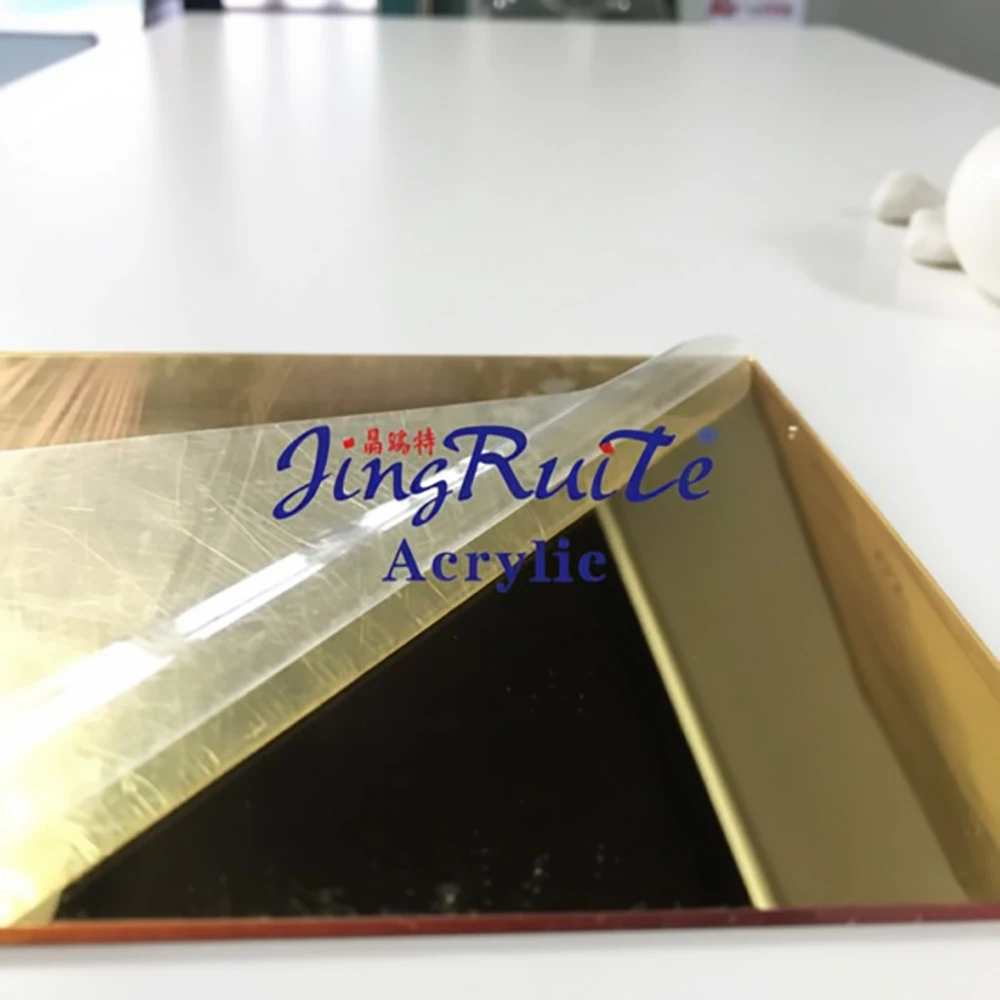
Outra vantagem prática das placas de acrílico espelhadas é a película protetora de PE aplicada à superfície espelhada. Durante o transporte, o manuseamento e o processamento, esta camada protetora ajuda a proteger a superfície contra riscos, poeira e pequenas abrasões.
Manter a película protetora no lugar durante todo o processo de produção ajuda a preservar a qualidade da superfície até à instalação final. A película pode então ser removida para revelar um acabamento espelhado, limpo e liso.
Por que é que estas características são importantes na fabricação à medida
Em conjunto, estas três características — um substrato termoplástico de PMMA, uma camada refletora metalizada a vácuo e uma película protetora de superfície — conferem às placas de acrílico espelhadas uma maior flexibilidade de processamento do que os espelhos de vidro tradicionais.
Estas vantagens tornam o material adequado para aplicações personalizadas, tais como painéis decorativos, expositores para lojas, sinalética e instalações criativas. As secções seguintes explicam os principais métodos de fabrico e as considerações práticas para se obterem resultados de qualidade.
Como cortar placas de acrílico espelhado para projetos personalizados
O corte é um dos processos mais comuns em folha de acrílico fabricação, uma vez que muitos projetos decorativos e comerciais requerem painéis espelhados com formas e dimensões específicas. Em comparação com os espelhos de vidro tradicionais, as placas espelhadas de acrílico oferecem maior flexibilidade de processamento, permitindo aos fabricantes criar painéis personalizados, elementos de sinalética e peças decorativas para diferentes aplicações.
As placas de acrílico espelhado com dimensões personalizadas são frequentemente a opção preferida quando as dimensões padrão das placas não se adequam a um projeto. Ao ajustar o tamanho e a forma antes da instalação, os designers e os fabricantes podem reduzir o desperdício de material e obter um ajuste mais preciso para diversas aplicações.
O método de corte adequado depende de fatores como a complexidade do projeto, o volume de produção, os requisitos de qualidade das arestas e as especificações do projeto. Os métodos de corte mais comuns para placas de acrílico espelhado incluem o corte a laser, o corte CNC e o corte manual.
O corte a laser permite criar formas precisas para designs detalhados
O corte a laser é frequentemente utilizado em placas de acrílico espelhado quando os projetos envolvem padrões complexos, detalhes decorativos ou formas personalizadas. Como o corte a laser é um processo sem contacto, permite aos fabricantes produzir desenhos intricados, minimizando simultaneamente a pressão física exercida sobre o material. Isto torna-o adequado para aplicações como sinalética espelhada, elementos de exposição e decorações artísticas.
Ao cortar a laser chapas de acrílico espelhado, é importante ter em conta a proteção da superfície refletora. Os parâmetros de processamento devem ser ajustados de acordo com a espessura da chapa, a capacidade do equipamento e os requisitos do projeto, de modo a ajudar a manter a qualidade da superfície.
O corte a laser é, em geral, adequado para projetos que exigem:
Padrões complexos e contornos detalhados
Desenhos personalizados repetidos com formas consistentes
Processamento eficiente para aplicações decorativas
Para projetos que exijam um processamento mecânico adicional ou requisitos de fabrico diferentes, o corte por CNC pode constituir uma solução mais adequada.
O corte por CNC proporciona resultados consistentes para formas personalizadas
O corte CNC utiliza ferramentas controladas por computador para criar formas precisas com base em desenhos digitais. É frequentemente escolhido para projetos que exigem dimensões consistentes, produção em série ou painéis espelhados personalizados.
Em comparação com o corte a laser, o corte CNC oferece maior flexibilidade para determinados requisitos de fabrico, especialmente quando os projetos envolvem etapas adicionais de processamento mecânico. Com a seleção adequada das ferramentas e das condições de processamento, o corte CNC pode ajudar a obter arestas limpas, mantendo simultaneamente a qualidade da superfície espelhada.
O corte por CNC é geralmente adequado para:
Painéis de espelho personalizados de maiores dimensões
Peças de produção em série
Projetos que exigem dimensões precisas e resultados consistentes
Durante o corte por CNC, é importante controlar cuidadosamente as condições de corte para reduzir os danos na superfície e preservar o aspeto da camada refletora.
O corte manual é adequado para formas simples e projetos de pequena dimensão
O corte manual pode ser utilizado em projetos de pequena escala ou em formas simples, nos casos em que não são necessários desenhos complexos nem produção em grande volume.
Em comparação com os métodos de corte automatizados, o processamento manual exige um controlo cuidadoso das medidas, da técnica de corte e do acabamento das arestas. Um manuseamento inadequado pode resultar em arestas irregulares ou marcas visíveis na superfície.
O corte manual pode ser adequado para:
Pequenos projetos e protótipos
Cortes retos simples
Ajustes no local ou pequenas modificações
Para projetos de maior dimensão que exigem precisão constante e resultados repetíveis, os métodos de corte automatizados são, normalmente, a melhor opção.
Escolher o método de corte adequado para placas de acrílico espelhado
A escolha do método de corte adequado depende dos requisitos de conceção, das necessidades de produção e dos resultados de processamento pretendidos.
Requer um ajuste adequado dos parâmetros para proteger a superfície refletora
Corte CNC
Formas personalizadas, produção em série, painéis de espelho de maiores dimensões
Oferece maior flexibilidade para os requisitos de fabrico mecânico
Corte manual
Pequenos projetos e ajustes simples
Requer um manuseamento cuidadoso para manter a qualidade das arestas
Ao escolherem o método de corte adequado, os fabricantes e designers podem obter dimensões precisas, mantendo simultaneamente a aparência e a qualidade refletora das placas de acrílico espelhado.
Técnicas de perfuração de placas de acrílico espelhado
A perfuração é frequentemente necessária quando é preciso instalar placas de acrílico espelhado com parafusos, suportes, espaçadores ou outros acessórios de montagem. A realização de orifícios limpos e precisos ajuda a garantir uma instalação segura, mantendo simultaneamente o aspeto da superfície espelhada.
Ao contrário dos espelhos de vidro, as placas de espelho acrílico são menos propensas a rachar durante a usinagem. No entanto, é importante utilizar técnicas de perfuração adequadas, uma vez que o calor, a pressão ou a vibração excessivos podem afetar a qualidade dos orifícios e danificar a superfície refletora.
As práticas a seguir podem ajudar a obter resultados de perfuração mais limpos e a melhorar a qualidade geral da fabricação.
Seleção da broca adequada para a perfuração de furos limpos
A escolha das ferramentas adequadas é um primeiro passo importante na perfuração de placas de acrílico espelhado. As brocas concebidas para materiais plásticos ou acrílicos são geralmente as mais recomendadas, uma vez que ajudam a reduzir o atrito e a minimizar a tensão exercida sobre a placa.
As arestas de corte afiadas são especialmente importantes durante a perfuração. Ferramentas gastas ou inadequadas podem gerar calor adicional, criar arestas irregulares nos orifícios e aumentar a probabilidade de surgirem marcas de tensão em torno da área perfurada.
Para obter melhores resultados de perfuração:
Utilize brocas afiadas adequadas para materiais acrílicos ou plásticos
Verifique se a broca está devidamente alinhada antes de começar
Substitua as ferramentas gastas para manter um bom desempenho de corte
Condições adequadas de perfuração para o controlo do calor
A gestão do calor é um aspeto importante a ter em conta na perfuração de materiais acrílicos. O atrito excessivo entre a broca e a chapa pode amolecer o material, afetar a qualidade das arestas ou criar superfícies irregulares à volta do orifício.
Manter uma velocidade de perfuração constante e permitir que os cavacos sejam removidos durante o processo pode ajudar a reduzir a acumulação de calor. Deve evitar-se a aplicação de força excessiva, uma vez que tal pode aumentar a tensão na chapa e afetar a qualidade final do orifício.
Para melhorar o desempenho da perfuração:
Mantenha um movimento constante de perfuração
Evite empurrar a broca através do material com força excessiva
Deixe espaço suficiente para que as limalhas possam sair, especialmente ao fazer furos mais profundos
Apoio adequado da chapa para evitar danos nas bordas
Um apoio adequado por baixo do chapa acrílica espelhada ajuda a manter a estabilidade durante a perfuração. Sem um apoio adequado, a vibração ou o movimento podem afetar a precisão do furo e aumentar o risco de lascas no lado de saída do furo.
A utilização de uma superfície de apoio estável pode ajudar a manter a chapa fixa enquanto a broca atravessa o material. Isto é particularmente útil ao perfurar perto das bordas da chapa ou ao criar orifícios de montagem maiores.
Um bom apoio da folha ajuda a:
Reduzir a vibração durante a perfuração
Melhorar a uniformidade das bordas dos furos
Minimizar o risco de fissuras ou lascas à volta da área perfurada
Preservação da película protetora durante a perfuração
As placas de acrílico espelhadas são normalmente fornecidas com uma película protetora de PE que ajuda a proteger a superfície refletora durante o transporte, o manuseamento e o processamento.
Manter esta camada protetora no lugar durante a perfuração pode reduzir o risco de riscos, contaminação por poeira e pequenas marcas na superfície. Assim que a fabricação e a instalação estiverem concluídas, a película pode ser removida para revelar a superfície espelhada acabada.
Problemas comuns na perfuração e métodos de prevenção
Podem ocorrer vários problemas durante chapa acrílica espelhada perfuração, caso o processo não seja devidamente controlado:
Problema comum
Possível causa
Método de prevenção
Bordas irregulares do orifício
Ferramentas cegas ou perfuração instável
Utilize ferramentas afiadas e mantenha um processo de perfuração constante
Fissuras ou lascas à volta do orifício
Pressão excessiva, vibração ou apoio insuficiente
Aplique uma pressão controlada e apoie a folha de forma adequada
Problemas de superfície relacionados com o calor
Atrito excessivo durante a perfuração
Manter condições de perfuração adequadas e permitir a remoção correta das limalhas
Arranhões superficiais
Manuseamento inadequado durante o fabrico
Mantenha a película protetora de PE no lugar até à instalação final
Ao selecionar as ferramentas adequadas, manter as condições de perfuração corretas e proteger a superfície do espelho durante o processamento, os fabricantes e instaladores podem criar orifícios de montagem limpos, preservando simultaneamente a aparência e a qualidade das placas acrílicas espelhadas.
Técnicas de gravação a laser para placas de acrílico espelhado
A gravação a laser é frequentemente utilizada para criar padrões, texto, logótipos e detalhes decorativos em placas de acrílico espelhado. Ao contrário do corte, a gravação remove parte da camada superficial para criar desenhos específicos, preservando simultaneamente o aspeto geral da superfície espelhada.
Quando gravação em folha de acrílicoAssim, o método de processamento deve ser selecionado com base no efeito de design pretendido, na espessura da chapa e nos requisitos do projeto. Diferentes técnicas de gravação podem produzir diferentes níveis de contraste, textura e profundidade visual.
Controlo da profundidade de gravação para diferentes efeitos de design
A profundidade da gravação tem um impacto direto no aspeto do desenho final. Uma gravação superficial pode criar texturas subtis ou padrões foscos, enquanto uma gravação mais profunda pode produzir um contraste mais acentuado, dependendo da direção da gravação e do aspeto pretendido.
No caso das placas de acrílico espelhado, deve evitar-se uma profundidade de gravação excessiva, uma vez que tal pode reduzir o efeito espelhado pretendido ou afetar a camada refletora em determinadas aplicações.
Para obter melhores resultados:
Selecione a profundidade da gravação de acordo com o resultado desejado para o desenho
Teste o efeito da gravação numa peça de amostra antes de iniciar a produção em série
Evite qualquer tratamento desnecessário que possa afetar as áreas em que o acabamento espelhado deve permanecer intacto
Seleção da direção de gravação para diferentes efeitos de espelho
As placas de acrílico espelhado podem ser gravadas na face frontal ou no verso, consoante o aspeto pretendido.
A gravação na face frontal altera diretamente a superfície visível e pode criar áreas texturizadas ou foscas. Este método é adequado quando se pretende que o próprio padrão gravado faça parte do design visível.
A gravação no verso cria um efeito visual distinto, ao tratar a parte de trás da folha, mantendo intacta a superfície refletora da frente. O desenho gravado surge por trás da superfície espelhada, criando um efeito de camadas e protegendo simultaneamente o acabamento exterior liso.
A melhor direção de gravação depende do facto de o projeto dar prioridade à textura da superfície, à profundidade visual ou à preservação do acabamento espelhado.
Preservação da película protetora durante a gravação a laser
As placas de acrílico espelhado são normalmente fornecidas com uma película protetora de PE para ajudar a evitar riscos e contaminação durante o transporte e a transformação.
Manter a película protetora no lugar durante a gravação a laser pode ajudar a proteger as áreas não tratadas de pequenos riscos, poeira e resíduos do processo. Após a conclusão da gravação e da instalação final, a película pode ser removida para revelar a superfície espelhada acabada.
Controlo das condições de processamento para resultados de gravação consistentes
A obtenção de resultados de gravação consistentes depende da configuração adequada do equipamento e do controlo do processo. Configurações incorretas ou condições de processamento instáveis podem afetar o aspeto e a qualidade da área gravada.
Entre os problemas mais comuns relacionados com a gravação, destacam-se:
Problema comum
Possível causa
Método de prevenção
Resultados de gravação irregulares
Condições de processamento inconsistentes
Teste e ajuste as configurações antes da produção
Efeito de espelho reduzido
Profundidade de gravação excessiva ou método de processamento inadequado
Selecione o método de gravação adequado, tendo em conta o aspeto pretendido
Contaminação superficial
Pó ou resíduos de processamento durante a fabricação
Mantenha a película protetora no lugar e limpe a superfície após o processamento
Qualidade de design inconsistente
Configuração incorreta do equipamento
Assegurar o funcionamento estável do equipamento antes do início da produção
Ao selecionar métodos de gravação adequados e controlar as condições de processamento, os fabricantes podem criar designs personalizados em placas de acrílico espelhado, preservando ao mesmo tempo o acabamento espelhado pretendido.
Como as chapas acrílicas espelhadas da JRT simplificam os projetos de fabricação à medida
Depois de selecionar os métodos de fabrico adequados, escolher um fornecedor fiável espelho de acrílico folha fornecedor constitui um passo importante para alcançar resultados consistentes no projeto. A qualidade do material, a consistência dimensional e as opções de personalização disponíveis podem influenciar diretamente a eficiência do processamento, a precisão da instalação e o aspeto final.
JRT Folha de espelho acrílico foi concebido para aplicações que exigem tanto desempenho refletor como flexibilidade de fabrico. Fabricado em PMMA de qualidade ótica com um revestimento refletor metalizado a vácuo, proporciona um acabamento espelhado transparente, mantendo simultaneamente as características de leveza e resistência ao impacto dos materiais acrílicos.
Em comparação com os espelhos de vidro tradicionais, as placas acrílicas para espelhos da JRT permitem simplificar os processos de transporte, manuseamento e fabrico. A sua estrutura leve reduz as dificuldades de instalação, enquanto as suas propriedades de resistência ao impacto e à quebra ajudam a minimizar o risco de danos durante o processamento e a aplicação.
As principais vantagens incluem:
Design leve: Aproximadamente 50% do peso dos espelhos de vidro tradicionais, o que facilita o transporte e a instalação em projetos personalizados
Desempenho resistente ao impacto: Resistência ao impacto até 17 vezes superior à do vidro, o que contribui para melhorar a durabilidade durante o manuseamento e a utilização
Aspecto transparente e refletor: Proporciona uma transmitância de luz ≥92% e uma refletância ≥90%, para efeitos espelhados brilhantes e consistentes
Capacidade de fabrico flexível: Adequado para corte, perfuração, gravação a laser e outros processos de fabrico personalizados
Proteção da superfície durante o processamento: A película protetora de PE ajuda a reduzir riscos, poeira e contaminação da superfície durante o transporte e a fabricação
As placas de espelho acrílico JRT estão disponíveis em espessuras que variam entre 1,8 mm e 10 mm, com dimensões padrão que incluem 1220 × 2440 mm e 1500 × 3000 mm. É possível fornecer dimensões, cores e opções de fabrico personalizadas, de acordo com os diferentes requisitos de cada projeto.
Quer sejam utilizadas em painéis decorativos, expositores de retalho, sinalética ou aplicações criativas com espelhos, a JRT fornece placas de acrílico espelhado com um desempenho consistente do material e opções flexíveis de personalização, para apoiar os projetos desde o desenvolvimento do design até à produção final.
Perguntas frequentes sobre placas de acrílico espelhado
P1: É possível cortar as placas de acrílico espelhado em tamanhos e formas personalizados?
R: Sim. As placas de acrílico espelhado podem ser trabalhadas através de métodos de corte como o corte a laser, o corte CNC e o corte manual. O método adequado depende da complexidade do projeto, dos requisitos de produção e da qualidade desejada das arestas.
P2: A placa de acrílico espelhada é mais fácil de trabalhar do que um espelho de vidro?
R: Sim. Em comparação com os espelhos de vidro, as placas de acrílico espelhadas são mais leves, menos frágeis e mais fáceis de trabalhar. Podem ser cortadas, perfuradas e gravadas com técnicas de processamento adequadas para aplicações personalizadas.
P3: É possível gravar a laser placas de acrílico espelhado?
R: Sim. A gravação a laser pode ser utilizada para criar padrões, texto, logótipos e desenhos decorativos em placas de acrílico espelhado. As definições de processamento adequadas ajudam a obter o efeito visual desejado, mantendo simultaneamente a qualidade da superfície espelhada.
Conclusão
Selecionar o correto chapa acrílica espelhada exige que se tenham em conta tanto o desempenho do material como os requisitos de fabrico. Compreender as propriedades do material, os métodos de processamento e as opções de personalização ajuda os designers e os fabricantes a obter resultados mais precisos e fiáveis em projetos personalizados.
Através de técnicas adequadas de corte, perfuração e gravação a laser, as placas de acrílico espelhado podem ser transformadas em componentes personalizados para aplicações decorativas, comerciais e criativas.
A consistência do material e a fiabilidade do fornecedor são também fatores importantes para se obterem resultados de fabrico estáveis. Ao optar por chapas de acrílico espelhado com especificações adequadas e opções de personalização, as empresas podem melhorar a eficiência do processamento e concretizar os seus conceitos de design em aplicações práticas.
Contacte a JRT para discutir as especificações adequadas das placas de acrílico espelhado e as opções de personalização para o seu projeto.
Introdução As chapas acrílicas, apreciadas pela sua clareza ótica (transmissão de luz 92%) e versatilidade, estão a revolucionar as indústrias, desde a aeroespacial à dos cuidados de saúde. Com um mercado global esperado...
Introdução As folhas de cloreto de polivinilo (PVC) são um elemento básico na construção, nos cuidados de saúde e na eletrónica devido à sua durabilidade, resistência química e eficácia em termos de custos. Com o mercado global de PVC...
Em aplicações onde a segurança, a beleza e a durabilidade são essenciais, há um material que se destaca: a chapa acrílica retardadora de chama. Para projectos em edifícios, transportes públicos ou edifícios de...
Quem já se informou sobre o custo da instalação de um espelho que ocupa toda a parede sabe quais são as desvantagens associadas ao vidro: o peso, a equipa de instalação, a responsabilidade civil caso...