Transporting and installing large mirror panels can be challenging for interior designers, contractors, and display manufacturers. Traditional glass mirrors are heavy, fragile, and often difficult to fabricate into complex shapes. A damaged mirror during handling or installation can result in safety concerns, unexpected replacement expenses, and project delays.
A mirror acrylic sheet provides a more versatile alternative by combining a mirror finish with the lightweight and impact-resistant properties of acrylic. Manufactured with an optical-grade PMMA substrate and a high-reflective coating applied through vacuum metallization, it delivers high-quality mirror reflection while making transportation and installation easier compared with traditional glass mirrors.
Beyond its lightweight and shatter-resistant advantages, mirror acrylic sheets offer greater flexibility for customized projects. They can be cut, shaped, and fabricated into different forms, making them suitable for decorative panels, retail displays, signage, and creative applications.
This article explains the key processing methods for mirror acrylic sheets and how proper fabrication techniques can help achieve customized results for different projects.
The processing advantages of mirror acrylic sheets come from the properties of their acrylic substrate. Unlike glass, which is rigid and brittle, PMMA (Polymethyl Methacrylate) is a thermoplastic material. When heated under suitable processing conditions, it becomes pliable and can be reshaped. After cooling, it retains its new form while maintaining its strength and stability.
This thermoplastic behavior makes processes such as thermoforming possible. It also allows mirror acrylic sheets to be cut and drilled with fewer processing limitations compared with traditional glass mirrors.
The mirror surface of acrylic mirror sheets is created through a vacuum metallization process, where a reflective coating is applied to the acrylic substrate. This layered structure helps preserve the mirror finish during fabrication when proper processing methods are used.
For fabricators, this means mirror acrylic sheets can be customized into different shapes and sizes while maintaining their desired reflective appearance. Proper handling during cutting and drilling helps protect the reflective surface from damage throughout the fabrication process.
PE Protective Film Protects the Surface During Fabrication
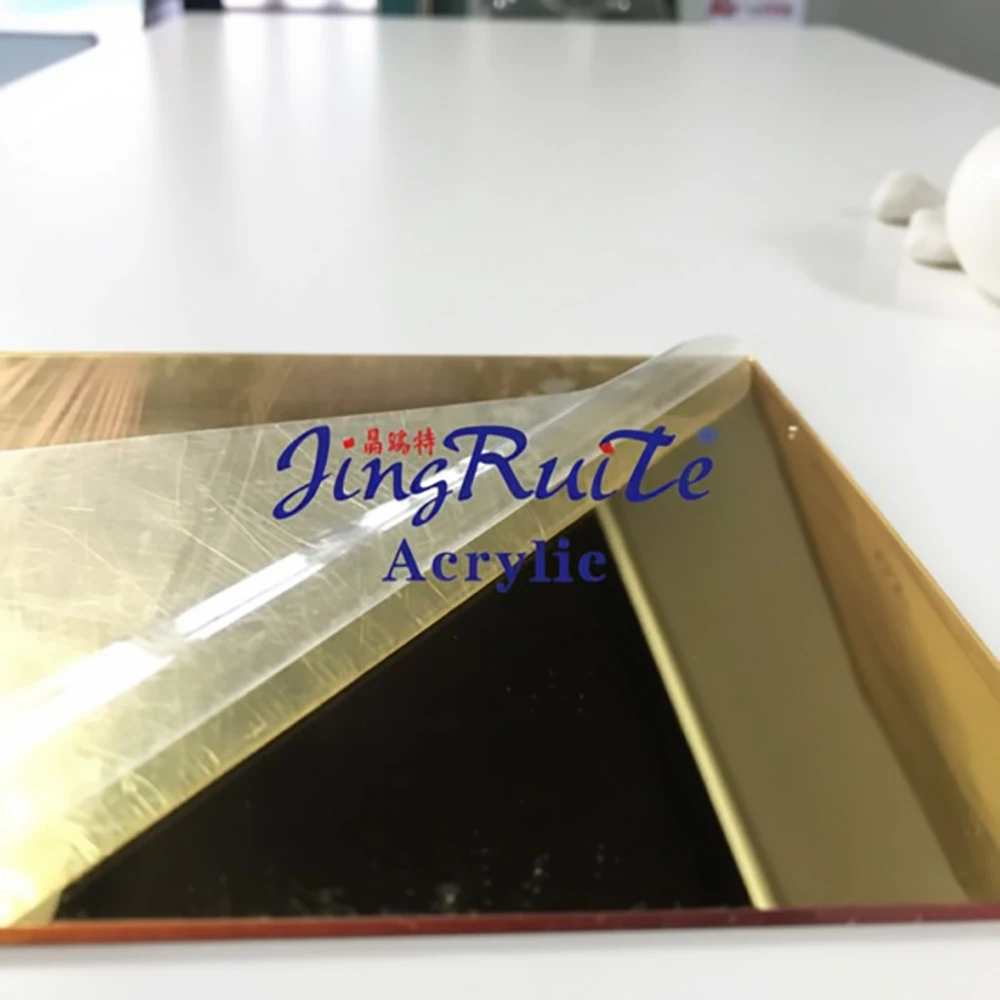
Another practical advantage of mirror acrylic sheets is the PE protective film applied to the mirror surface. During transportation, handling, and fabrication, this protective layer helps protect the surface from scratches, dust, and minor abrasions.
Keeping the protective film in place throughout the production process helps maintain surface quality until final installation. The film can then be removed to reveal a clean and smooth mirror finish.
Why These Features Matter for Custom Fabrication
Together, these three characteristics — a thermoplastic PMMA substrate, a vacuum-metallized reflective layer, and a protective surface film — give mirror acrylic sheets greater processing flexibility than traditional glass mirrors.
These advantages make the material suitable for customized applications such as decorative panels, retail displays, signage, and creative installations. The next sections explain the key fabrication methods and practical considerations for achieving quality results.
How to Cut Mirror Acrylic Sheets for Custom Projects
Cutting is one of the most common processes in acrylic sheet fabrication, as many decorative and commercial projects require mirror panels in specific shapes and dimensions. Compared with traditional glass mirrors, acrylic mirror sheets offer greater processing flexibility, allowing manufacturers to create customized panels, signage elements, and decorative pieces for different applications.
Custom-sized mirror acrylic sheets are often preferred when standard sheet dimensions do not fit a project. By adjusting the size and shape before installation, designers and fabricators can reduce material waste and achieve a more precise fit for various applications.
The right cutting method depends on factors such as design complexity, production volume, edge quality requirements, and project specifications. Common cutting methods for mirror acrylic sheets include laser cutting, CNC cutting, and manual cutting.
Laser Cutting Creates Precise Shapes for Detailed Designs
Laser cutting is commonly used for mirror acrylic sheets when projects involve complex patterns, decorative details, or customized shapes. Because laser cutting is a non-contact process, it allows manufacturers to produce intricate designs while minimizing physical pressure on the material. This makes it suitable for applications such as mirror signage, display elements, and artistic decorations.
When laser cutting mirror acrylic sheets, protecting the reflective surface is an important consideration. Processing parameters should be adjusted according to sheet thickness, equipment capability, and project requirements to help maintain surface quality.
Laser cutting is generally suitable for projects that require:
Complex patterns and detailed outlines
Repeated custom designs with consistent shapes
Efficient processing for decorative applications
For projects requiring additional mechanical processing or different fabrication requirements, CNC cutting may provide a more suitable solution.
CNC Cutting Provides Consistent Results for Custom Shapes
CNC cutting uses computer-controlled tools to create accurate shapes based on digital designs. It is often selected for projects that require consistent dimensions, repeated production, or customized mirror panels.
Compared with laser cutting, CNC cutting offers more flexibility for certain fabrication requirements, especially when projects involve additional mechanical processing steps. With proper tool selection and processing conditions, CNC cutting can help achieve clean edges while maintaining the quality of the mirror surface.
CNC cutting is commonly suitable for:
Larger customized mirror panels
Repeated production pieces
Projects requiring precise dimensions and consistent results
During CNC cutting, careful control of cutting conditions is important to reduce surface damage and maintain the appearance of the reflective layer.
Manual Cutting Is Suitable for Simple Shapes and Small Projects
Manual cutting can be used for small-scale projects or simple shapes where complex designs and high-volume production are not required.
Compared with automated cutting methods, manual processing requires careful control of measurements, cutting technique, and edge finishing. Improper handling may lead to uneven edges or visible surface marks.
Manual cutting may be suitable for:
Small projects and prototypes
Simple straight cuts
On-site adjustments or minor modifications
For larger projects that require consistent accuracy and repeatable results, automated cutting methods are usually a better choice.
Choosing the Right Cutting Method for Mirror Acrylic Sheets
Selecting the appropriate cutting method depends on the design requirements, production needs, and desired processing results.
Cutting Method
Best Suited For
Key Considerations
Laser Cutting
Detailed patterns, signage, decorative designs
Requires proper parameter adjustment to protect the reflective surface
Offers greater flexibility for mechanical fabrication requirements
Manual Cutting
Small projects and simple adjustments
Requires careful handling to maintain edge quality
By choosing the right cutting method, manufacturers and designers can achieve accurate dimensions while maintaining the appearance and reflective quality of mirror acrylic sheets.
Drilling Techniques for Mirror Acrylic Sheets
Drilling is commonly required when mirror acrylic sheets need to be installed with screws, brackets, spacers, or other mounting accessories. Creating clean and accurate holes helps ensure secure installation while maintaining the appearance of the mirror surface.
Unlike glass mirrors, acrylic mirror sheets are less prone to cracking during machining. However, proper drilling techniques are still important because excessive heat, pressure, or vibration can affect hole quality and may damage the reflective surface.
The following practices can help achieve cleaner drilling results and improve the overall fabrication quality.
Suitable Drill Tool Selection for Clean Hole Processing
Selecting the right tools is an important first step when drilling mirror acrylic sheets. Drill bits designed for plastic or acrylic materials are generally preferred because they help reduce friction and minimize stress on the sheet.
Sharp cutting edges are especially important during drilling. Worn or unsuitable tools can generate additional heat, create rough hole edges, and increase the possibility of stress marks around the drilled area.
For better drilling results:
Use sharp drill bits suitable for acrylic or plastic materials
Check that the drill bit is properly aligned before starting
Replace worn tools to maintain clean cutting performance
Proper Drilling Conditions for Heat Control
Heat management is an important consideration when drilling acrylic materials. Excessive friction between the drill bit and the sheet can soften the material, affect edge quality, or create uneven surfaces around the hole.
Maintaining a steady drilling speed and allowing chips to clear during processing can help reduce heat accumulation. Applying excessive force should be avoided because it may increase stress on the sheet and affect the final hole quality.
To improve drilling performance:
Maintain a steady drilling motion
Avoid pushing the drill through the material with excessive force
Allow sufficient space for chips to exit, especially when creating deeper holes
Proper Sheet Support for Preventing Edge Damage
Proper support underneath the mirror acrylic sheet helps maintain stability during drilling. Without adequate support, vibration or movement may affect hole accuracy and increase the risk of chipping on the exit side of the hole.
Using a stable backing surface can help keep the sheet secure while the drill passes through the material. This is particularly useful when drilling close to sheet edges or creating larger mounting holes.
Proper sheet support helps:
Reduce vibration during drilling
Improve hole edge consistency
Minimize the risk of cracks or chipping around the drilled area
Protective Film Preservation During Drilling
Mirror acrylic sheets are commonly supplied with a PE protective film that helps protect the reflective surface during transportation, handling, and fabrication.
Keeping this protective layer in place during drilling can reduce the risk of scratches, dust contamination, and minor surface marks. Once fabrication and installation are complete, the film can be removed to reveal the finished mirror surface.
Common Drilling Issues and Prevention Methods
Several issues may occur during mirror acrylic sheet drilling if the process is not properly controlled:
Common Issue
Possible Cause
Prevention Method
Rough hole edges
Dull tools or unstable drilling
Use sharp tools and maintain a steady drilling process
Cracks or chipping around the hole
Excessive pressure, vibration, or insufficient support
Apply controlled pressure and support the sheet properly
Heat-related surface issues
Excessive friction during drilling
Maintain suitable drilling conditions and allow proper chip removal
Surface scratches
Improper handling during fabrication
Keep the PE protective film in place until final installation
By selecting suitable tools, maintaining proper drilling conditions, and protecting the mirror surface during processing, manufacturers and installers can create clean mounting holes while preserving the appearance and quality of mirror acrylic sheets.
Laser Engraving Techniques for Mirror Acrylic Sheets
Laser engraving is commonly used to create patterns, text, logos, and decorative details on mirror acrylic sheets. Unlike cutting, engraving removes part of the surface layer to create specific designs while preserving the overall appearance of the mirror surface.
When engraving acrylic sheets, the processing method should be selected based on the desired design effect, sheet thickness, and project requirements. Different engraving approaches can produce different levels of contrast, texture, and visual depth.
Engraving Depth Control for Different Design Effects
The engraving depth has a direct impact on the appearance of the finished design. Light engraving can create subtle textures or frosted patterns, while deeper engraving can produce stronger contrast depending on the engraving direction and the required appearance.
For mirror acrylic sheets, excessive engraving depth should be avoided because it may reduce the intended mirror effect or affect the reflective layer in certain applications.
For better results:
Select the engraving depth according to the desired design outcome
Test the engraving effect on a sample piece before full production
Avoid unnecessary processing that may affect the areas where the mirror finish needs to remain intact
Engraving Direction Selection for Different Mirror Effects
Mirror acrylic sheets can be engraved from the front side or reverse side depending on the desired appearance.
Front-side engraving directly changes the visible surface and can create textured or frosted areas. This method is suitable when the engraved pattern itself is intended to be part of the visible design.
Reverse-side engraving creates a different visual approach by processing the back of the sheet while keeping the front reflective surface intact. The engraved design appears behind the mirror surface, creating a layered appearance while protecting the smooth exterior finish.
The best engraving direction depends on whether the project prioritizes surface texture, visual depth, or preservation of the mirror finish.
Protective Film Preservation During Laser Engraving
Mirror acrylic sheets are commonly supplied with a PE protective film to help prevent scratches and contamination during transportation and fabrication.
Keeping the protective film in place during laser engraving can help protect unprocessed areas from minor scratches, dust, and processing debris. After engraving and final installation are completed, the film can be removed to reveal the finished mirror surface.
Processing Condition Control for Consistent Engraving Results
Consistent engraving results depend on suitable equipment setup and processing control. Incorrect settings or unstable processing conditions may affect the appearance and quality of the engraved area.
Common engraving issues include:
Common Issue
Possible Cause
Prevention Method
Uneven engraving results
Inconsistent processing conditions
Test and adjust settings before production
Reduced mirror effect
Excessive engraving depth or unsuitable processing method
Select the appropriate engraving approach based on the desired appearance
Surface contamination
Dust or processing debris during fabrication
Keep the protective film in place and clean the surface after processing
Inconsistent design quality
Improper equipment setup
Ensure stable equipment operation before production
By selecting suitable engraving methods and controlling processing conditions, manufacturers can create customized designs on mirror acrylic sheets while preserving the intended mirror finish.
How JRT Mirror Acrylic Sheets Simplify Custom Fabrication Projects
After selecting the right fabrication methods, choosing a reliable mirror acrylic sheet supplier is an important step in achieving consistent project results. Material quality, dimensional consistency, and available customization options can directly influence processing efficiency, installation accuracy, and final appearance.
JRT Acrylic Mirror Sheet is designed for applications that require both reflective performance and fabrication flexibility. Made from optical-grade PMMA with a vacuum-metallized reflective coating, it provides a clear mirror finish while maintaining the lightweight and impact-resistant characteristics of acrylic materials.
Compared with traditional glass mirrors, JRT mirror acrylic sheets can simplify transportation, handling, and fabrication processes. Their lightweight structure reduces installation challenges, while their impact-resistant and shatter-resistant properties help minimize the risk of damage during processing and application.
Key advantages include:
Lightweight Design: Approximately 50% of the weight of traditional glass mirrors, making transportation and installation easier for customized projects
Impact-Resistant Performance: Up to 17 times higher impact resistance than glass, helping improve durability during handling and use
Clear Reflective Appearance: Provides light transmittance of ≥92% and reflectivity of ≥90% for bright and consistent mirror effects
Flexible Fabrication Capability: Suitable for cutting, drilling, laser engraving, and other customized fabrication processes
Surface Protection During Processing: PE protective film helps reduce scratches, dust, and surface contamination during transportation and fabrication
JRT Acrylic Mirror Sheets are available in thicknesses from 1.8mm to 10mm, with standard sheet sizes including 1220×2440mm and 1500×3000mm. Custom sizes, colors, and fabrication options can be provided according to different project requirements.
Whether used for decorative panels, retail displays, signage, or creative mirror applications, JRT provides mirror acrylic sheets with consistent material performance and flexible customization options to support projects from design development to final production.
Frequently Asked Questions About Mirror Acrylic Sheets
Q1: Can mirror acrylic sheets be cut into custom sizes and shapes?
A: Yes. Mirror acrylic sheets can be processed through cutting methods such as laser cutting, CNC cutting, and manual cutting. The suitable method depends on the design complexity, production requirements, and desired edge quality.
Q2: Is mirror acrylic sheet easier to process than a glass mirror?
A: Yes. Compared with glass mirrors, mirror acrylic sheets are lighter, less brittle, and easier to fabricate. They can be cut, drilled, and engraved with appropriate processing techniques for customized applications.
Q3: Can mirror acrylic sheets be laser engraved?
A: Yes. Laser engraving can be used to create patterns, text, logos, and decorative designs on mirror acrylic sheets. Proper processing settings help achieve the desired visual effect while maintaining the mirror surface quality.
Conclusion
Selecting the right mirror acrylic sheet requires consideration of both material performance and fabrication requirements. Understanding the material properties, processing methods, and customization options helps designers and manufacturers achieve more accurate and reliable results for customized projects.
Through proper cutting, drilling, and laser engraving techniques, mirror acrylic sheets can be fabricated into customized components for decorative, commercial, and creative applications.
Material consistency and supplier reliability are also important factors in achieving stable fabrication results. By choosing mirror acrylic sheets with suitable specifications and customization options, businesses can improve processing efficiency and bring their design concepts into practical applications.
Contact JRT to discuss the right mirror acrylic sheet specifications and customization options for your project.
Introduction Acrylic sheets, prized for their optical clarity (92% light transmission) and versatility, are revolutionizing industries from aerospace to healthcare. With a global market expected...
Introduction Polyvinyl Chloride (PVC) sheets are a staple in construction, healthcare, and electronics due to their durability, chemical resistance, and cost-effectiveness. With the global PVC...
In applications where safety, beauty and durability are essential, one material stands out: flame retardant acrylic sheet. For projects in buildings, public transportation or high-end...
Anyone who has priced out a wall-sized mirror installation knows the tradeoffs glass brings with it: the weight, the installation crew, the liability if it...