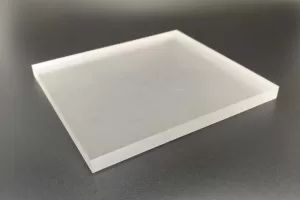
The cast vs extruded acrylic decision depends on what your finished part must do: cast is a strong starting point for high-contrast engraving, while extruded deserves attention when consistent thickness and cost matter most. Both types can be laser cut, so choose a grade and test the process rather than relying on the label alone.
Two clear sheets can look alike before cutting yet demand different approval checks. A sign maker needs readable engraved lettering; a display builder needs panels that fit their slots. Treating those jobs as the same purchase leaves the most useful questions unanswered.
This guide compares the two methods and explains how to read thickness limits. It then takes you from choosing stock to checking a sample. The aim is an order you can quote, check, and repeat.
Puntos clave
- Compare cast vs extruded acrylic against engraving, assembly, and forming requirements, rather than naming one universal winner.
- Check cutting edges and engraved surfaces separately; they are different results.
- Use the actual grade’s thickness table, not a single tolerance percentage for every sheet.
- Approve a sample that includes the features your finished part needs.
- Compare quotations with the same material, quantity, processing, and delivery scope.
Cast vs Extruded Acrylic at a Glance
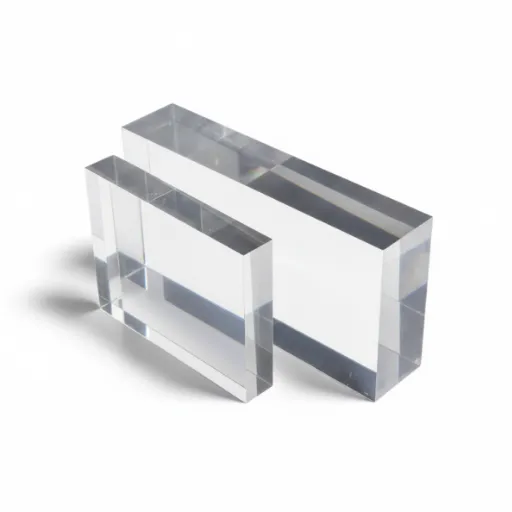
Cast vs Extruded Acrylic at a Glance
Start With the Requirement That Is Hardest to Meet
A useful cast vs extruded acrylic comparison begins with your limiting requirement. Is the customer approving an engraved logo, a fitted joint, a formed cover, or a polished display edge? Write that requirement down before choosing stock.
The table below gives selection priorities. It isn’t a promise that every grade will perform the same way, and it doesn’t replace a supplier’s technical data sheet.
| Decision point |
Cast sheet |
Extruded sheet |
What to confirm |
| Production route |
Monomer is polymerized in a casting cell |
Polymer is formed through an extrusion process |
Supplier’s declared manufacturing method |
| High-contrast laser engraving |
A useful starting choice |
Test whether the appearance meets the design |
An engraved sample of the actual artwork |
| Thickness consistency |
Read the grade-specific range |
A useful starting choice for gauge control |
Thickness limits for the ordered stock |
| Laser cutting |
Suitable grades can be cut |
Suitable grades can be cut |
Edge appearance on your equipment |
| Forming and bonding |
Check the grade and process |
Check the grade and process |
Approved production conditions |
| Cost comparison |
Compare the full order scope |
Compare the full order scope |
A dated quote for the same quantity and work |
These priorities follow the manufacturer and equipment guidance discussed below. Use them to shortlist material, then let documents and samples settle the final choice.
Before placing an order, review JRT Acrylic’s acrylic sheet options. Send the application, dimensions, quantity, and intended finish when asking which sheet grades match your project.
Illustrative Scenario: An Engraved Brand Plaque
A fabricator needs clear plaques with a readable logo and a visible cut edge. The buyer first asks for the lowest sheet price, but the drawing doesn’t define the engraving appearance.
For this cast vs extruded acrylic choice, the next step is to approve two features separately: the engraved logo and the cut perimeter. A material that passes the edge check can still miss the customer’s preferred contrast. This is an illustrative specification exercise, not a reported customer result.
How Cast and Extruded Acrylic Sheets Are Made
Cell Casting and Continuous Extrusion
In cell casting, liquid monomer is placed between glass plates and reacts to form a solid sheet. Extrusion makes sheet continuously from heated polymer. The process matters because it helps explain differences in machining and thickness control.
ACRYLITE’s manufacturer comparison describes cast grades as having higher molecular weight than its extrusion grades. It identifies machining advantages for cast and tighter thickness control, lower cost, and faster forming or cementing for extruded sheet.
Use that evidence as background for cast vs extruded acrylic selection. It doesn’t establish a numeric performance gap between every pair of brands, and it doesn’t prove the properties of an unspecified JRT grade.
Ask Which Casting Process the Supplier Means
Ask which product the word “cast” identifies. The quotation should name a grade and manufacturing method, not leave you to guess from a broad label. Match that description to the supplier’s technical data sheet before approving the stock.
Record the material name, grade, process, color, surface, and nominal thickness together. Does the quote use a code you don’t know? Ask the supplier to explain it. The grade record links the quote to the sheet you receive.
Separate Manufacturing Method From Product Quality
The cast vs extruded acrylic label answers a process question. It doesn’t tell you whether a particular sheet meets your optical, dimensional, or surface requirements.
Build your checks around the job. For a visible panel, state how you’ll judge its look and where you’ll view it. For a fitted part, define the size and fit checks. Share those checks with the people designing, making, and buying the part.
For a broader material-selection workflow, use the complete acrylic sheet selection guide. Keep this comparison focused on the sheet manufacturing choice.
Cast vs Extruded Acrylic for Fabrication
Cast vs Extruded Acrylic for Fabrication
Laser Engraving and Laser Cutting Need Different Checks
Laser engraving changes the visible surface; laser cutting creates the part’s perimeter. Don’t accept a statement about one as proof of the other.
Trotec’s acrylic processing guide recommends cast acrylic for bright, high-contrast engraving. It also describes laser cutting extruded acrylic to produce a polished edge. That makes “extruded acrylic cannot be laser cut” a poor basis for choosing material.
Your cast vs extruded acrylic trial should include the actual artwork, corners, and visible edges. Ask the operator to record the grade, thickness, machine, and settings used. A photograph of an unrelated sample won’t show whether your own design meets the acceptance criteria.
Keep the approval language concrete. Instead of writing “good engraving,” specify that the customer must approve the logo’s contrast and legibility under the intended viewing conditions. Instead of “smooth cut,” identify which edges remain visible after assembly.
Routing, Drilling, and Visible Edges
ACRYLITE’s comparison identifies less tendency to melt or chip during machining as an advantage of its cast sheet. Treat this as a reason to test the appropriate grade, not a guarantee that cast will never chip or that extruded cannot be machined.
When planning cast vs extruded acrylic samples, include the smallest hole, a representative corner, and the edge finish that matters to the finished product. Check the part after the required finishing steps, not just after the first cut.
Will the part be bonded later? Tell the processor before you approve the finish, and ask it to check the full assembly sequence. Discuss the drawing and the work needed through JRT Acrylic’s cutting and finishing services.
Thermoforming and Cementing
ACRYLITE reports faster thermoforming and cementing for its extruded sheet than for its cast sheet. This is a comparative property statement, not a ready-made production schedule for another supplier’s material.
For cast vs extruded acrylic forming decisions, ask the processor which grade and conditions suit the planned shape. Include the formed sample in approval if the cover, bend, or finished surface is central to the design. Don’t approve only a flat sheet when the purchased result is a shaped part.
Likewise, assess a bonded sample if joints determine fit or appearance. Record the proposed adhesive and process with the material grade, and ask the supplier for compatible processing guidance.
Thickness Tolerance and Fit: Read the Actual Specification
Nominal Thickness Is the Order Description
Nominal thickness identifies the stock you request. The supplier’s tolerance table defines the permitted range for that stock. Those two pieces of information serve different purposes.
In cast vs extruded acrylic purchasing, avoid turning a nominal number into an exact measured promise. Ask what range applies to your grade and thickness, how the supplier checks it, and what the finished-part drawing requires.
A Brand-Specific Example With the Units Preserved
The ACRYLITE cast thickness table lists nominal 6.0 mm sheet with a permitted range of 5.0–7.0 mm. Its separate extruded thickness table lists nominal 0.236 inch sheet, labeled 6.0 mm, with limits of 0.224–0.248 inch.
| Published example |
Nominal designation |
Published permitted range |
| ACRYLITE cast |
6.0 mm |
5.0–7.0 mm |
| ACRYLITE extruded, listed products |
0.236 inch, table label 6.0 mm |
0.224–0.248 inch |
The inch limits remain in their original unit. These are ACRYLITE examples, not JRT specifications or universal industry limits.
For your cast vs extruded acrylic order, obtain the table that applies to the actual product. A percentage copied from a general guide is weaker evidence than the supplier’s documented range.
Illustrative Scenario: A Slotted Display Stand
A designer plans a stand whose panels slide into cut slots. The drawing names a nominal sheet thickness but leaves the fit requirement open.
The cast vs extruded acrylic decision now includes two approvals: the supplied sheet’s thickness range and the finished joint’s fit. The team measures a production sample, checks the assembled joint, and records the accepted drawing revision. This example illustrates an approval method; it doesn’t specify a universal slot width or report a real project outcome.
Keep Stock Tolerance and Machining Tolerance Separate
A sheet’s thickness limit doesn’t tell you how accurately a hole or outline will be cut. It doesn’t set the gap needed for assembly, either. Put each requirement in the right place on the drawing.
A simple sample record can prevent those requirements from becoming mixed together:
| Field |
What to record |
| Material identity |
Supplier, grade, process, color, and batch reference |
| Stock thickness |
Nominal value, permitted range, units, and measured values |
| Finished dimensions |
Drawing revision and dimensions to be checked |
| Montaje |
Fit requirement, drawing revision, and approved sample reference |
| Aspecto |
Visible faces, edges, and agreed viewing conditions |
This is where a cast vs extruded acrylic comparison becomes an order specification. Keep the approved sample and drawing linked to the purchase record so a repeat order has a clear reference.
Choose Cast vs Extruded Acrylic by the Finished Product
Choose Cast vs Extruded Acrylic by the Finished Product
Engraved Signs and Brand Components
For a sign whose lettering must stand out, start with the contrast you need. Test the actual logo and text size. View the sample as the customer will before choosing stock.
The cast vs extruded acrylic choice is one input in that approval. Color, surface, installation, and the sign’s lighting also need their own checks. For that wider application decision, see the guide to selecting acrylic for signage.
Fitted Parts and Visible-Edge Displays
For repeated fitted parts, give thickness control and assembly checks a prominent place in the specification. For a display with exposed edges, make the finished edge sample part of approval. If a design needs both, evaluate both on the same representative part.
Don’t let a cast vs extruded acrylic decision stop at the purchasing desk. The person approving the appearance and the person checking the assembly should agree on the sample before production is released.
Illustrative Scenario: A Formed Display Cover
A buyer requests a clear cover made from a flat blank. The cover needs a formed shape, drilled fixing points, and an approved visible surface.
Rather than choosing cast vs extruded acrylic from price alone, the buyer asks the processor to propose a grade and produce a representative formed sample. The approval checks shape, fixing-point fit, and appearance together. This is an illustrative scenario, without an invented production saving or customer testimonial.
Compare Total Cost and Confirm the Order
Put Both Quotations on the Same Basis
A cast vs extruded acrylic price comparison is useful only when the quoted work matches. Compare material identity, nominal thickness, quantity, sheet or part dimensions, processing, packaging, and delivery terms.
If one supplier quotes raw sheet and another quotes finished parts, separate those scopes before judging price. Ask what is included and what you must arrange elsewhere. This is a purchasing check, not a claim that one manufacturing method always has a lower total cost.
Record the quote’s date, currency, and delivery terms. Check which costs it covers. Don’t compare a local stock price with an export order that includes packing and shipping as if they were the same offer.
Send a Usable RFQ
For a cast vs extruded acrylic enquiry, send a short order checklist:
- Application and drawing revision.
- Desired grade or manufacturing method.
- Nominal thickness, allowed range, and units.
- Color, surface, dimensions, and quantity.
- Cutting, forming, bonding, or finishing scope.
- Features needing sample approval and the person approving them.
Add packaging and destination requirements, then ask the supplier to confirm deviations in writing. A response that names a different grade or changes the finishing scope needs review before the purchase order is issued.
Need help matching material to the drawing? Request a specification-based quote from JRT Acrylic, including the dimensions, quantity, application, and required processing. Ask which sample checks should be completed before bulk production.
Your Final Selection
The best cast vs extruded acrylic choice is the one supported by the finished-part requirements, the grade’s documents, and an approved sample. Use engraving, fit, forming, and cost as separate decision points, then bring them together in the order specification.
Send your drawing and finish requirements to JRT Acrylic through the quote link above. Ask for the material proposal and sample requirements in the same response so purchasing and production can review one clear scope.
Preguntas frecuentes
Is Cast Acrylic Always Better Than Extruded Acrylic?
No. The cast vs extruded acrylic decision changes with the job. High-contrast engraving can favor cast, while thickness control and cost can favor extruded. Confirm the actual grade and representative sample rather than assuming a process label settles every requirement.
Can Extruded Acrylic Be Laser Cut?
Yes. Trotec’s guide describes laser cutting extruded acrylic and the resulting polished edge. Check the grade and equipment conditions for your work; don’t confuse a different engraving appearance with an inability to cut the sheet.
Which Type Has Tighter Thickness Tolerance?
ACRYLITE identifies tighter thickness control as an advantage of its extruded sheet. For a cast vs extruded acrylic order, obtain the grade-specific limits and retain the units shown in the table. Those limits are more useful than a single percentage applied to all products.
How Can I Tell Cast From Extruded Acrylic?
Ask the supplier for the grade and declared process. Match them to three records: the quote, the sheet label or identification, and the delivery record. Don’t approve stock from its look or protective film alone. If the records disagree, ask the supplier to resolve the mismatch before you use the sheet.
For cast vs extruded acrylic identification, separate paperwork from performance approval. A correctly identified sheet still needs the fit, engraving, or finish checks required by your drawing. Don’t use a burning test to replace product records.
Is Plexiglass a Different Material From Cast Acrylic?
In general buying language, plexiglass means acrylic sheet; cast names a way of making it. It isn’t a third process alongside cast and extruded. For a cast vs extruded acrylic enquiry, ask for the actual grade and process. A broad product name alone doesn’t identify the stock.
How Is Cast Acrylic Made?
In cell casting, liquid monomer reacts between glass plates to form a solid sheet. Extrusion instead forms heated polymer continuously. The manufacturing section above explains the comparison; use the supplier’s process declaration to identify the product being offered.
What Should I Approve Before Ordering?
Approve the grade, stock limits, drawing revision, required finish, and representative sample. For cast vs extruded acrylic, include the feature that drives your choice: engraving contrast, a fitted joint, or a formed shape. Check the part you intend to buy.