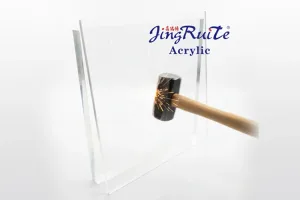








For transparent rod applications, glass is often the first material that comes to mind. It offers excellent optical clarity, surface hardness, and high-temperature capability. However, these advantages come with trade-offs: glass is heavier, more brittle, and generally more difficult to cut, drill, or shape. Acrylic rod, made from PMMA, offers a different balance of properties. It is significantly lighter, provides good impact resistance and optical clarity, and is generally easier to cut, drill, bend, and finish.
Rather than asking whether acrylic rod is better than glass rod, engineers usually need to consider which material matches their specific working conditions, processing requirements, and performance expectations. Choosing the wrong material can add unnecessary weight, complicate fabrication, or lead to premature performance problems.
このガイドブックでは、以下の項目を比較している。 acrylic rod and glass rod in terms of performance, processing, and application requirements, helping you understand where each material performs best and when an acrylic rod may be the more practical choice.
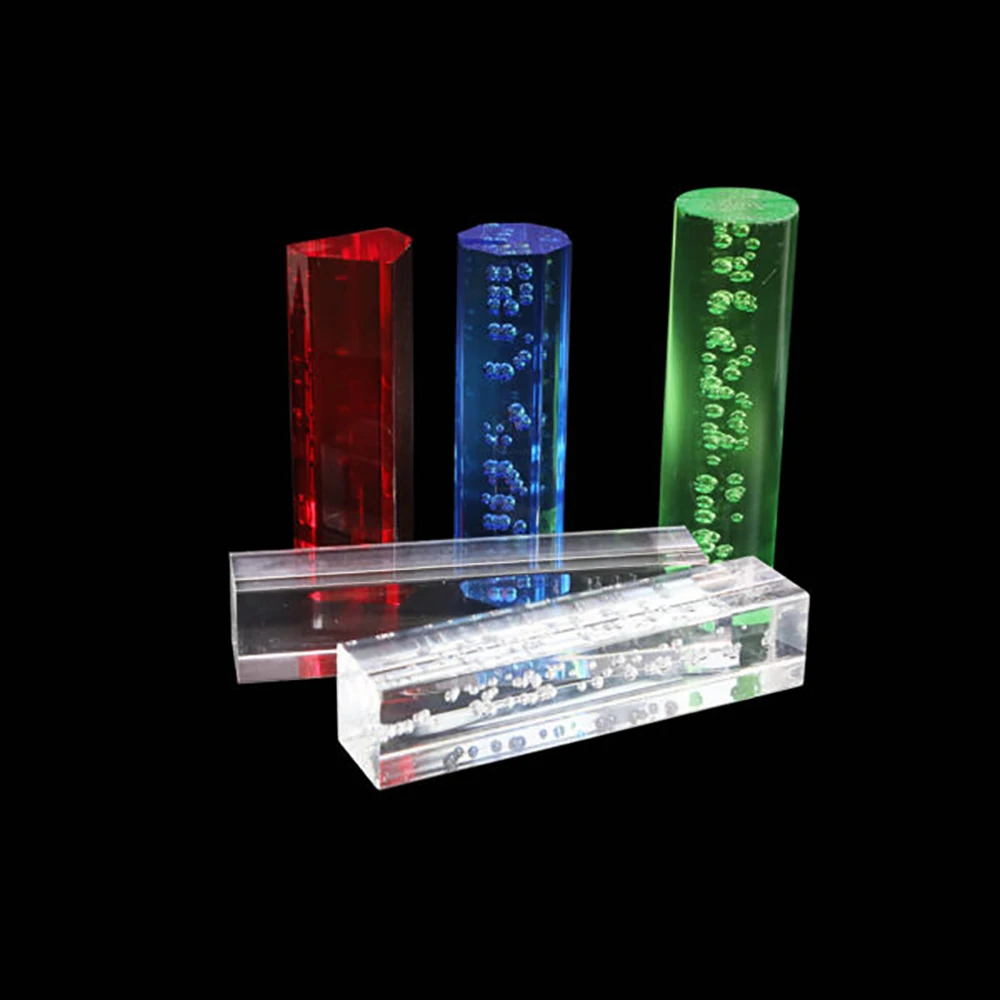
An acrylic rod is a solid cylindrical component made from acrylic, most commonly PMMA. PMMA is an amorphous thermoplastic known for its high optical clarity, low density, and good surface finish. It can be manufactured into rods, tubes, sheets, and a wide range of machined components.
Acrylic rods can be produced using different manufacturing processes, including casting and extrusion. Cast acrylic rods are produced by casting and polymerizing the acrylic material in a mold, while extruded acrylic products are manufactured through a continuous extrusion process. The manufacturing method can affect the product’s dimensions, consistency, and processing characteristics.
Because acrylic offers high transparency, low density, and good machinability, an acrylic round rod is a practical option for transparent cylindrical components that require cutting, drilling, polishing, or other secondary processing.
A glass rod is a solid cylindrical component made from glass, an inorganic, non-metallic material. Unlike acrylic, glass is not a thermoplastic polymer; it is typically produced by melting a mixture of raw materials at high temperatures and then cooling it into a rigid solid. As a result, glass generally requires much higher temperatures and more specialized equipment for reshaping than acrylic.
Glass rods can be made from several types of glass, including soda-lime glass, borosilicate glass, and fused silica. The glass composition directly influences properties such as optical clarity, chemical resistance, hardness, and temperature performance. Common manufacturing methods involve forming molten glass into a cylindrical shape, followed by controlled cooling and finishing to achieve the required dimensions and surface finish.
The specific glass type and manufacturing process therefore determine the final properties of a glass rod and its suitability for a particular application.
Although acrylic rod and glass rod can both be used as transparent cylindrical components, their performance can differ significantly in practical use. The differences become particularly important when weight, impact resistance, environmental exposure, and processing requirements need to be considered together.
| プロパティ | アクリル棒 | Glass Rod |
| 光学性能 | High optical clarity; suitable for transparent applications | High optical clarity; performance varies by glass type |
| 重量 | Lower for the same diameter and length | Higher for the same dimensions |
| Impact Behavior | Generally higher impact resistance and less prone to shattering | More brittle and more susceptible to fracture under impact |
| Mechanical Behavior | Good mechanical strength with lower stiffness | High hardness, stiffness, and rigidity |
| Temperature Performance | More limited because acrylic is a thermoplastic | Generally better suited to elevated temperatures |
| 耐候性 | Good weather and UV resistance for suitable grades | Generally stable outdoors, depending on glass type and conditions |
| 耐薬品性 | Resistant to many mild chemicals but vulnerable to some solvents | Generally strong chemical resistance; varies with glass composition |
Both acrylic rod and glass rod can provide high optical clarity, but their optical performance depends on the specific material grade, surface finish, and dimensional quality.
Clear acrylic rod can provide high visible-light transmission and has a refractive index of approximately 1.49. These characteristics make it suitable for transparent cylindrical components used in light-transmitting, decorative, and certain optical applications.
Glass rod can also provide excellent optical clarity, but its optical properties vary according to the glass composition and grade. For an application where the rod is expected to transmit or redirect light, factors such as light transmission, refractive index, surface finish, and dimensional accuracy should all be considered rather than transparency alone.
Weight can make a significant difference when an acrylic rod or glass rod is used as a structural, decorative, or mounted component.
PMMA typically has a density of around 1.17–1.20 g/cm³, while common glass is much denser, often around 2.4–2.5 g/cm³. As a result, an acrylic rod with the same diameter and length as a glass rod will weigh substantially less.
This lower weight can make acrylic rods easier to transport, position, install, and support. The difference becomes particularly relevant for longer rods, larger-diameter components, suspended structures, and applications where the finished assembly needs to remain lightweight.
When a transparent rod may be exposed to accidental impact, its fracture behavior becomes an important design consideration.
An acrylic rod generally has higher impact resistance than a conventional glass rod and is less prone to shattering under impact. This can be useful in applications where the rod may be handled frequently or exposed to incidental contact.
A glass rod, by comparison, provides high hardness and rigidity but can fracture when subjected to sufficient impact. This does not mean that acrylic is universally stronger than glass. The two materials behave differently under load, so tensile strength, flexural strength, stiffness, surface hardness, and impact resistance should be evaluated separately according to the requirements of the rod application.
For applications where impact resistance is a priority, acrylic rod may provide an advantage. Where high rigidity or surface hardness is more important, glass rod may be more appropriate.
The environment in which a rod will operate is another important factor in material selection.
Acrylic rod is generally well suited to outdoor applications when the selected PMMA grade provides appropriate weather and UV resistance. Its transparency and surface appearance can remain stable under suitable outdoor conditions.
Temperature presents a different consideration. Because an アクリル棒 is made from a thermoplastic material, its usable temperature range is more limited than that of many types of glass rod. Glass can generally tolerate substantially higher temperatures, although the actual performance depends on the specific glass composition and operating conditions.
For a rod installed outdoors, exposed to prolonged sunlight, or positioned near a heat source, both weathering and operating temperature should therefore be evaluated before choosing the material.
The chemical environment surrounding a rod can also affect its suitability for a particular application.
Acrylic rod is resistant to many mild chemicals, including certain dilute acids and alkalis, but some solvents can cause surface attack, crazing, or cracking. The chemical resistance of an acrylic rod should therefore be evaluated against the actual substance, concentration, temperature, and exposure conditions.
Glass rod generally provides strong resistance to many chemicals, although its performance also varies with the glass composition. Certain glass types are selected for applications where greater chemical durability is required.
For either material, chemical compatibility should be assessed based on the actual operating environment rather than assuming that one material is universally more resistant than the other.
When a transparent rod requires cutting, drilling, shaping, or polishing, its processing characteristics can directly affect manufacturing efficiency, tooling requirements, and fabrication complexity. In general, acrylic rod is easier to process than glass rod, particularly for applications involving frequent machining or custom geometries.
An acrylic rod can generally be cut and drilled using standard machining methods with suitable tooling and processing parameters. Sawing, drilling, CNC machining, and other secondary operations can be used to achieve the required dimensions and features.
A glass rod can also be cut and drilled, but the process typically requires more specialized tools and tighter process control to reduce the risk of cracking, chipping, or breakage. Machined edges may also require additional grinding or finishing.
For applications requiring frequent machining adjustments, drilled holes, slots, or other customized features, an acrylic rod generally offers greater fabrication flexibility.
Acrylic rod offers a practical advantage when the finished component requires controlled bending or reshaping. Because acrylic is a thermoplastic, controlled heating can soften the material and allow it to be formed into certain geometries. Heat bending and other thermoforming techniques can therefore be used for suitable acrylic components.
Glass rod behaves differently. Although glass can be formed at high temperatures, reshaping it requires specialized glassworking equipment and significantly higher processing temperatures. It is therefore generally less practical to reshape during typical fabrication processes.
If a project requires customized curves, bends, or other non-standard geometries, the forming requirements of each material should be evaluated before production begins.
Surface finishing is particularly important for transparent rods because scratches, machining marks, and rough edges can affect both appearance and optical performance.
アン アクリル棒 can be mechanically polished after cutting or machining to improve surface clarity and achieve a smooth, glossy finish. This makes post-machining surface treatment relatively accessible for acrylic components.
Glass rod can also be ground and polished to achieve a smooth surface or polished edge, but glass generally requires harder abrasives and more specialized equipment because of its higher hardness.
For applications where cutting, machining, and subsequent polishing are expected, acrylic rod can offer a simpler and more flexible fabrication process.
Start with the environment in which the rod will operate.
Check the expected operating temperature, exposure to sunlight and weather, humidity, chemicals, mechanical impacts, and cleaning agents. Outdoor applications may benefit from acrylic’s weathering characteristics, while high-temperature environments may favor glass.
The key is to evaluate the actual working conditions rather than choosing a material based on appearance alone.
Next, determine which performance characteristics matter most.
For an application where low weight, transparency, and impact resistance are priorities, acrylic can be a strong candidate. For an application where high hardness, rigidity, or elevated-temperature performance is more important, glass may be preferable.
It is also important to consider how the component will fail. Acrylic and glass have different fracture and deformation behaviors, so safety requirements should be included in the material-selection process.
Think about what needs to happen after the material is purchased.
Will the rod need to be cut to a specific length? Does it need drilled holes, polished surfaces, heat-bent sections, or other custom features? Acrylic is often advantageous when a project involves multiple secondary machining or forming operations.
If the required geometry can be achieved efficiently using standard glass-processing methods, glass may still be the more appropriate choice.
Finally, consider long-term maintenance.
Surface hardness is an important factor because glass is generally harder and more scratch-resistant than uncoated acrylic. Acrylic can provide good long-term weather performance, but its surface should still be protected from abrasive handling and incompatible cleaning chemicals.
A material-selection decision should therefore consider not only initial fabrication but also cleaning, handling, environmental exposure, replacement requirements, and expected service life.
Once acrylic is selected as the preferred material, choosing the right acrylic rod supplier and specification becomes the next important step.
JRT Acrylic Rod is a solid PMMA cylindrical profile designed for applications that require optical clarity, lightweight construction, weather resistance, and flexible fabrication. Available in standard and custom sizes, it can be adapted for a wide range of transparent engineering, decorative, and industrial applications.

JRT Acrylic Rod provides high transparency with a light transmittance of ≥92% and a refractive index of 1.49, making it suitable for applications where visual appearance and light transmission are important.
With a density of 1.19 g/cm³, acrylic rod offers a lightweight alternative to glass while maintaining useful mechanical properties, including a tensile strength of 61.8 MPa, flexural strength of 107 MPa, and impact resistance of 16 kJ/m².
These characteristics make it suitable for lighting components, optical parts, display structures, decorative applications, and transparent engineering components.
For outdoor or semi-outdoor applications, JRT Acrylic Rod is designed to provide stable performance under changing environmental conditions.
The product supports a continuous operating temperature range of -40°C to 80°C and incorporates UV stabilizer technology to help reduce yellowing during outdoor exposure for up to 5 years under specified conditions.
This makes it suitable for applications where long-term transparency and appearance are important, although the final material selection should always consider the specific operating environment.
JRT Acrylic Rod is available in various standard diameters and lengths, with customization options available for projects requiring specific dimensions.
Standard diameters include 2 mm to 100 mm, with customized diameters available up to 400 mm. Special profiles, including triangular, square, and hexagonal shapes, can also be produced according to project requirements.
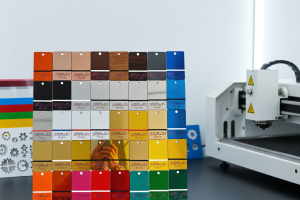
The material supports common secondary processing methods such as cutting, drilling, polishing, heat bending, laser engraving, and bonding. This flexibility allows manufacturers to adapt acrylic rods for different designs and fabrication requirements.
Acrylic rod and glass rod each offer unique advantages, and the better choice depends on the specific application requirements.
Acrylic rod is often preferred for projects that require lightweight design, impact resistance, optical clarity, weather resistance, and easier processing, while glass rod may be more suitable for applications requiring high temperature resistance, surface hardness, or specific glass properties.
For applications where acrylic is the right choice, JRT Acrylic Rod provides excellent transparency, reliable mechanical performance, weather resistance, and flexible customization options for various engineering, decorative, and industrial applications.