


تطبيقات صفائح الأكريليك: الابتكارات والتحولات الصناعية
مقدمة تُعد صفائح الأكريليك، التي تتميز بنقائها البصري (92%) وتعدد استخداماتها، ثورة في الصناعات بدءًا من صناعة الطيران وحتى الرعاية الصحية. ومن المتوقع أن يشهد السوق العالمي...
The acrylic vs polycarbonate choice starts with the job: consider acrylic for appearance-focused displays and compare polycarbonate when impact performance drives the design. Then check the actual grade, coating, and assembly. Neither material name alone proves that a finished panel meets a safety requirement.
Ordinary acrylic, impact-modified acrylic, and coated polycarbonate are different purchasing options. A useful comparison names those options instead of treating every acrylic or PC sheet as identical. This guide explains how to compare them, request evidence, and approve a sample before ordering.
For the wider purchasing process, start with our دليل شراء الألواح الأكريلية. Here, the focus is the material decision and the information that makes competing offers comparable.
النقاط الرئيسية
- Compare named grades and coatings, rather than polymer names alone.
- Keep material impact data separate from finished assembly approval.
- Check the exposure, fabrication, mounting, and care instructions together.
- Compare total delivered part costs using the same drawing and requirements.
- Record the approved sample and product identity for repeat orders.
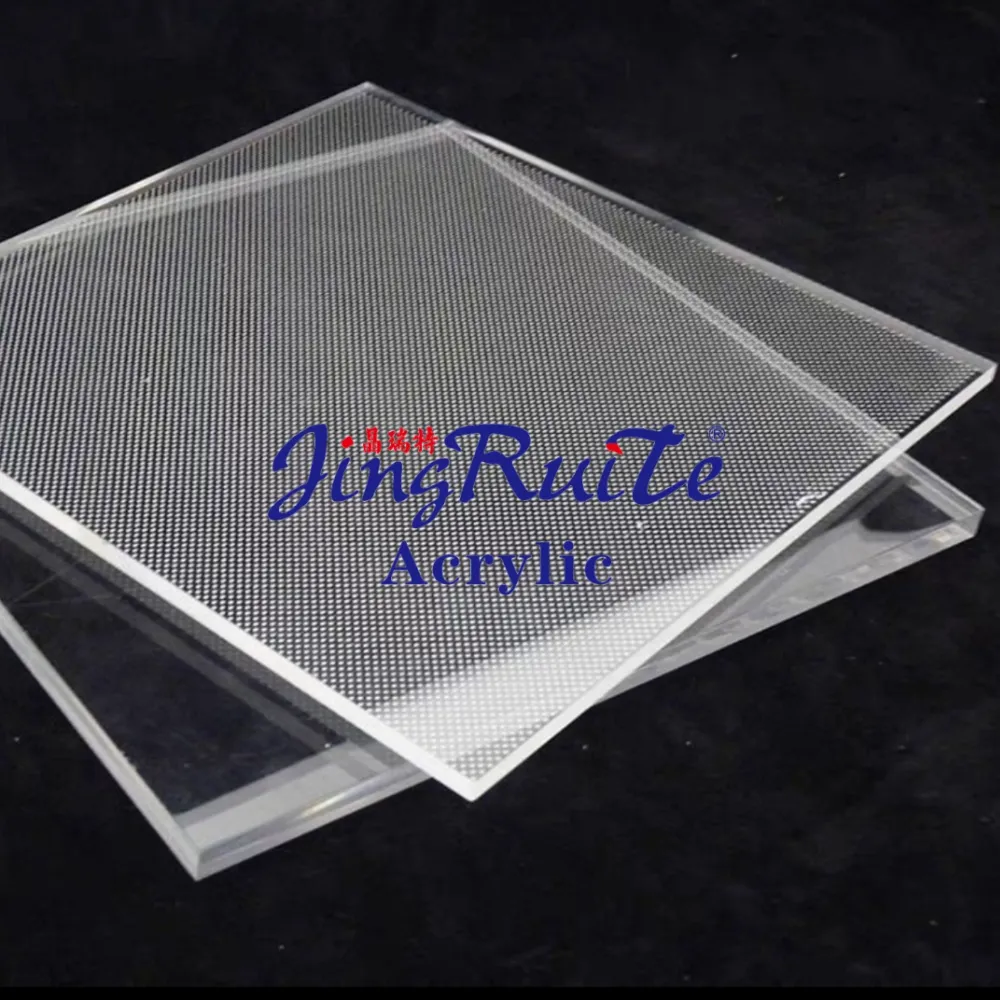
Acrylic is PMMA, while polycarbonate is commonly shortened to PC. Both appear in clear sheet applications, but the right choice depends on which properties matter most in use. Identify the requirement that could rule out a material before comparing its appearance or purchase price.
| المتطلبات | Acrylic option to discuss | Polycarbonate option to discuss | الأدلة المطلوب تقديمها |
|---|---|---|---|
| Display appearance | Grade, finish, and edge appearance | Optical grade and surface finish | Sample under intended viewing conditions |
| Impact exposure | Ordinary or impact-modified PMMA | Named impact-performing grade | Relevant test data and assembly requirements |
| Outdoor use | Grade-specific weathering guidance | UV protection and correct installation face | Current exposure guidance and warranty terms |
| Frequent cleaning | Surface and approved care method | Uncoated or abrasion-resistant surface | Cleaning and chemical compatibility guidance |
| Fabricated part | Cutting, forming, and joining needs | Cutting, forming, and joining needs | Supplier and fabricator instructions |
| Controlled application | Appropriate documented system | Appropriate documented system | Applicable finished-system evidence |
Treat this acrylic vs polycarbonate table as a checklist, not a universal product specification. It does not assign a safe thickness, operating temperature, or service life to either family.
If you are choosing an acrylic option, send JRT the drawing and material requirements. Ask which acrylic grade and supporting documents are available before you commit to a production order.
An acrylic vs polycarbonate enquiry should identify more than a clear sheet of a certain size. State whether you are considering ordinary acrylic, an impact-modified grade, or a surface-treated product. Ask the supplier to confirm the product code, thickness, finish, and current data sheet in writing.
The words “impact resistant” do not define one performance level. Don’t assume that an unnamed modified acrylic has the same properties as another manufacturer’s grade. Keep any proposed substitution visible on the quote so it can be reviewed before cutting or assembly begins.
The central acrylic vs polycarbonate question is often strength, but strength needs a defined test and use case. Request the method, specimen details, thickness, and test conditions with any reported result. A number without that context is a weak basis for comparing sheets.
Ask whether two results describe the same property. Notched and unnotched tests, different specimen dimensions, or different reporting units may prevent a direct comparison. A higher number on an unrelated test does not automatically establish the better part for your design.
For a display cover, your review may focus on appearance and routine handling. For a protective assembly, the designer must also define the relevant hazard and required performance. Record the mounting and complete construction with the material choice.
An acrylic vs polycarbonate comparison cannot approve a machine guard, transport window, or security barrier by itself. Obtain the evidence appropriate to the finished system. Avoid replacing an existing specified material merely because another sheet is described as tough or impact modified.
Plaskolite’s comparison of ballistic-grade materials discusses both PC and PMMA constructions. This shows why “only one polymer can be used” is too broad. It does not establish that an ordinary sheet from either family provides ballistic protection.
Keep the acrylic vs polycarbonate discussion tied to the documented product and construction. Ask for the applicable rating, test scope, and installation requirements when a project calls for protective glazing. Do not infer a rating from sheet thickness or a generic material brochure.
سيناريو توضيحي: A workshop is reviewing a replacement machine enclosure panel. The buyer first retrieves the existing design requirements and asks the equipment designer to review any substitution. The next step is checking the proposed grade and assembly evidence, not selecting a sheet from a general comparison chart. This is a decision example, not a reported customer outcome.
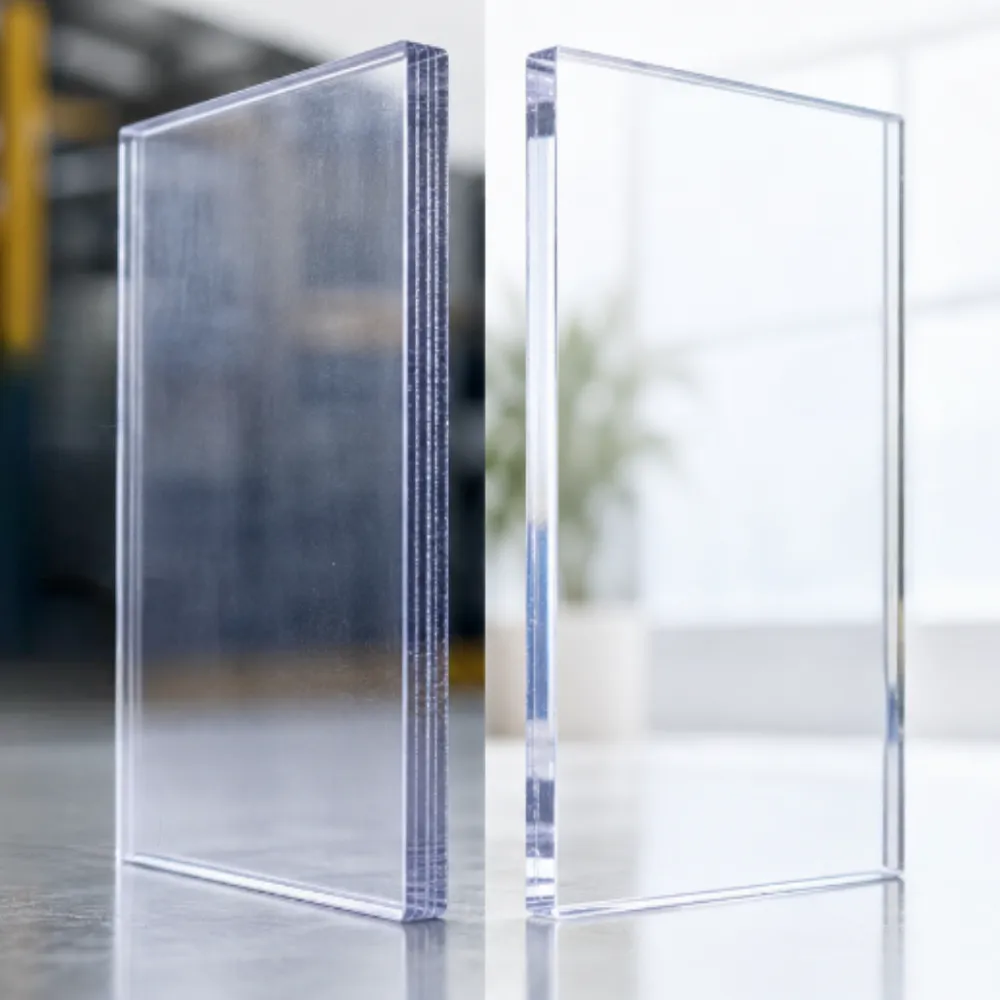
In acrylic vs polycarbonate selection, compare the actual samples under the conditions in which people will see them. Look through the sheet at the intended background. Check the face, edges, tint, reflections, and any formed areas that matter to the project.
A display may need a polished visible edge; a cover may need a specific surface appearance. Define those requirements separately. “Clear” is not a complete optical specification, and an attractive small sample does not settle every requirement of a larger fabricated panel.
A fair acrylic vs polycarbonate review names the surface treatment. Palram’s PALSUN product range includes optical, UV-protected, and abrasion-resistant options. Those distinctions matter when comparing outdoor panels or frequently handled surfaces.
Do not compare a named specialty acrylic against unspecified PC and extend the result to every PC product. Equally, do not transfer the performance of an abrasion-resistant PC grade to all polycarbonate. Ask what coating is included and which surface or surfaces receive it.
Ask for approved cleaners, cleaning tools, and any restrictions for the exact product. Include coatings, graphics, adhesives, and seals in that discussion. A maintenance method needs to suit the complete part, not just the base polymer.
For acrylic vs polycarbonate samples, use the intended care procedure during evaluation if the supplier permits it. Record what was used and inspect the result. Don’t adopt a universal alcohol-cleaning or polishing rule from a generic material comparison.
سيناريو توضيحي: A museum buyer compares sample covers for a frequently cleaned display. Alongside appearance, the buyer requests the permitted cleaning method for each surface and discusses it with the maintenance team. The purpose is to identify a workable care routine before approval; no scratch-life or cost outcome is claimed.
Outdoor acrylic vs polycarbonate selection needs the actual exposure conditions. Describe direct sunlight, orientation, expected temperatures, nearby heat sources, and any chemicals involved. Ask the supplier to identify the grade intended for those conditions and the limits of its guidance.
UV protection is a product feature to verify, not a reason to dismiss every PC sheet outdoors. Confirm whether protection applies to one face or both, how that face is marked, and how it must be installed. Keep the film or identification record until the orientation has been confirmed.
Acrylic vs polycarbonate weathering claims should identify the product and what was measured. Ask for the test conditions and the stated acceptance criteria. An accelerated test duration does not, by itself, establish an equivalent number of years in your installation.
Read warranty terms separately from test data. Check the covered grade, location, installation conditions, and exclusions before using a warranty in a purchasing decision. Avoid promising that a sheet will never yellow or remain unchanged in every climate.
Ask which thermal property a data sheet reports and how it applies to the planned service conditions. A single heat-related value is not a complete operating specification. Discuss exposure duration, loading, supports, and the finished part with the responsible designer and supplier.
For chemicals, provide the actual products and contact conditions. That includes cleaners, inks, adhesives, and incidental process fluids. An acrylic vs polycarbonate chart cannot replace compatibility guidance for the particular grade, surface, and use.
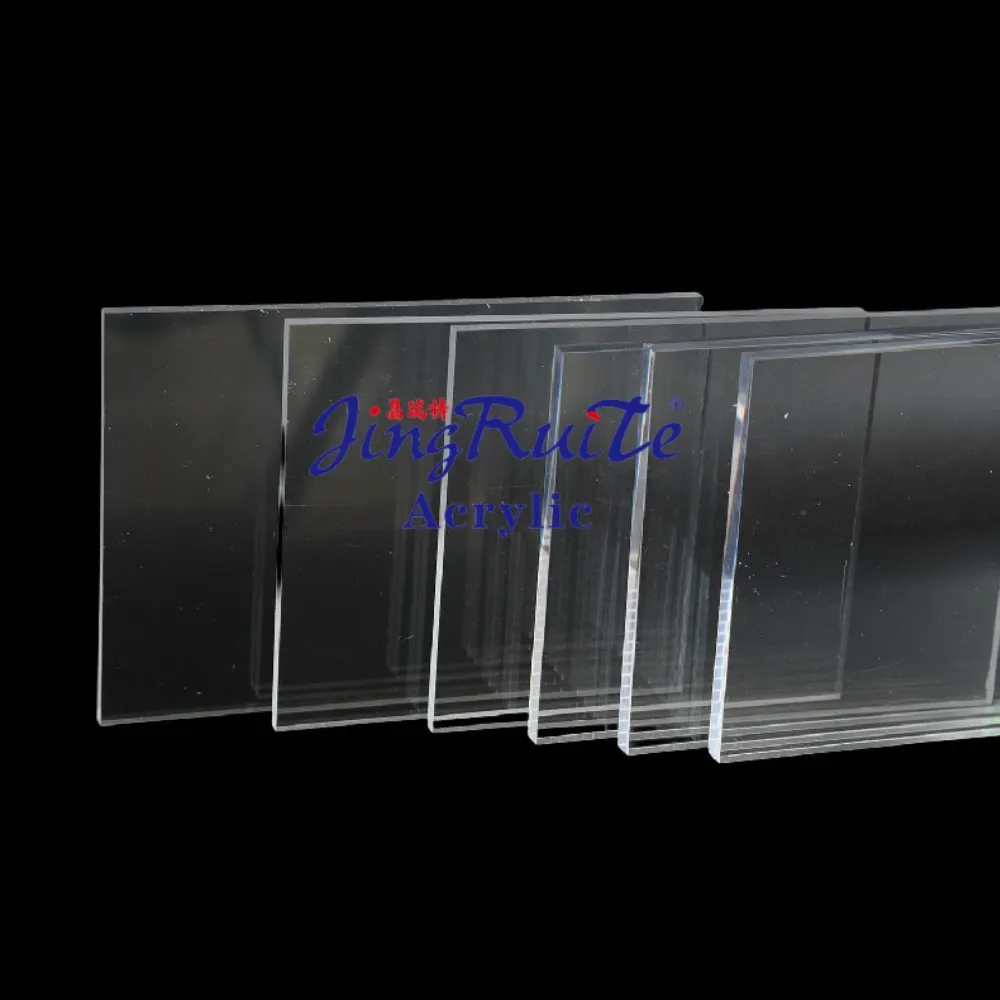
The acrylic vs polycarbonate decision should include the fabricator early. Share the drawing with dimensions, holes, edges, bends, joins, and visible faces. Ask the fabricator to identify which operations need a trial before a final material is approved.
For acrylic work, our processing services page provides a route to discuss the required operations. Confirm the proposed material and process together rather than assuming every grade can follow the same cutting or forming recipe.
Start with panel dimensions, supports, loading, fit, and the required finished function. Use our دليل سماكة الألواح الأكريلية to prepare those questions. Final thickness still needs to match the actual application and material requirements.
Acrylic vs polycarbonate thickness choices should not come from a table that assigns a safety level to a venue or industry. A bank counter, display, skylight, and equipment cover each need a defined design. Thickness alone does not prove compliance or prevent every failure mode.
Inspect the sample after the intended fabrication steps. Check dimensions, fit, edges, hole positions, surface condition, and any graphics. Confirm that the mounting plan and tolerances are understood by the people making and assembling the parts.
Record any change in grade, finish, coating, or process after the sample is accepted. If a proposed change affects a requirement, return it for review. That keeps an acrylic vs polycarbonate decision from being undone by an undocumented production substitution.
An acrylic vs polycarbonate price comparison is useful only when the quotes describe equivalent work. Send the same drawing, quantity, finish, packaging needs, and delivery destination to each supplier. Ask what is included and what still needs to be resolved.
Compare the cost of the required finished part rather than the headline sheet price. Include cutting yield, fabrication, coating, inspection, packaging, transport, and any agreed sample work. Do not assume a fixed percentage saving between polymer families without current comparable quotes.
Before requesting samples, write down the questions the trial must answer. Choose checks that relate to the project instead of creating a test merely because it is easy to perform. For any controlled or protective use, agree on the required validation with the responsible specialist.
A practical acrylic vs polycarbonate sample record includes:
Keep the approved sample with its documents. A physical piece without a grade or drawing reference is difficult to use as a repeat-order standard. Make sure the purchase order identifies the accepted version rather than relying on an email description such as “same clear sheet.”
سيناريو توضيحي: A sign fabricator receives two low-priced offers with different finishes and processing allowances. The buyer returns both quotes for clarification against one drawing and requests representative samples. This demonstrates how to make offers comparable; it does not claim that either material produced savings.
For your acrylic enquiry, include the application, drawing, quantity, dimensions, finish, and exposure conditions. Add the documents and sample checks you need, plus any delivery or packaging constraints. For signage-specific questions, consult our signage material selection guide.
Separate confirmed requirements from preferences. If you don’t yet know the grade or thickness, state the missing decision and who will approve it. This makes the discussion more useful than requesting an acrylic vs polycarbonate winner without a defined job.
Treat it as a distinct grade choice. Ask for the exact product identity and current data rather than transferring the claims of a modified material to ordinary PMMA. The modifier description alone does not establish a particular impact result or approved application.
There is no universal answer. Compare the specified products, UV protection, installation orientation, exposure guidance, and relevant warranty conditions. Outdoor suitability should be confirmed for the actual grade and design.
Thickness is one design input. It does not establish a finished protection rating by itself. Use the required product and assembly evidence, including the applicable mounting requirements, for the intended task.
Request current quotes for equivalent finished parts. Grade, coating, dimensions, yield, quantity, fabrication, and delivery can change the comparison. Avoid treating a general material-price statement as a project saving.
Send the drawing, application, dimensions, quantity, surface requirements, environment, and any required documentation. Include the sample acceptance checks and identify who can approve material or design changes.
Make your acrylic vs polycarbonate decision from the documented grade and the finished job, then keep the approved sample and drawing together. To discuss an acrylic option, send JRT your project details and evidence requirements. Confirm the open technical questions before releasing the production order.
 15سبتمبر
 15سبتمبر
 17أكتوبر
 23أكتوبر