Key Takeaways
- Choose board color and surface structure according to the finished product and whether cut edges will remain visible.
- Select thickness and sheet size based on fabrication methods, support requirements, and installation conditions.
- Confirm color consistency, print compatibility, and surface quality before placing a bulk order.
- Test samples before production to check cutting results, printed colors, and bonding performance.
- Compare material specifications and quality control procedures when choosing a long-term supplier.
What Should You Know Before Buying PVC Foam Board?
Before selecting PVC foam board, consider the finished product, processing method, and installation environment. These factors help determine the right surface structure, color, and thickness.
What Is the Difference Between Through-Color and Surface-Color Boards?
The main difference is how color is distributed through the material. A through-color board has color throughout its thickness, while a surface-color board uses a colored outer layer over a different core.
This difference matters when cutting, routing, or engraving the board. If the finished product has exposed edges, a different-colored core may affect its appearance. A colored surface layer can still be suitable when the edges are covered or hidden during installation.
Before purchasing, ask the supplier whether the color extends through the full board or is limited to the surface. Request a sample and inspect the face, edges, and corners after cutting.
How Do Application Requirements Affect Color and Surface Selection?
The intended use determines which surface and color features matter most. Indoor signs may prioritize brand colors and print quality, while display panels may require a clean surface and consistent appearance across several sheets.
For retail displays and decorative panels, check for visible marks, uneven coloring, or gloss differences. For engraved letters and routed shapes, examine the exposed edges as well as the front surface.
If the board will be installed in a public-facing area, consider how lighting affects its appearance. A color that looks consistent under indoor lighting may appear different under daylight or strong spotlights. Review samples under the lighting conditions expected at the installation site.
How to Choose the Right Color, Thickness, and Sheet Size
After identifying the application, compare color options, board dimensions, and thickness. These choices affect material use, processing time, and the final appearance.
How to Match Standard or Custom Colors
Standard colors can simplify repeat orders and reduce the need for custom color matching. Custom colors may be more suitable when a project requires a specific brand identity or must match existing panels.
Color descriptions alone are not enough for accurate purchasing. Different suppliers may use similar names for colors that look different in practice. Provide a physical sample or a recognized color reference and agree on an acceptable color difference before production.
According to ASTM International, ASTM D2244 provides methods for calculating color differences from measured color coordinates. This offers a practical basis for comparing a reference sample with supplied material and setting color inspection requirements.
For repeat orders, keep an approved sample and record the color reference in the purchase specification. Also confirm whether the supplier can maintain a consistent appearance across production batches.
How to Select the Right Thickness and Density
The correct PVC foam board thickness depends on the board dimensions, finished product, support structure, and processing method. A thin board may suit lightweight signs, while a thicker board may be more appropriate for display components that need greater rigidity.
As an initial guide, consider these application ranges:
- 3–5 mm: lightweight signs, printed panels, and decorative graphics.
- 8–15 mm: display structures, furniture components, and thicker decorative panels.
- 20–30 mm: selected applications requiring a thicker board, subject to design and support requirements.
These ranges are starting points rather than universal rules. A large panel with limited support may need a different specification from a small component made from the same material.
Density also affects board weight and material characteristics. Do not select thickness alone. Confirm the supplier’s density range and test a sample if the finished product has specific rigidity or weight requirements.
What Sheet Dimensions and Tolerances Should You Confirm?
Sheet dimensions affect cutting layouts, material waste, and shipping. Before ordering, confirm the available length, width, thickness, and dimensional tolerances.
Standard sheets may suit common sign sizes, while custom dimensions can reduce offcuts in repeated production runs. Compare the sheet size with your finished product dimensions and the working area of your cutting equipment.
Thickness consistency is also important when boards are installed side by side or processed in batches. Ask the supplier how dimensions are checked and whether tolerances can be stated in the purchase specification.
For large orders, review the cutting plan before confirming quantities. This helps identify avoidable waste and estimate the number of sheets required.
How Do Printing and Fabrication Requirements Affect Board Selection?
Color and dimensions are only part of the selection process. Printing, cutting, engraving, and bonding can all affect the final result, so confirm processing compatibility before production.
What Should You Check Before Printing Colored Boards?
Printing performance depends on the surface finish, ink system, print settings, and preparation method. A board that looks smooth may still require surface preparation to achieve reliable ink adhesion.
Before choosing a printing process, confirm whether the supplier recommends UV inkjet printing, screen printing, or another method for the intended application. Run a sample test to check color reproduction, image sharpness, surface coverage, and ink adhesion.
When evaluating PVC foam board printing, use the same artwork and color settings planned for the production run. This makes the test more representative of the finished product and helps reveal differences before a large quantity is printed.
If the design includes small text, fine lines, or large areas of solid color, inspect these elements closely. Also check whether the printed surface can withstand the expected handling, cleaning, and installation conditions.
How Do Cutting, Routing, and Engraving Affect the Finish?
Cutting and routing can leave visible edges, while engraving can expose the material beneath the surface. The result depends on the board structure, tool condition, cutting settings, and design details.
Before production, check whether the board can be processed using the equipment available in your workshop. Test the intended cutting or engraving method on a sample, especially when the design contains narrow lines, small corners, or detailed lettering.
Bonding and screw fixing also need attention. Confirm the adhesive’s compatibility with PVC and test the fixing method on the selected thickness. For assembled displays or furniture components, evaluate the finished joint rather than relying only on the appearance of an unprocessed sheet.
A small production trial can reveal problems with edge quality, surface damage, and assembly before they affect an entire order.
Is Colored PVC Foam Board Suitable for Outdoor Use?
Outdoor suitability depends on the board formulation, surface properties, exposure conditions, and expected service life. Direct sunlight, moisture, and temperature changes can affect the appearance and performance of plastic materials over time.
According to the International Organization for Standardization (ISO), ISO 4892-2 describes methods for exposing plastics to laboratory light sources using xenon-arc lamps. Such testing can help evaluate weathering-related changes under controlled conditions.
For outdoor signs, ask the supplier for relevant weathering or exposure test information. Consider the expected exposure, mounting method, and maintenance requirements before selecting the material. Where appearance is important, test a sample under conditions representative of the intended use.
Do not assume that a colored surface alone guarantees outdoor durability. Confirm the suitability of the specific board grade for the planned application.
Why Choose JRT Colored PVC Foam Board?
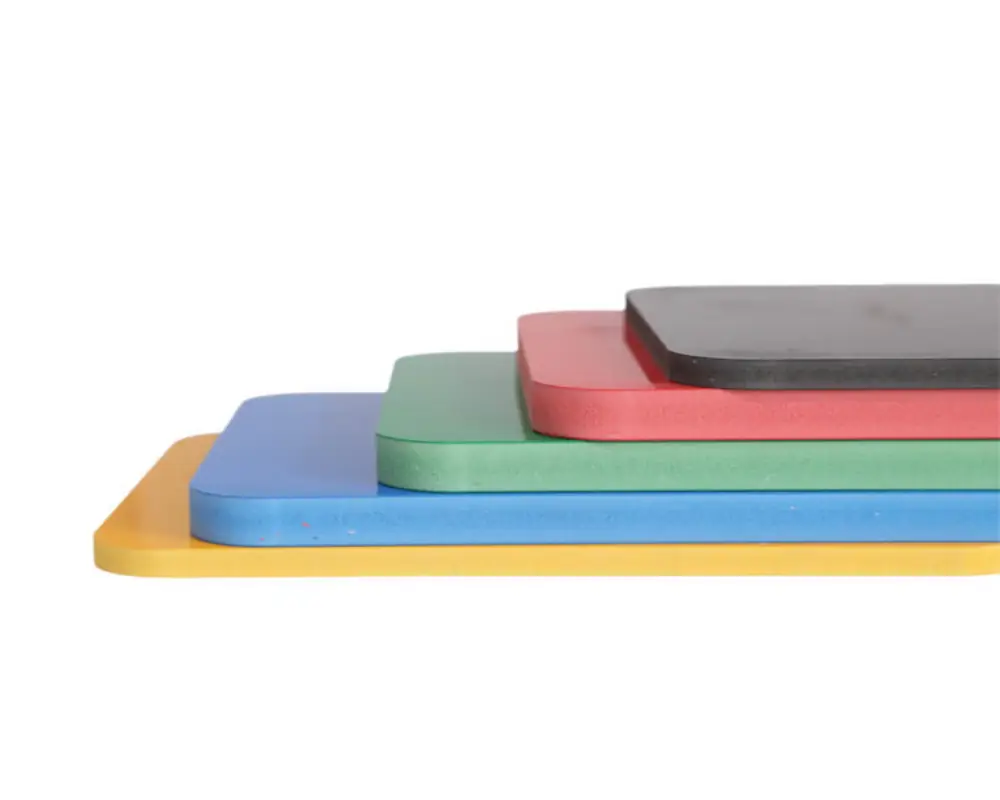
JRT offers colored PVC foam board for signage, displays, and fabrication projects. Its co-extruded structure combines a colored outer layer with a closed-cell foam core. This provides a finished colored surface for projects that require a specific appearance and flexible processing options.
Key Product Specifications
| Specification |
JRT PVC Color Foam Board |
| Structure |
Co-extruded colored surface and foam core |
| Surface layer thickness |
0.2–0.5 mm |
| Density |
0.45–0.8 g/cm³ |
| Thickness range |
3–30 mm |
| Standard sheet size |
1220 × 2440 mm |
Co-Extruded Structure for a Finished Colored Surface
The co-extruded construction provides a colored outer layer over the foam core. This can simplify projects that need a colored face without applying a separate decorative sheet.
Before production, check how the surface and core appear after cutting or engraving. This is particularly important for designs with exposed edges or detailed routed patterns.
Standard and Custom Colors for Branding Projects
JRT offers 10 standard colors and RAL color customization. Buyers can choose a standard color for routine production or request a custom match for projects with specific visual requirements.
For repeat orders, confirm the approved color reference and retain a sample. This helps buyers compare future batches against the agreed appearance.
Thickness Options for Different Fabrication Needs
The 3–30 mm thickness range allows buyers to consider different board sizes and fabrication requirements. The appropriate option depends on panel dimensions, support, and the intended processing method.
Review the finished design and cutting plan before confirming the specification. A sample can help verify whether the selected thickness meets the project’s appearance and handling requirements.
Printing and Fabrication Options
The board can be used with printing methods such as UV inkjet printing and screen printing, subject to process compatibility. Common fabrication operations include cutting, drilling, planing, and engraving.
Test the intended printing and fabrication methods before bulk production. This helps confirm surface quality, edge appearance, and processing results for the actual design.
Frequently Asked Questions
What color customization options does JRT offer?
JRT offers 10 standard colors and RAL color customization. For projects with strict brand requirements, provide a color reference and approve a physical sample before bulk production.
What thicknesses and sheet sizes are available from JRT?
JRT PVC Color Foam Board is available in thicknesses from 3 mm to 30 mm, with a standard sheet size of 1220 × 2440 mm. Confirm the required dimensions and tolerances with the supplier before ordering.
Which printing and fabrication methods can be used with JRT boards?
Potential methods include UV inkjet printing, screen printing, cutting, drilling, planing, and engraving. Compatibility should be confirmed through sample testing with the intended equipment and process settings.
What is the difference between colored and white PVC foam board?
Colored board provides a colored surface for projects that need a particular appearance or reduced reliance on a separate decorative layer. White board may be preferable when the project requires a white background for graphics or painting. The right option depends on the design and finishing process.
Why should you test a sample before buying in bulk?
Sample testing helps verify color, surface quality, printing results, cutting performance, and assembly compatibility. It also gives buyers a chance to identify processing problems before committing to a large production quantity.
Conclusion
Choosing the right board starts with the finished product rather than a single material specification. Color consistency, sheet dimensions, processing compatibility, and the planned installation should all be considered before placing an order.
For buyers sourcing PVC foam board for signage or custom fabrication, comparing samples and confirming production requirements can help reduce material waste and avoid rework. JRT offers standard and customized colors, multiple thickness options, and fabrication flexibility for different project requirements.
If you are looking for PVC foam board for signage, contact JRT Acrylic to discuss your application requirements, suitable product options, and quotation.