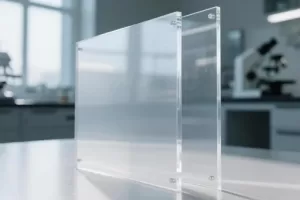
What Is Night Acrylic Sheet? A 2026 Guide to Energy-Saving Luminous Materials
Introduction
In the global architectural safety and decorative lighting sectors, functional materials are undergoing a significant transformation, driven by stricter safety regulations and a growing demand for energy-efficient solutions. An outstanding innovation in this field is the night acrylic board, which combines practicality and aesthetics to meet the growing needs of commercial, public and residential projects. As industries turn to sustainable and low-energy alternatives, new materials like this photoluminescent acrylic resin have gained traction, providing a reliable substitute for traditional lighting systems that rely on electricity. According to the report of the global specialty acrylic materials industry in 2025, the photoluminescent acrylic resin market is growing at a compound annual growth rate of 6.2%, and now 78% of commercial and public infrastructure projects give priority to self-luminous security materials (source: Global Acrylic Materials Industry Association). This comprehensive guide breaks down everything you need to know about this innovative product—from its core functionality to its real-world applications—optimized to help buyers and designers make informed decisions.
Night acrylic sheet is a kind of high-performance photoluminescence acrylic board, which is designed to provide continuous lighting in a dark environment without an external power supply. Different from the standard acrylic panels, it is characterized by long afterglow phosphor particles uniformly dispersed throughout the original PMMA (polymethyl methacrylate) matrix, rather than a surface coating. This structural integration ensures durability and longevity, eliminating the risk of the luminous layer peeling or fading over time—a common issue with surface-treated luminous materials. The working principle is simple: this sheet can absorb the visible light of sunlight or indoor lighting (400-700nm) within 10-30 minutes, and then emits soft and uniform light for 8-12 hours in complete darkness. Its initial brightness reaches ≥2000 mcd/m², fully complying with the Chinese national standard GB/T 24982, making it a reliable choice for safety and decorative applications alike.
The Rise of New Materials For Safety Lighting
In recent years, new materials have completely changed the construction and lighting industries, with the emphasis on sustainability, durability and functionality. Traditional emergency lighting systems rely on batteries or an external power supply, which can fail in case of power failure, thus causing security risks in key environments such as subway stations, tunnels and high-rise buildings. This gap leads to the adoption of self-luminous materials, and the night acrylic board stands out because of its unique combination of performance and versatility. Different from other photoluminescence materials, it maintains excellent optical clarity during the day, seamlessly blends with architectural designs, and provides reliable lighting at night. According to the Global Acrylic Material Industry Association, the use of this functional acrylic material reduces the emergency lighting maintenance costs of commercial buildings by an average of 40% (source: Global Acrylic Material Industry Association).
What Makes Day and Night Acrylic Different?
Day and night acrylic (the dual-functional counterpart of night acrylic sheet) is defined by its ability to perform two key roles: it acts as a standard transparent acrylic panel during the day, allowing light to pass through and maintaining a clean, modern appearance, while transforming into a self-luminous source at night. This dual function makes it different from traditional luminescent materials, which usually appear dim or faded in the daytime. Unlike surface-coated luminous boards, day-and-night acrylic resin maintains its transparency (60–80% transmittance according to ASTM D1003) and aesthetic appeal during the day, making it suitable for both functional and decorative applications. Its uniform luminous color (yellow-green (520nm) and blue-green (490nm) can be selected) can ensure no bright spots and provide consistent lighting in a dark environment.
Core Advantages of The Night Acrylic Sheet
1. Excellent luminous performance: the excitation time of the luminous acrylic board is 10-30 minutes, and the continuous luminous time is 8-12 hours (≥ 0.32 mcd/m²), which conforms to DIN 67510 photoluminescence safety material standard. This ensures reliable lighting in case of power failure or low light, which is very important for emergency evacuation.
2. Durable & Long-Lasting: the uniform dispersion of phosphors within the PMMA matrix prevents the luminous layer from peeling off, even after years of use. It boasts a service life of ≥ 10 years, with ≥80% of initial brightness retained over time, outperforming surface-coated alternatives that often degrade within 3–5 years.
3. Superior Physical Strength: With an impact strength of ≥ 12 kJ/m² (ASTM D256) and flexural strength of 75 MPa, night acrylic sheet is resistant to breakage and damage, making it suitable for high-traffic public areas. Its d 85 Shore hardness ensures scratch resistance and long-term durability, even in busy commercial or industrial environments.
4. Excellent weather ability: it keeps stable performance in temperatures range of -20℃ to 60℃, and it still keeps 80% or higher performance after 500 hours of ultraviolet aging test (source: Global Acrylic Materials Industry Association). This makes it suitable for indoor and outdoor applications, from underground parking lots to outdoor landscape lighting.
5. Easy to process: the acrylic sheet for night use can be cut, drilled, thermoformed, and laser-carved without damaging the luminescent layer. Laser cutting is recommended to avoid high temperatures that could affect phosphor performance, while mechanical cutting requires fine-tooth saw blades for clean edges. This flexibility makes it easy to integrate into all kinds of project designs.
6. Safe & Eco-Friendly: It contains no radioactive substances, complies with RoHS and REACH standards, and has no heavy metal pollution. This makes it safe for use in residential, commercial and public places, including schools, hospitals and child care institutions, where safety is the most important.
Technical Specifications of Night Acrylic Sheet
In order to help buyers choose a product suitable for their needs, the following is a detailed technical parameter table based on industry standards and product testing:
Property
Specification
Test Method
Initial Luminance
≥2000 mcd/m²
GB/T 24982
Afterglow Time
≥8 hours (≥0.32 mcd/m²)
GB/T 24982
Excitation Light Source
Visible light (400-700nm)
–
Emission Color
Yellow-green (520nm), Blue-green (490nm)
–
Light Transmission
60-80%
ASTM D1003
Impact Strength
≥12 kJ/m²
ASTM D256
Service Temperature
-20℃ to 60℃
–
Lifespan
≥10 years (≥80% initial brightness)
–
Product Specifications and Customization Options
There are many standard specifications for the night acrylic board to choose from to adapt to different applications, and they can be customized for special items. The following are the classifications of standard sizes and applications:
Thickness
Standard Size
Luminous Color
Surface Finish
Application
2-3mm
1220×2440mm
Yellow-green
Matte
Safety signage
4-6mm
1220×2440mm
Blue-green
Glossy
Decorative lighting
8-10mm
1220×2440mm
Dual-color
Custom
Special projects
Custom
As per request
Custom color
–
OEM/ODM
For projects with unique requirements, manufacturers provide OEM/ODM services, including customization of thickness, size, luminous color and surface polishing. This flexibility makes the night acrylic board suitable for a wide range of applications, from small decoration projects to large-scale public infrastructure.
Key Application Scenarios
The versatility of acrylic board at night makes it suitable for three kinds of applications: emergency indication, decorative lighting and special uses. The following is a detailed classification of each.
1. Emergency instructions: In public places and commercial buildings, safety is the most important thing, and day and night acrylic plays a vital role in emergency preparation. It is widely used for emergency exit signs, evacuation route indicators and fire exit signs, providing clear guidance in case of power failure. Public facilities such as subway stations, underground parking lots and tunnels also use it for emergency guidance, because it does not need external power supply and can bear high traffic flow. In transportation, it is used in airplanes, ships, and high-speed train night escape systems, ensuring passengers can evacuate safely in low-light conditions.
2. Decorative Lighting: new materials like night acrylic sheet have transformed decorative lighting, offering an energy-efficient alternative to traditional LED lights. In interior design, it is used for wall decoration, furniture inlays and a starry sky effect on the ceiling, adding unique soft light to spaces without increasing energy costs. In architecture, it is used for building outline lighting, landscape lights and artistic installations to enhance the aesthetic attraction of buildings and public spaces at night. Concerts, festivals and theme parks are also used for stage settings and festival decorations, creating immersive night experiences.
3. Special Applications: In addition to emergency and decorative purposes, night acrylic sheet is also used in military and industrial environments. The military uses it as a sign for marching at night and an identification tag for equipment, because it provides reliable lighting without revealing its position. In industrial environments, it is used for equipment control panels, instrument dials, and night operation guidelines—helping workers operate safely in low-light conditions. It can also be used in consumer goods, such as creative gifts, stationery and household ornaments, providing a unique functional design element.
Processing & Installation Guidelines
In order to ensure the best performance of the acrylic board at night, the correct processing and installation are very important. The following is a step-by-step guide based on industry best practices.
1. Cutting: Laser cutting is recommended because it can avoid high temperatures, which could damage the phosphor. If mechanical cutting is required, use a fine-toothed saw blade to ensure that the edges are clean and prevent chipping. Wear protective gear when cutting to avoid injury.
2. Engraving: the night acrylic can be laser engraved with patterns or characters, but the engraving depth should not exceed 0.5 mm, so as to keep the luminous layer. This ensures that the board will continue to emit light evenly after carving.
3. Hot forming: During hot forming, the plate is heated to 140-160℃, and the holding time is reduced by 30% compared with that of standard acrylic. This minimizes the migration of phosphors and ensures consistent luminous performance.
4. Bonding: Use acrylic-specific glue to bond the night acrylic sheet, as adhesives with excessive solvents can damage the PMMA matrix and affect luminous performance. Apply the glue evenly, and leave enough drying time to form a firm bond.
5. Installation: Avoid long-term exposure to strong direct light, as this can lead to temporary saturation of the phosphor particles. During installation, a gap of ≥ 2 mm should be left between plates to allow thermal expansion and ensure the normal performance of acrylic plates at night.
Frequently Asked Questions
Q1: How long will the acrylic sheet for night use shine after absorbing light?
A1: After absorbing visible light for 10-30 minutes, it can continuously emit light for 8-12 hours in complete darkness, and the initial brightness is ≥ 2000 mcd/me. The afterglow gradually decays, which conforms to GB/t 24982 standards (source: Global Acrylic Material Industry Association).
Q2: Is day and night acrylic suitable for outdoor use?
A2: Yes, it has excellent weather resistance, the service temperature range is -20℃ to 60℃, and the performance retention rate of the 500-hour ultraviolet aging test is ≥ 80. It is suitable for outdoor applications, such as landscape lighting and architectural contours.
Q3: Can the acrylic sheets for night use be customized for specific projects?
A3: Yes, manufacturers offer OEM/ODM services, including custom thickness (from 2 mm to 10 mm and beyond), size, luminous color (custom colors available), and surface finish (matte, glossy, or custom). This makes it suitable for unique projects of various sizes.
Q4: Is it safe to use an acrylic board indoors at night?
A4: Absolutely. It contains no radioactive substances, meets RoHS and REACH standards, and has no heavy metal pollution. It can be safely used in residential, commercial and public places, including schools and hospitals.
Q5: Compared with traditional emergency lighting, how about the acrylic board at night?
A5: Different from the traditional emergency lighting that relies on batteries or an external power supply, the acrylic board is self-luminous at night and does not need maintenance or power. It reduces maintenance costs by 40% on average, and eliminates the risk of failure in case of power failure (source: Global Acrylic Materials Industry Association)
Conclusion
As the demand for energy-efficient, safe, and versatile materials continues to grow, night acrylic sheet has established itself as a leading new materials solution for emergency and decorative lighting. Its unique dual functions-transparent during the day and self-luminous at night-combined with extraordinary durability, easy processing and environmental protection characteristics, make it the first choice for architects, designers and buyers in 2026. Whether for emergency indication, decorative lighting, or special applications, day and night acrylic offers a reliable, cost-effective alternative to traditional materials, aligning with global trends toward sustainability and safety. With its growing market demand and mature performance, it will become the main product of the construction and lighting industry in the next few years.
Introduction Acrylic sheets, prized for their optical clarity (92% light transmission) and versatility, are revolutionizing industries from aerospace to healthcare. With a global market expected...
Introduction Acrylic sheets, known for their exceptional transparency (92% light transmission) and durability, have become indispensable in industries ranging from architecture to healthcare. With a...
Introduction Polyvinyl Chloride (PVC) sheets are a staple in construction, healthcare, and electronics due to their durability, chemical resistance, and cost-effectiveness. With the global PVC...
In applications where safety, beauty and durability are essential, one material stands out: flame retardant acrylic sheet. For projects in buildings, public transportation or high-end...