Why Are More Industries Switching to Clear Acrylic Sheet Instead of Glass?
Introduction
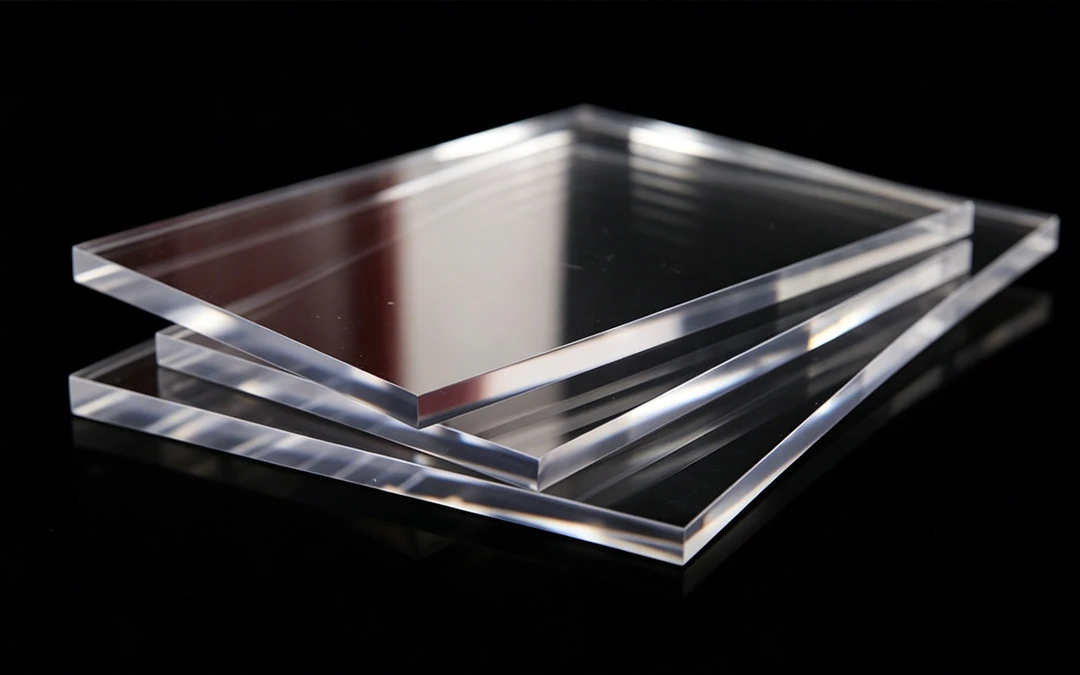
In today’s material selection process, industries are increasingly prioritizing transparency, safety, and lightweight performance. One material that consistently appears in engineering and design projects is the clear acrylic sheet, which has become a widely adopted alternative to traditional glass in architecture, retail, and industrial manufacturing.
A related material often used in higher-precision applications is the clear cast acrylic sheet. It is produced through a casting process that improves optical uniformity and reduces internal stress. This makes it particularly suitable for applications requiring stable machining and high visual clarity.
Acrylic is a transparent thermoplastic derived from polymethyl methacrylate (PMMA). It is manufactured through either casting or extrusion depending on performance requirements and production cost.
The clear acrylic sheet is known for its high transparency, reaching up to 92% light transmission (source: ASTM D1003), which places it close to optical glass in terms of visual clarity. Its density is around 1.19 g/cm³ (source: ASTM D792), making it significantly lighter than glass while still maintaining structural usability.
In many engineering projects, material selection depends not only on appearance but also on processing behavior and long-term stability.
Optical Performance and Visual Clarity
Optical clarity is a major reason why acrylic has gained popularity in industrial applications.
The clear acrylic sheet provides high visible light transmission of approximately 92% with haze levels below 1% (source: ASTM D1003). This ensures minimal distortion and consistent clarity in lighting, display, and architectural applications.
Because of its uniform molecular structure, a clear cast acrylic sheet can maintain more consistent optical behavior after cutting or thermoforming compared with other transparent plastics. This makes it suitable for precision display systems and optical components.
Mechanical Strength and Structural Stability
Beyond transparency, acrylic materials also provide strong mechanical performance.
Impact strength is typically around 16 kJ/m² (source: ASTM D256), while tensile strength reaches about 65 MPa (source: ASTM D638). Flexural strength is approximately 90 MPa (source: ASTM D790).
These values indicate that a clear acrylic sheet can withstand higher impact loads than standard glass, making it a safer option in public environments such as retail stores, exhibitions, and transportation facilities.
In applications requiring machining accuracy and reduced internal stress, a clear cast acrylic sheet is often preferred due to its improved structural consistency.
Environmental Resistance and Long-Term Use
Acrylic materials are designed to perform in a wide range of environmental conditions.
They can typically operate between -40°C and 80°C without significant deformation. UV-stabilized versions help reduce yellowing over time, supporting outdoor use for several years under normal exposure conditions.
Water absorption remains low at ≤0.3% (source: ASTM D570), while thermal expansion is approximately 7×10⁻⁵ /°C (source: ASTM D696).
As a result, the clear acrylic sheets are commonly found in outdoor structures and protective installations.
Key Technical Parameters
Property
Test Standard
Value
Light Transmission
ASTM D1003
≥92%
Density
ASTM D792
1.19 g/cm³
Impact Strength
ASTM D256
16 kJ/m²
Tensile Strength
ASTM D638
65 MPa
Flexural Strength
ASTM D790
90 MPa
Heat Deflection Temperature
ASTM D648
85°C
Water Absorption
ASTM D570
≤0.3%
Thermal Expansion
ASTM D696
7×10⁻⁵ /°C
These figures are commonly used when comparing acrylic with glass or other transparent materials.
Processing and Fabrication Flexibility
Acrylic materials are widely used because they are easy to process using standard industrial methods.
Cutting is often performed using laser systems or fine-tooth saws for different thickness ranges. Thermoforming is typically carried out at 140°C to 160°C, allowing the material to be reshaped without losing transparency.
Bonding can be achieved using solvent-based adhesives or UV-curing systems, depending on assembly requirements. Surface finishing techniques include flame polishing, diamond polishing, and sandblasting.
A clear acrylic sheet performs reliably during fabrication, which is one of the reasons it is widely used in custom manufacturing projects.
Standard Sizes and Material Options
Standard production sizes typically include 1220×2440 mm and 1524×3048 mm, with thickness ranging from 1 mm to 50 mm.
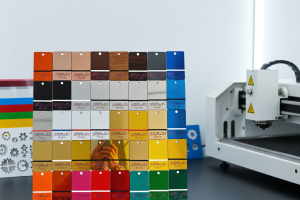
Surface finishes may include high-gloss clear, frosted, non-glare, and UV-protected coatings depending on application requirements.
In logistics and transportation, sheets are usually covered with protective PE film and packed on wooden pallets to reduce surface damage.
A clear cast acrylic sheet is often selected for applications requiring high-end surface quality and machining precision.
Application Scenarios Across Industries
Acrylic has become a practical material choice across architecture, retail, and industrial manufacturing.
In architectural engineering, they are applied in skylights, greenhouse panels, façade systems, and protective barriers where both light transmission and safety are important.
In retail and advertising environments, acrylic is commonly used in signage systems, display cases, exhibition booths, and illuminated branding structures.
Industrial applications include equipment housings, instrument covers, and protective shields where durability and visibility are required.
Interior design projects often use acrylic for partitions, decorative panels, and furniture components where aesthetics and modern appearance are important.
In many of these applications, the clear acrylic sheet replaces glass because of its lower weight and improved impact resistance.
Acrylic vs Glass in Practical Use
When comparing acrylic and glass, the differences become more apparent in real-world applications.
Glass offers excellent hardness and scratch resistance but is heavier and more fragile under impact. Acrylic provides significantly better impact resistance and is easier to fabricate into custom shapes.
In large-scale installations, weight reduction becomes a major advantage, as acrylic can reduce structural load and installation costs.
A clear acrylic sheet is therefore commonly selected when safety, flexibility, and cost efficiency are prioritized over surface hardness.
Additional Practical Considerations in Real Projects
In real projects, engineers also care about transportation, installation speed, and maintenance costs. Acrylic panels are easier to transport due to their lower weight, which can reduce logistics costs significantly in large-scale construction or retail rollout projects.
Another important factor is maintenance. Unlike glass, which may require frequent polishing to maintain clarity, acrylic surfaces can often be restored using simple polishing compounds when minor scratches occur. This makes long-term maintenance more predictable in controlled environments such as museums, laboratories, and retail showcases.
From a fabrication standpoint, designers also appreciate the flexibility of acrylic during prototyping. Acrylic can be laser-cut into complex shapes with high precision. This helps shorten the time from design to installation. This is particularly useful in exhibition design, where rapid customization is required.
Many manufacturers are also paying more attention to recyclable materials. Under controlled conditions, acrylic can be reprocessed and reused in certain industrial applications.
These practical advantages collectively explain why the clear acrylic sheet continues to replace traditional materials in both commercial and technical environments.
Frequently Asked Questions
Q:What is acrylic sheet mainly used for?
A:Acrylic materials are widely used in architecture, retail display systems, industrial equipment, and interior design due to their transparency and durability.
Q:What is the difference between cast and extruded acrylic?
A:Extruded acrylic is more cost-efficient and suitable for general use, while cast acrylic offers better optical clarity and machining stability.
Q:Can acrylic be used outdoors?
A:Yes, UV-stabilized acrylic can perform well outdoors and maintain clarity over extended periods under normal environmental conditions.
Q:Is acrylic stronger than glass?
A:Acrylic has significantly higher impact resistance, making it safer in environments where breakage risk is a concern.
Q:How should acrylic be cleaned?
A:It is recommended to use mild soap and water to avoid surface damage and maintain long-term clarity.
Conclusion
Acrylic materials have become an essential part of modern engineering and design due to their balance of transparency, strength, and processing flexibility. The clear acrylic sheet is widely used across industries where safety and visual performance are important.
For precision applications requiring improved machining stability and optical consistency, the clear cast acrylic sheet remains a preferred choice among engineers and designers worldwide.
Brief introduction Acrylic board is widely used in all walks of life because of its excellent transparency, light weight and machinability. However, they differ significantly...
If you work in UV curing, medical diagnostics, optical research or tanning equipment design, you’ve probably asked: What material can reliably transmit UV light without...
When making engraved name badges, office signs or equipment labels, the biggest question is:Which material gives crisp, professional contrast without extra painting? Dual-color sheet is...
Introduction From commercial buildings to industrial facilities, when choosing transparent materials for safety-critical applications, two choices stand out: impact resistant acrylic and polycarbonate. For professionals in the...