How to Choose the Right Translucent Acrylic Sheet for Your Application?
Key Takeaways
A translucent acrylic sheet works well when a panel needs to transmit light without providing a clear view through it.
Light transmittance affects brightness, while haze controls how widely light spreads across the panel.
Thickness influences rigidity, appearance, and light transmission, so it needs to match the panel size and installation method.
Cast and extruded acrylic suit different production and fabrication requirements.
A physical sample can reveal color, diffusion, and LED hotspot issues before bulk production begins.
Introduction
Translucent acrylic sits between transparent and opaque acrylic. It allows light to pass through while reducing the clarity of objects behind the sheet.
It is commonly used for backlit signs, light boxes, decorative panels, partitions, and other applications that need light transmission without a clear view.
“Translucent” does not describe one fixed optical effect. The same color can look different when the thickness, light transmittance, and haze change. These factors affect brightness, color depth, and light diffusion.
Choosing the right sheet should not start with color or thickness alone. First define the required light transmission, privacy, and lighting effect. Then select the optical properties, structural specifications, and production method.
Determine the Required Light Transmission and Privacy
Do You Need Light Transmission or Privacy?
The main challenge is that a panel cannot usually provide both a clear view and strong visual screening. The more clearly light passes through, the easier it may be to see objects behind the sheet.
If clear visibility is required, transparent acrylic is more suitable. If the main purpose is to block light and visibility, an opaque acrylic sheet is a better match. When light transmission and reduced visibility are both needed, translucent acrylic is more suitable. An opal acrylic sheet can also be considered when a softer, more diffused appearance is required.
The choice is straightforward: use transparent acrylic for clear visibility, opaque acrylic for stronger blocking, and translucent acrylic when light transmission and reduced visibility are both important.
How Much Light Needs to Pass Through?
Light transmittance affects how bright the finished panel appears. However, higher transmittance does not always produce better backlighting.
For signs and light boxes, insufficient transmittance can make the panel look too dark. For decorative panels, the lighting may still appear uneven even when the overall brightness is sufficient.
The required transmittance should therefore be considered together with the light source, haze, and LED layout.
How Should Color and Thickness Be Matched?
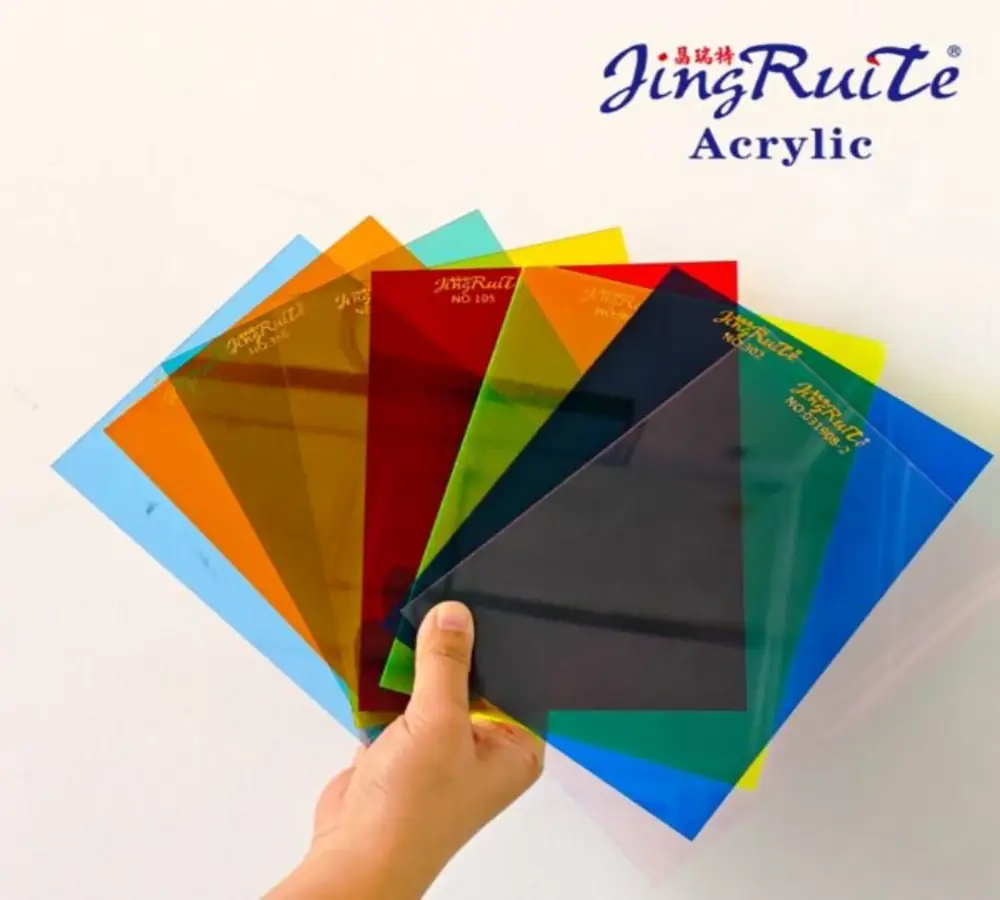
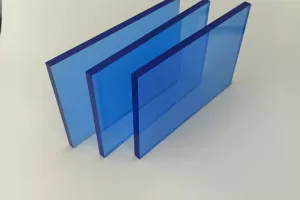
Color and thickness can both change the final appearance. With the same color, a thinner sheet may allow more light to pass through, while a thicker sheet can appear deeper in color.
A standard color card cannot fully represent the appearance of a backlit panel. For ordinary projects, a standard color can be selected first. For brand colors or specific lighting effects, test the actual color and thickness under the final lighting conditions.
Choose the Right Optical Properties for Backlighting
For backlit applications, the two main optical factors are light transmittance and haze. Light transmittance indicates how much light passes through the sheet, while haze indicates how much light is scattered.
ASTM D1003-21 is a standard test method for measuring haze and luminous transmittance in transparent plastics. The test provides measurable data for comparing how much light different materials transmit and how strongly they diffuse it. This can help when selecting a translucent acrylic sheet because buyers can compare supplier data based on measured optical performance rather than color or appearance alone.
When comparing materials, make sure the test data refers to the same or comparable material type, color, thickness, and test conditions. This makes it easier to select a sheet with the light transmission and diffusion needed for the application.
What Is the Difference Between Light Transmittance and Haze?
Light transmittance mainly affects overall brightness, while haze affects how widely light is scattered across the panel.
If the panel is too dark, transmittance and light source output should be checked. If the brightness is sufficient but individual LED points remain visible, haze, LED spacing, and the distance between the LEDs and the panel should be considered.
Neither higher transmittance nor higher haze is automatically better. The right balance depends on the lighting design.
When Is Higher Light Transmittance Needed?
Higher light transmittance can be useful for backlit signs, display panels, and light boxes that require stronger brightness.
If the panel remains too dark, compare a material with higher transmittance or a stronger light source. When brightness is already sufficient, other factors such as haze and LED layout may have a greater effect on the final result.
When Is Higher Haze Needed?
Higher haze can help spread light more evenly and reduce the visibility of individual LED points. However, excessive haze may also reduce perceived brightness.
When the panel is bright enough but LED hotspots remain visible, a higher-haze material can be tested.If brightness drops too much, the haze level should be balanced with transmittance and LED output.
How Can LED Hotspots Be Checked?
LED hotspots depend on LED spacing, the distance between the LEDs and the panel, and the diffusion ability of the acrylic.
For an accurate check, use the actual LED type, spacing, and installation distance. View the finished panel from the normal viewing position and check whether bright points or uneven areas are visible.
If hotspots remain, the LED layout, installation distance, or material haze may need adjustment.
Choose the Right Sheet Type, Thickness, and Processing Method
Cast and extruded acrylic are two common production methods for PMMA sheets.
Cast or Extruded Acrylic: Which Is More Suitable?
Cast acrylic is made by polymerizing liquid monomer in a mold. It can be considered when a project requires specific colors, thicknesses, sizes, or processing requirements.
Extruded acrylic is produced continuously by heating PMMA and pushing it through a die. It can be suitable for fixed specifications and larger-volume production.
If both methods can meet the application requirements, compare the supplier’s specifications, pricing, order volume, and processing capabilities.
ISO 7823-1:2003 provides requirements and test methods for non-modified flat cast PMMA sheets, including colored transparent, translucent, and opaque sheets. It can be used as a reference when reviewing cast PMMA specifications.
How Thick Should the Sheet Be?
Thickness mainly affects rigidity and resistance to deformation.The required thickness depends not only on panel size but also on the unsupported span, support points, installation method, and actual use.
For small, well-supported panels, a thinner specification can be evaluated first. Larger panels or panels with fewer support points generally require greater attention to rigidity.
For colored translucent acrylic, thickness can also affect color depth and light transmission. For backlit projects, the final thickness should be checked under the intended lighting conditions.
Can Cutting, Thermoforming, or Printing Affect Material Selection?
Yes. Different processes can place different requirements on the material, thickness, and surface.
Laser cutting, CNC milling, thermoforming, printing, and other processes should be considered as part of the complete production flow. If several processes are required, provide the full sequence so the supplier can confirm the material and production method before production.
Confirm the Supplier Before Placing a Bulk Order
Before placing a bulk order, confirm the color, thickness, surface finish, production method, and required processing with the supplier. For backlit applications, a physical sample is also useful for checking the final color, light diffusion, and LED hotspot visibility under the actual lighting conditions.
Translucent Acrylic Sheet Options from Jingruite
Jingruite provides translucent acrylic sheets in different colors, thicknesses, surface finishes, and production options for decorative, display, and backlit applications.
Key Item
Product Information
Material
PMMA acrylic sheet
Translucent thickness
2–30 mm
Color options
50+ standard colors
Color matching
Pantone color matching
Production methods
Cast or extruded
Surface options
Glossy, matte, and textured
Processing options
Laser cutting, CNC milling, thermoforming, laser engraving, printing, and bonding
50+ Standard Colors and Pantone Matching
Jingruite offers more than 50 standard colors for decorative, display, and backlit applications. Pantone color matching is also available when a standard color does not meet the required design or brand specification.
For backlit applications, the same color may produce a different visual effect at different thicknesses or under different light sources. A sample allows the finished color and light diffusion to be viewed before bulk production.
2–30 mm Translucent Thickness Options
Jingruite offers translucent acrylic sheets from 2 to 30 mm. The range covers both thinner sheet requirements and thicker panels where greater rigidity is needed.
Glossy, Matte, and Textured Surface Options
Jingruite provides glossy, matte, and textured surface options for different visual requirements.
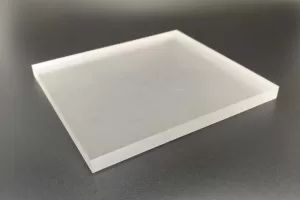
A glossy surface provides a smooth appearance, while a matte surface can reduce reflections. A textured surface can add a distinctive decorative effect to an acrylic panel.
Cast and Extruded Production With Multiple Processing Options
Jingruite supports both cast and extruded acrylic production. The sheets can also be processed through laser cutting, CNC milling, thermoforming, laser engraving, printing, and bonding.
Having production and processing options in one supply chain can simplify projects that require both a specific sheet type and several fabrication steps.
Frequently Asked Questions
Can Translucent Acrylic Sheets Be Customized for a Specific Color?
Yes. Jingruite offers more than 50 standard colors and supports Pantone color matching. A physical sample can be checked under the intended lighting when color accuracy is important.
What Thickness Options Are Available for Translucent Acrylic Sheets?
Jingruite offers translucent acrylic sheets from 2 to 30 mm. The final thickness should be selected according to the panel size, support structure, and application requirements.
Can I Order Translucent Acrylic Sheets With a Specific Surface Finish?
Yes. Jingruite offers glossy, matte, and textured surface options. The suitable finish can be selected according to the required appearance and viewing environment.
Can Translucent Acrylic Sheets Be Cut or Thermoformed for a Custom Design?
Yes. Jingruite supports laser cutting, CNC milling, thermoforming, laser engraving, printing, and bonding. Buyers can provide the complete processing sequence so the material and production requirements can be confirmed together.
Can I Request a Sample Before Placing a Bulk Order?
Yes. A sample can be used to check color, thickness, surface finish, light diffusion, and LED hotspot visibility before bulk production.
Conclusion
Choosing a translucent acrylic sheet requires more than matching one specification. Color, thickness, surface finish, production method, and processing requirements all need to suit the final application.
Jingruite offers more than 50 standard colors, Pantone color matching, and translucent acrylic sheets from 2 to 30 mm. Cast and extruded production is available, along with multiple surface and processing options.
For projects with specific color, thickness, or backlighting requirements, a physical sample can help confirm the final appearance before a bulk order is placed.
If you are sourcing acrylic plastic sheet for a translucent application, provide the required color, thickness, panel dimensions, surface finish, and processing requirements. Jingruite can help confirm the suitable specification and provide a customized quotation.
Introduction Acrylic sheets, prized for their optical clarity (92% light transmission) and versatility, are revolutionizing industries from aerospace to healthcare. With a global market expected...
Introduction Acrylic sheets, known for their exceptional transparency (92% light transmission) and durability, have become indispensable in industries ranging from architecture to healthcare. With a...
Introduction Polyvinyl Chloride (PVC) sheets are a staple in construction, healthcare, and electronics due to their durability, chemical resistance, and cost-effectiveness. With the global PVC...
In applications where safety, beauty and durability are essential, one material stands out: flame retardant acrylic sheet. For projects in buildings, public transportation or high-end...